16,000 Miles Barefoot

Subscribe on Substack!

A therapist once diagnosed me as “quirky.” I’d retained him to advise me during my divorce, at my ex-wife’s suggestion, as she said I desperately needed help. The diagnosis rested on my decision to stop wearing shoes and start running and hiking barefoot. Otherwise, he thought I was fine.

But questions linger.

Today, in reviewing the last 1,000 miles of barefoot walking, hiking, and running in my training log, it’s fair to ask — what prompted this odd pursuit?

Maybe going barefoot is one of life’s secrets – a simple way to promote natural alignment and have fun. Or maybe my “quirky” personality predisposes me to adopt extreme positions and pursue them with reckless passion. If it hadn’t been the barefoot practice, which I discovered after reading Chris MacDougal’s bestseller, “Born to Run,” maybe I would have become an obsessive stamp collector or train spotter or competitive bird-watcher, or maybe I would have colored my hair, pierced my nose, and covered every square inch of my skin with tattoos.

In any case, this last block of 1,000 miles, which brings me to 16,000 barefoot miles over 13 years, started with the unbridled enthusiasm characteristic of each step in this peculiar journey. On December 31, 2025, I ran a 10k outside of Tucson, Arizona, at a conservative pace mind you, since I’d strained the rectus femoris muscle in my right quadriceps during a slip and a fall two weeks before. This accident took place in the Shawangunk Mountain and, incidentally, due to winter temperatures, I was wearing shoes. When I fell, I knew instantly that I’d torn something. I lay there for a moment, unsure how bad the damage was. There was no choice but to drag myself to my feet and limp back 3 miles to the trailhead. Over the next few days, the injured leg felt a little better, although a small bruise formed on the inside of my right thigh, indicating that there had indeed been a tear and some internal bleeding.

Nonetheless, the 10k went fine, and a few days later, I flew to Texas for the Chevron Houston Marathon, which I ran without food or water for a little extra challenge. This was barefoot race number 134 and barefoot marathon/ultra no. 24. The following month I ran 27 miles on a loop course in Las Vegas, where I met the legendary ultra-runner Ann Trason. When she saw me running barefoot, she laughed at my “stupid and painful” approach to running. But that’s like the pot calling the kettle black, because she was pushing a walker, due to a severe case of rheumatoid arthritis. A week later, I ran a 50k race in western Arizona partly barefoot and partly in shoes on account of the unremittingly rocky course.
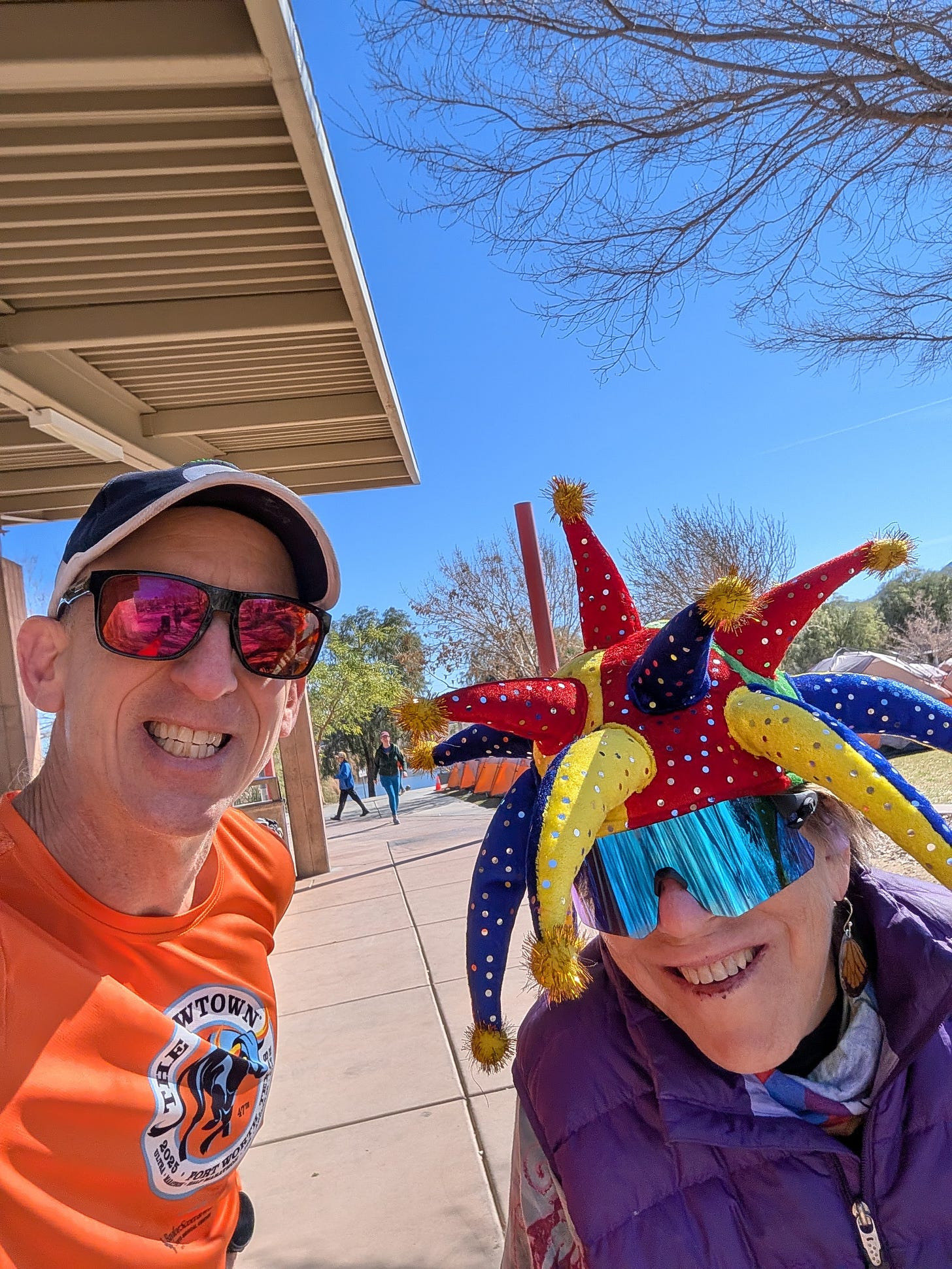
Read about my encounter with Ann Trason

Read about my 50k in AZ

These trips helped me escape an unusually cold New York winter, at least for a few days at a time. Back home, I didn’t try to run outdoors when the temperature was below freezing. Instead, I bought a treadmill. Which turned out to be a great investment. In fact, between this machine and treadmills in hotels, I covered 122 miles during January and February, typically 3 or 5 miles at a time, but sometimes up to 10. To manage the tedium, I made a point to constantly vary the speed and inclination in micro-intervals of thirty seconds or quarter miles, adding some structure to what otherwise would have been a monotonous execution. Once I looked out through a window in the garage, where my treadmill is stationed, and watched a deer searching for something to eat in the snow.

It was an unusually severe winter, but every now and then the sun came out and the temperatures moderated. In mid-February, I took advantage of a mild weekend to run Sassquad Trail Running’s Onesiefest 5k in Mahwah, New Jersey. Conditions were ideal for winter barefoot running – the wind was calm, temperatures were hovering in the 30s, and the sun broke through the clouds. The surface was mostly hard-packed snow, which is easy to run on, and it was fun to run with a large group of kids from the Happy Feet running club of Hackensack, NJ and pass some of them, too.

A few days later, I took advantage of another mild day to climb a mountain in Harriman State Park. Once again, the trail was hard-packed snow, the sun was out, and the temperature was above freezing. To reach the summit, I had to leave the trail for a quarter-mile, and here the snow was knee-deep in places, which I punched through with care on account of sticks and rocks lurking beneath the powder. Happily, I returned to the trail before my feet got too cold and didn’t incur any damage besides a scratch on one foot.
Meanwhile, the rectus femoris muscle I’d strained back in December seemed to have mostly healed, although I noticed there was still some swelling. I went to see a physical therapist for advice on rehab, but received a shock when he looked at me with a stern face and warned there might be a serious rupture. The swelling I’d noticed was actually a bulge, where torn muscle had retracted, like a window shade rolling up. Go get it checked out by a doctor, he admonished.

Now I was worried — would my thigh muscle be permanently compromised? And how long would I be out of commission if I opted for reconstructive surgery? Feeling panicked, I rushed down to New York City to see my sports doc, and when the receptionist sent me to get an X-ray, I protested – wouldn’t an MRI be necessary to scan for soft-tissue damage? Wait for the doctor’s instructions, she told me. Impatient, I waited in the examining room. The doctor entered. Listened to my story. Had me raise my leg. And started laughing. He told me that torn thigh muscles are common among soccer players.

“It just means you’re a badass,” he explained.

“But I don’t want to be a badass,” I whimpered, “I just want my thigh back.”

He sent me home. Apparently, the rectus femoris is not an important muscle.

As an aside, “quirky” is a word of unknown origin, possibly related to the German “quer” meaning queer. At first, I’d been put off by my diagnosis, as if it meant I was unpleasantly weird. Which is, incidentally, how I used to feel in high school. However, in checking the dictionary, I found that quirky means “unusual in an interesting or appealing way.” Quirky is associated with unconventional styles, offbeat and eccentric personalities, or charming oddities, although it’s sometimes used to describe people trying too hard to be different.

Personally, I feel that everyone is different and thus many of us would appear quirky to each other if we could pursue what really interests us. But so many people seem weighed down by the spirit of conformity.

As winter morphed into early spring, I drove down to Harriman State Park on every possible occasion, determined to complete a special peak-bagging project which I’d started a couple of years earlier. The goal was to climb each of the 59 named mountains in the park. Barefoot of course. Harriman has small mountains, averaging only 1,000 feet high, but it’s a lovely place with long ridges and U-shaped glacial valleys running northeast-southwest, quiet grassy knolls, open forests with a lot of oak, abundant lakes and bogs. During these visits, I basked in the early spring sun, shivered in the cold wind, high-stepped through scratchy blueberry scrub, and meditated on the concept of “good medicine,” which is a Lipan Apache term for experiences in nature that fill you with feelings of joy and magic. By the way, the Harriman project is part of a lifetime goal to climb 1,000 mountains barefoot. (Because someone needs to do this.)
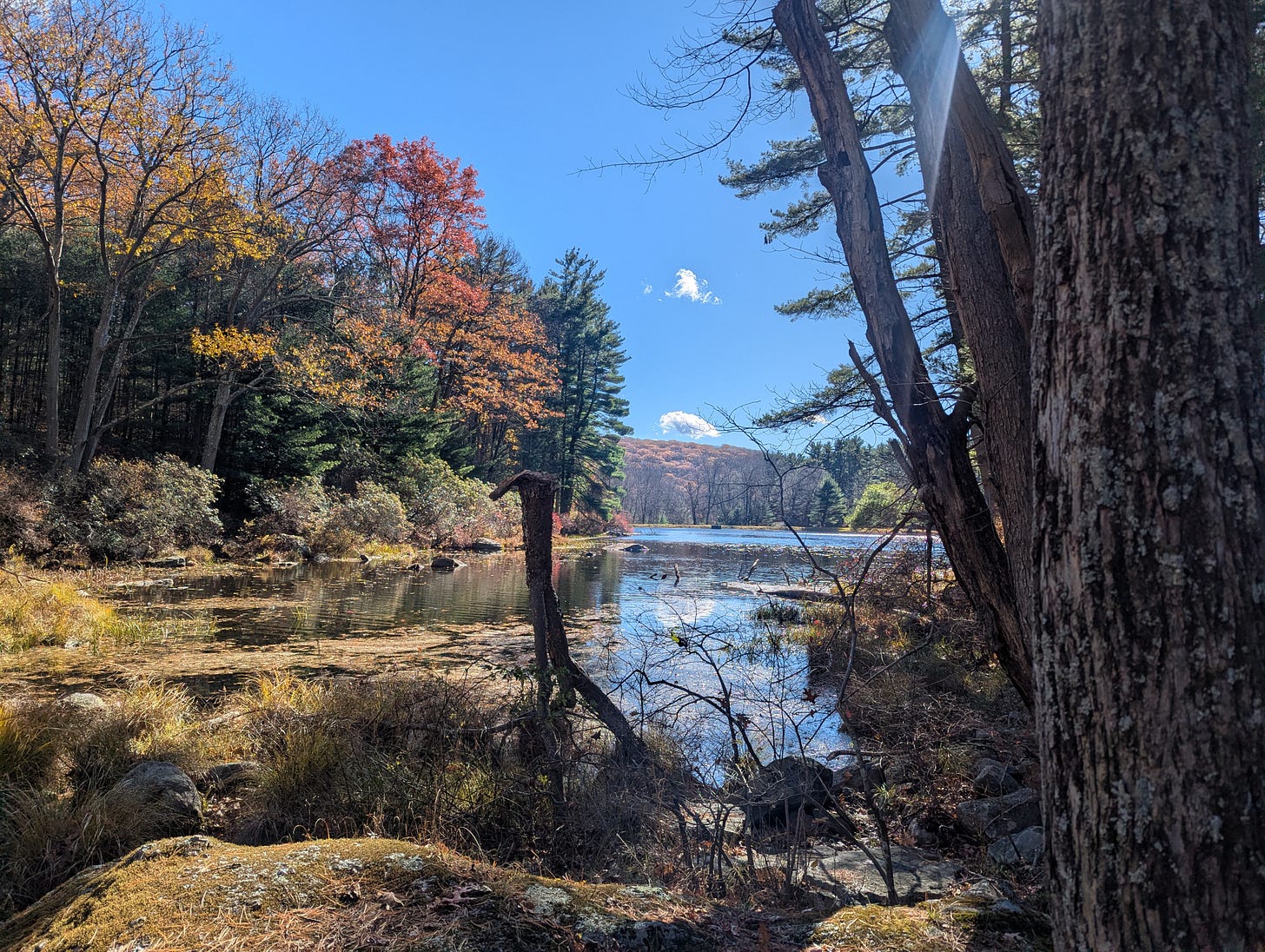
Harriman scene

Read about my Harriman project

1,000 Mountain Project

After completing the Harriman project, it was time to return to the Catskills, where I’ve made close to 300 barefoot climbs. Compared to Harriman, these mountains, ranging from 3,500 feet to just over 4,000, suddenly felt quite steep and tall. Gradually I worked my way back into better climbing trim, completing a 15-mile trek in the Blackhead Range which bagged me six peaks. It was 5,200 feet of total climbing, and by the end I was out of breath and moving slowly, but this was also the longest and toughest barefoot hike I’d done in this mountain range. I followed this up with a double ascent of Hunter Mountain, where I saw rangers head out to rescue an elderly hiker (he was OK), people driving radio-controlled model trucks on the trail, and a beautiful Black-and-Yellow Lichen Moth resting on a goldenrod bloom (a nice add to my collection of bug-on-flower photographs). Two fit-looking young dudes passed me, but where the trail turned steep, they had to stop to catch their breath, and I was quite pleased to beat them to the top.

On some weekends I visited the mountains, and on others I participated in local races ranging from 5k’s to half-marathons. In some cases, my times were better than the year before, which was encouraging. But they were slower than two years back. I think that barefoot helps in the battle with age by restoring natural alignment and reducing the risk of injury. But it does not appear to defeat the aging process, nor does it stop the passage of time, unfortunately. Speaking of which, I won my age group at a 1/2 marathon in Dallas in mid-July. It was 85 F and humid, but I felt good at the start and thought I had a shot at a new PR. By the half-way point, however, I was in trouble. Indeed, to make it back, I had to take some walking breaks — now there’s nothing wrong with that — but I’d never had to do that in such a short race before. Evidently, the heat is a little tougher for me to deal with than it used to be.
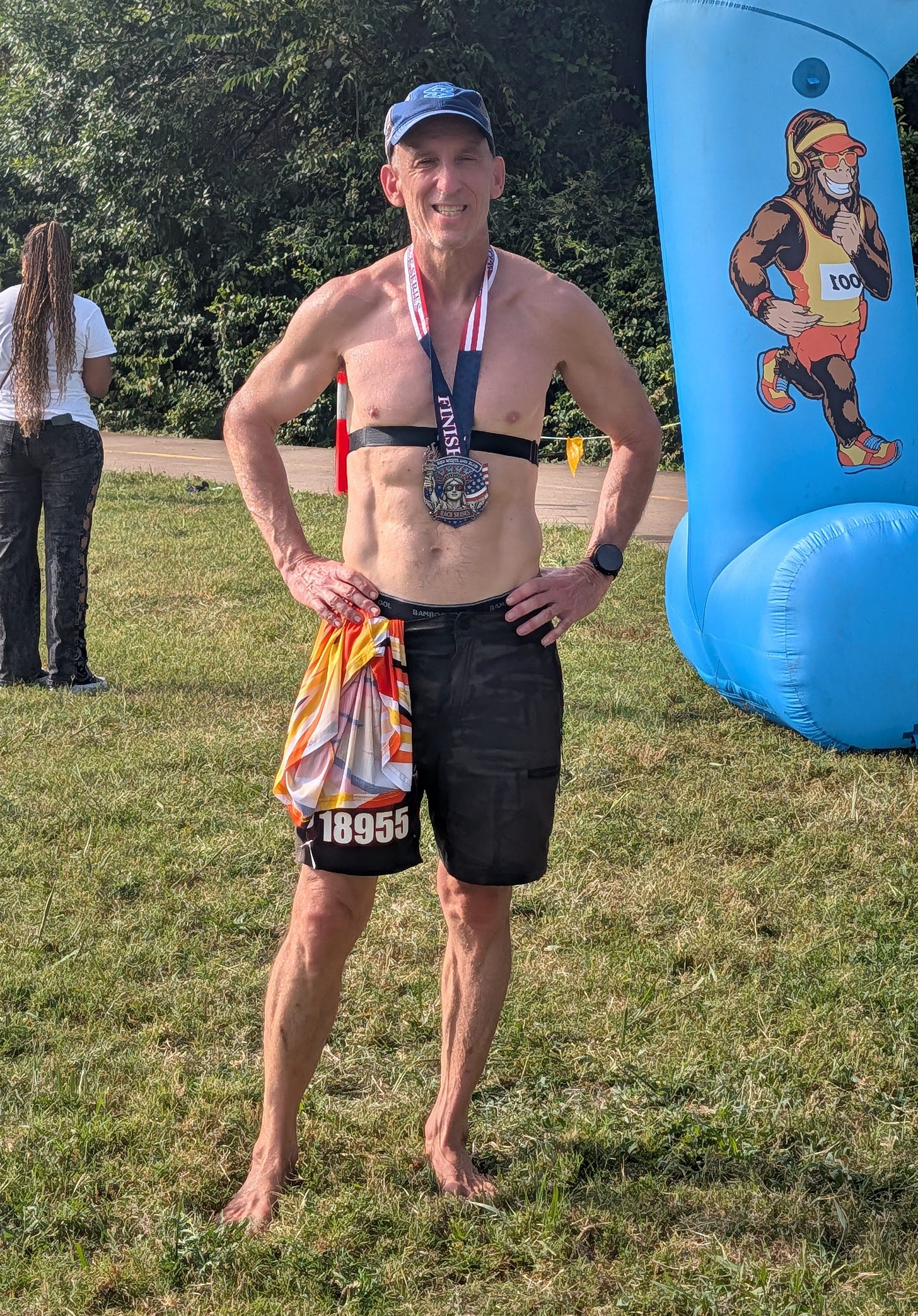
Age group win, but difficult execution in Dallas summer heat

If everyone is different, then what may differentiate a visibly “quirky” personality may well be the willingness to push the envelope more aggressively when it comes to dealing with social expectations. By this point in my journey, I’d built up the “social calluses” necessary to go barefoot in coffee shops, groceries, airports, museums, and even at fancy gala’s. But I’d continued wearing shoes at work, reasoning that work is a team sport and not the place to advertise a person’s peculiar interests. In June, I started a new job, as CFO of a small technology company, and I wanted to make a good impression on colleagues in terms of financial acumen, strategic outlook, and team spirit – not surprise them with unconventional sartorial choices.

But it felt so unnecessary and depressing, after going for my morning run without shoes and then showing up barefoot at my favorite coffee shop, to pull on shoes just to walk across a parking lot into an office building.

So, I decided to experiment with a “hybrid strategy” – to enter the building barefoot, but carrying my shoes in one hand. Now, this posture was meant to call to mind the idea of someone taking a break from shoes, not necessarily breaking with convention. Like when you see women carrying high heels in one hand, after tiring of the uncomfortable work of wearing them all day. I tried out this hybrid strategy when entering the building, stepping out for a coffee break, and then meeting a former colleague for dinner, and the results were even better than I’d hoped for: one person declared she’d like to join me on a barefoot walk, another recalled running barefoot drills back when he was on the high school cross-country team, and one just said, “that’s so cool.”

In a world of conformist pressure, the difference between quirky people and those who try harder to fit in may well be a willingness to take some risk and see what we can get away with.

I’d like to get to 20,000 barefoot miles before age claims my body for the scrap heap, as that would be making a statement to the world about the physical and mental benefits of this practice. But first, let’s see about 17,000.

Thanks for reading! This post is public so feel free to share it.

Share


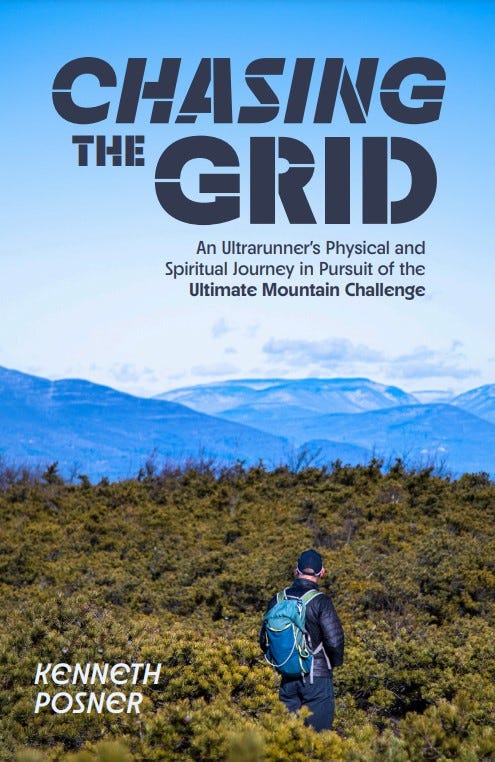
Chasing the Grid is available on Amazon!
16,000 Miles Barefoot

15,000 Miles Barefoot

Working in a bank a few years back, I saw that everything important was documented, allowing auditors to review decisions for compliance with policies and procedures.  Which begged the question — why wasn’t I documenting the important things in my life?

So, I opened a spreadsheet in Excel and created a training log.  The first entry dates back to February 15, 2013.  Evidently I ran 9 miles, although there is no indication of where or why or how it went.

Back then business travel took me to Florida from time to time, and I’d sometimes take advantage of a nearby beach to run barefoot – just for the novelty.  On July 10, 2013, I ran 5 miles barefoot on Vero Beach.  The following February, I ran 6 miles in Boca Raton.  The hard-packed sand felt frigid underfoot.

I don’t remember when I read Born to Run, but Chris MacDougall’s warning that shoes predispose us to injury struck a nerve.  Since I was struggling with running-related injuries at the time, I decided to conduct an experiment, although instead of running, I decided to try a barefoot hike.  On August 25, 2015, while on vacation in the Italian Alps, I walked up a nearby ski slope, and what I remember most was how the cows stared at me in wonder, as if they’d never seen a human without shoes before.  Two weeks later, back home in New York, I repeated the experiment on Peekamoose Mountain in the Catskills.

And then I went off the deep end.

Roughly one year later, I reached my 1,000th mile of barefoot training, comprised of running, hiking, and walking.  Speaking of documentation, this quirky accomplishment inspired me to write up a blog post in which I explained that barefoot running had been an “interesting experiment” based on the “calculated bet” that more natural form would prolong my useful running life.  I admitted to some surprise at the feeling of light-footedness, the exhilaration, the sense of a more direct connection with nature.  Even so, I had no idea where this odd journey was going to take me.

When I reached my 2,000th barefoot mile, I published a second blog post, and thereafter it became a habit upon reaching the next thousand-mile-marker to write about what I’d done and learned.  On June 22, 2025, I reached my 14,000th mile but skipped the report as I was busy — so here is my latest update, with the barefoot odometer now at 15,000 miles. Continue reading “15,000 Miles Barefoot”

15,000 Miles Barefoot

Winds

It was a cool morning in early November.  I was following a ridgeline in Harriman State Park, moving through open forest and across grassy knolls, sauntering easy and cheerful as the morning sun set the oak forest glowing in colors of tawny ocher and burnt orange — when suddenly the wind picked up.  It rolled in from the west without warning, jostled treetops, roared like a jet plane.  I zipped my jacket tighter, recognizing in the rough gusts the angry sound of winter.

That evening, I was chatting with my friend Stash Rusin, who’d recently climbed Cornell Mountain in the Catskills on a cold fall day, the sky overcast, the ground at elevation already dusted with snow as light as sugar frosting, although surprisingly no ice.  From the summit, he looked south, but a squall had pushed into the valley and blocked the mountain views.  He made his way through the woods to the north side of the summit and found himself in the middle of a maelstrom.  “The winds were 30-40-50 mph,” he recalled.  They made him feel “so excited – so alive.” Continue reading “Winds”

Winds

Hybrid Navigation Approach for the Catskills Off-trail Regime

Old-schoolers insist on carrying maps.  Paper maps.

I used to carry paper maps.  Back in my Army Ranger days, some 40 years ago – always.  Of course, that was before GPS.  Since then — not so much.  In August 2021, I was thru-hiking the John Muir Trail, and I distinctly remember reaching into my pocket for the map, but it wasn’t there.  I’d stopped at Woods Creek to filter water and placed the map on a rock to keep it from getting wet.  This was two miles back.  I was so upset when I realized I’d have to go back to retrieve it.

Today, I rarely carry paper maps, and never in the Catskill Mountains, which lie in New York’s Hudson Valley, an area I know intimately.  Instead, I use technology.  That’s not to say I’m ignorant of the risks. The more you stare at a compass needle or screen, the less you look around and think. David Barrie, a fellow of the Royal Institute of Navigation, describes GPS as one of the great achievements of modern times. But then he comments on what the technology is doing to us, now that we’ve become dependent: “Though we may not realize it, we are fast becoming navigational idiots.” Continue reading “Hybrid Navigation Approach for the Catskills Off-trail Regime”

Hybrid Navigation Approach for the Catskills Off-trail Regime

What if Chris McDougall was Right?

When Born to Run was published in 2009, it caused a stir.  To many people, McDougall’s thesis rang true – that running is a natural part of being human and so is going barefoot.  More controversial was his claim that modern running shoes predispose us to chronic injury.  The big heels, abundant cushion, and structural features designed to control the motion of the foot create a risk, McDougall argued – that they alter our natural gait.  Why else would 70% or more of runners get injured every year, for participating in such a natural activity?

You could ask similar questions about other aspects of modern life.  If eating is such a natural activity, then why are 74% of Americans overweight or obese?

Clearly, with technology we can solve for things like comfort and taste, since these attributes drive real-time feedback through sales.  But that doesn’t mean we understand what drives health.  Or the hidden costs and unintended consequences of having too much technology.

When Born to Run first came out, people saw barefoot running as primal.  They understood intuitively that going barefoot offered connection and intensity, qualities which modern life sometimes lacks.  The book was the catalyst for a boom in so-called minimalist footwear – lightweight running shoes with thin soles that let you feel the ground –  sandals, like those worn by the Tarahumara Indians whom McDougall profiled in his book — or the funny-looking Vibram Five-Fingers with pockets for each toe.  Some people unlaced their shoes and tried running on the unprotected soles of completely naked feet.

The enthusiasm faded quickly.  People found the transition was too hard.  Going from conventional to minimalist to barefoot exacted a toll on body parts that were used to having cushion.  Many suffered injuries.  For podiatrists, this was a windfall. Shoe companies profited by creating minimalist styles, and then they made even more money with by introducing new shoe types with even more technology.

I, too, experimented with minimalist and barefoot running, thanks to Born to Run.  I, too, suffered aches and pains and injuries and other setbacks.  But my path must have been subtly different from those of other people, because I made the transition successfully and have not looked back. 

My new book, Chasing the Grid, chronicles my pursuit of a peak-bagging challenge in New York’s Catskill Mountains, which I undertook both barefoot and in shoes.  The book’s themes include the power of big goals to drive personal development, and how I adopted the philosophical principles of minimalism and transcendentalism as a consequence of spending time in nature.  The story includes my first experiments with going barefoot, starting with the ascent of Peekamoose Mountain in September 2015, after which  I was immediately hooked.

Benefits of Barefoot

What first impressed me about going barefoot was the intensity.   The wild contrast between aggravating surfaces, like gravel and sharp rocks, and pleasurable ones, such as dirt, smooth slabs, and moss. In shoes, the difference is lost.  Moving barefoot, I felt such a powerful connection to the land – as if I had become part of the forest, instead of merely passing through.

I soon recognized that there were physical benefits, too.  Barefoot teaches you to step carefully, since you can’t afford to slip and stumble without shoes.  As such the practice promotes agility and balance.  As we age, slips and falls become an increasingly serious risk, indeed by the time we’re in our 50s, they are the number one cause of emergency room visits – which might well be another costly side-effect of wearing shoes.

When people see me barefoot, they often ask if I am “grounding.”  There’s no question, in my experience, that going barefoot creates a sense of calm.  Some people think this has to do with electrical forces passing through the soles.  Maybe.  I have a simpler theory – that there’s a lot of circuitry in the brain that’s evolved to guide us in motion, which includes directing soft feet on rough terrain.  When these circuits are engaged, you experience the joy of moving naturally — call it “the original human mindfulness.”  When the feet are covered and protected, this circuitry sits idle, making it easier for the brain to get distracted.

The biggest benefit of going barefoot is that it’s so much fun.  Running without shoes is such a blast!  I think McDougall is right – the practice has improved my form.  I can run hard, go fast, cover long distances, and I feel comfortable and loose.  You know how everyone talks about “pounding the pavement”?  That’s not how you feel in bare feet.  Instead, there’s an incredible feeling of light-footedness.

Suggested Approaches

Since that first climb up Peekamoose Mountain ten years ago, I have completed nearly 14,000 miles barefoot, according to my training log.  These miles include 112 races completed barefoot, of which 23 were marathons and ultra’s (longest distance 50 miles).  Plus a lot of barefoot hiking.  I’ve thru-hiked the 211-mile John Muir Trial in California’s High Sierra and climbed 485 mountains barefoot, including many of the Catskill peaks as chronicled in Chasing the Grid, as well as Mt. Whitney (14,500 feet) and Mt. Elbert (14,440 feet), the two highest peaks in the Continental US.  My training log includes hundreds of miles of barefoot walking, which is such a simple, easy way to take a break from hunching behind the laptop, get some air, enjoy a dose of natural motion, sustain the body – even if it’s a 1-mile stroll on the quiet country roads around my house, the sidewalk outside a hotel, or a treadmill.

So what did I do differently from other people who tried and gave up?  And what would I suggest for those interested in exploring?

Start with barefoot walking

Most of the barefoot action in Chasing the Grid consists of walking along the trails in the Catskill Mountains or moving off-trail in the forest.  In my experience, this is a much easier way to start, because walking doesn’t introduce the same kinds of stress as running, yet you immediately benefit from the sense of intensity, connection, and calmness, while improving your agility and balance.  Let your feet guide you as to speed and distance, and carry shoes as back-up for when they’ve had enough.

By the way, you don’t have to start by climbing a mountain.  Go walk barefoot in a local park.  Take a stroll around town.  If someone asks what you’re doing, tell them you’re experimenting with “grounding.”

Understand that barefoot is a slower journey

Whether walking or running, you’ll find that when the terrain gets rough, barefoot gets slow.  When faced with sharp-edged rocks, gravel, and gnarly roots, you’ll have to look around before stepping and then place each foot with care.  On rough trails, you shouldn’t expect to keep up with friends in shoes.  On rocky trails, I’ve been overtaken by grand-parents.

Going barefoot requires patience, and I suspect this is the primary barrier to more widespread adoption.  But don’t we have enough mindless rushing in our modern lives already?  The American Transcendentalist Ralph Waldo Emerson advised people to “adopt the pace of nature – her secret is patience.”  In my experience, barefoot is a great antidote to the state of constant distraction.

Start barefoot running on rough terrain

If you’re a runner and would like to give barefoot a try, make sure to start out slow and short.  Your legs are strong, and you have plenty of cardio, but the barefoot gait is subtly different.  You’ll need strong core engagement.  Your joints, tendons, and ligaments will need to adapt to a slightly different geometry.

Instead of starting on a smooth surface like a track or a grassy field, the better approach is to find a trail with dirt and rocks.  This will teach you the right form.  You’ll learn to watch where you step. To place your feet with care and pick them up.  You may find that you shift to landing on the forefoot instead of landing on the heel — although contrary to popular belief, you can run barefoot either way.  You may find that you run in a bit of a crouch.  A few years back, I picked out a 1-mile circuit on the bridal trail in New York’s Central Park.  The first time out, the best I could do was walk — with a few trotting steps where the coast looked clear.  After a year of practice, I could move across the rocks at an “easy” running pace.  When rain left the soil soft and damp, I could hammer it at threshold pace.

Barefoot is More Fun

When people see me hiking on the trails or running in a race, they give me lots of positive feedback.  They shout “respect” and “next level” and give me fist-bumps.  They call me “warrior” and “badass.”  The kids cry out, “look Mom, a barefoot runner!”  Afterwards, people ask how long I’ve been running like this.  They want to know, did I read Born to Run?

Barefooting is relatively uncommon, but there are a handful of us out there.  Thea Gavin is a self-proclaimed barefoot running grandma and poet who’s completed numerous trail races without shoes.  She’s also crossed the Grand Canyon barefoot.  In one of her posts, she shared her favorite answer when people ask, why barefoot?

“Because it’s more fun.”

Which is what I now say.  Sometimes I elaborate, explaining that “barefoot is for the experience, while shoes are for speed.”

In my opinion, Chris McDougall is right.  We were born to run.

(Thank you, Chris.)


Chasing the Grid is available for pre-order on Amazon!

What if Chris McDougall was Right?

13,000 Miles Barefoot

The 19th-century English art critic John Ruskin saw in mountains a story of endurance and destruction.  All we can know about a mountain is that “it was once greater than it is now, and it only gathers vastness, and still gathers, as it fades into the abyss of the unknown.”

And so it is with people – we endure as long as we can, hoping to leave something behind.

This is my report on reaching 13,000 miles of barefoot walking, hiking, and running, after starting on this unexpected journey some ten years ago. Continue reading “13,000 Miles Barefoot”

13,000 Miles Barefoot

12,000 Miles Barefoot

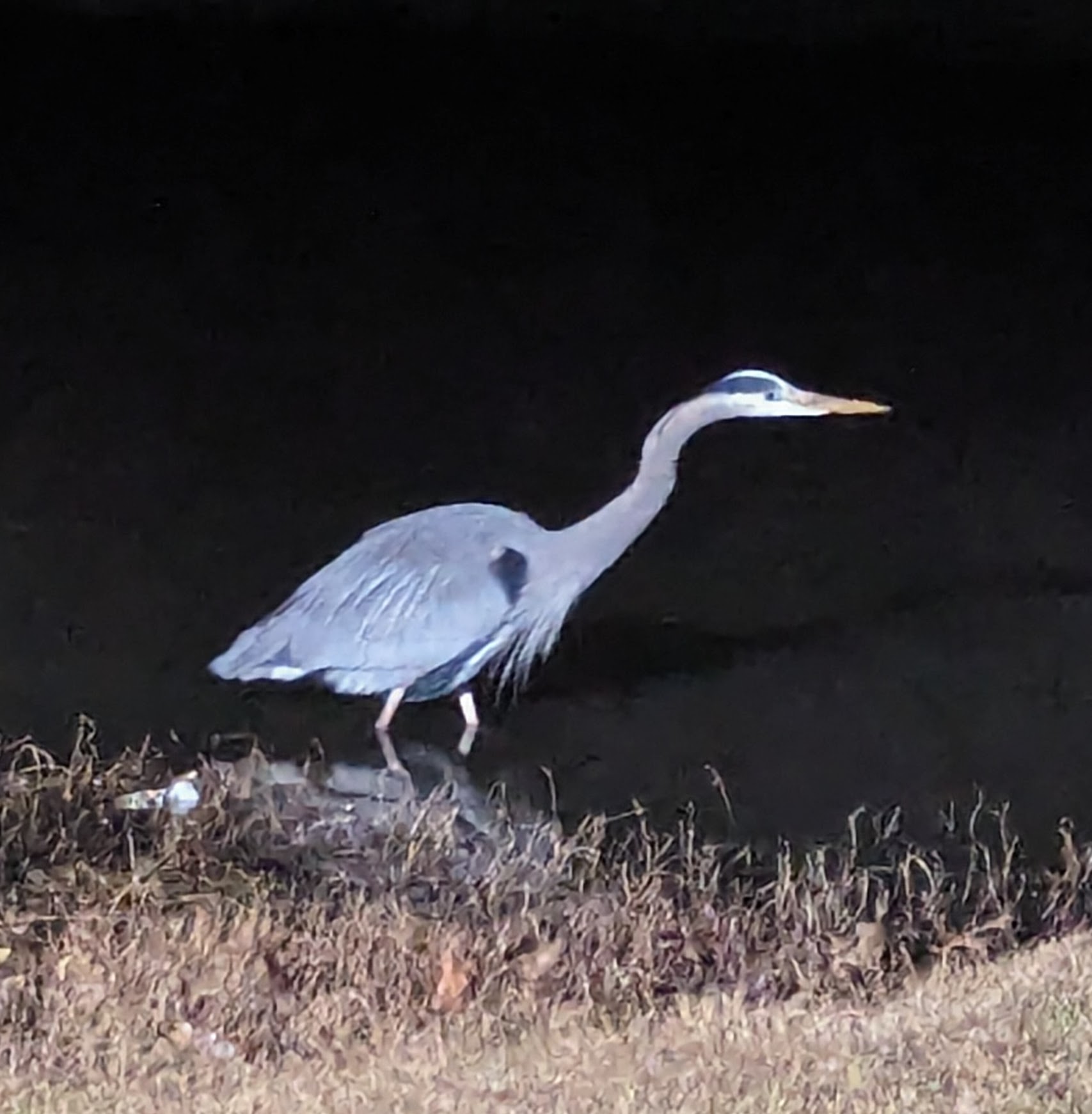
A blue heron looked up from the slimy water and gave me a sly sideways look, just as the digits 11,999 started to roll.  This was during a 1.6-mile barefoot stroll along the paved trails of Andrew Brown Park, Coppell, Texas.  I’m kidding – I don’t actually carry an odometer.  Rather I measure distances using a GPS watch and track my training (walking, hiking, running) in an excel spreadsheet with 16 tabs stored in the cloud.  It’s only in the spreadsheet that I see the world in digits.

original_4b5ea73b-da69-4b73-880a-d7f9b0b45ea7_PXL_20240220_114238233

From Andrew Brown Park it was off to DFW and then there was the long flight back to New York and a dark drive home in the rain.  The next morning, I emerged from boreal gloom onto the open summit of Wittenberg Mountain, where the southern view unfolds before your eyes as you step toward the edge of a flat sandstone ledge – nearly 100 miles of rolling green ridges, spring forests, hazy clouds — and it occurred to me that this, too, will end.  Instead of counting up past 12,000, maybe I should be counting down from (X-12,000) to zero, where X is my total lifetime mileage.  Only, I don’t know X.  Not yet.  But with each year it’s drawing closer.  I can sense it, just like when parachuting at night, how the invisible horizon rises to greet you – that’s when you flex your knees and get ready to roll. Continue reading “12,000 Miles Barefoot”

12,000 Miles Barefoot