Accepting the Universe

john burroughs

In his prime, John Burroughs (1837-1921) was one of the most popular writers in America, with a huge following of readers and relationships with the likes of Theodore Roosevelt, Henry Ford, Thomas Edison, and railroad tycoon E. F. Harriman.  His passion was the birds, forests, rivers, and mountains of his native Catskills, and his writings reveal a scientist’s powers of observation and a nature-lover’s emotional connection to the land.  In 1919, at age 82 he appeared in a short film, shown leading a trio of young children around his Catskill farm.  He points out butterfly, chipmunk, grasshopper, and then the following words appear on the screen:

I am an old man now and have come to the summit of my years.  But in my heart is the joy of youth for I have learned that the essentials of life are near at hand and happiness is his who but opens his eyes to the beauty which lies before him.

Today, these words are remembered by a dedicated group of Burroughs enthusiasts.  But despite his enormous popularity, his hasn’t become a household name like other American naturalists such as Henry David Thoreau or John Muir.  I wondered, why?

Continue reading “Accepting the Universe”

Accepting the Universe

Seeking “Flow”

A recent post on New York Magazine’s website gushed about ultra-marathoners who run in a state of “flow,” a term coined by psychologist Mihaly Csikszentmihalyi to describe the experience of people who are focused, productive, and happy.  According to the author, even casual runners recognize flow as “getting in the zone, cranking out your best stuff, and just being awesomely lost in a creative process.”  Endorphin-induced feelings of accomplishment, focus, and strength produce in the runner a “near-spiritual feeling of Zen and nirvana,” the author asserts.  The premise seems simple:  run, experience flow, and you’ll become happier and more productive.

But if you read Csikszentmihalyi’s work, you’ll find it’s not that easy.

Genuinely happy individuals are few and far between.

— Mihaly Csikszentmihalyi, Flow:  The Psychology of Optimal Experience

Csikszentmihalyi_Mihaly_WEB
Mihaly Csikszentmihalyi.  Source:  Association for Psychological Science

Continue reading “Seeking “Flow””

Seeking “Flow”

The Cry of the Anarcho-Primitivists

In short, all good things are wild and free.

— Henry David Thoreau, Excursions

As someone who enjoys running in the mountains, I find myself drawn to Henry David Thoreau’s vision of nature and wildness.   But when you follow in Thoreau’s path, you discover that his admirers include not only outdoors enthusiasts, but also people with more extreme views.  Consider the philosopher and writer John Zerzan, a self-proclaimed anarchist and primitivist, who criticizes industrial mass society as inherently oppressive and warns us that technology is leading humanity into an increasingly alienated existence, at the same time that it threatens to destroy the natural environment.  To be sure, the anarcho-primitivist movement counts few members, but does that mean it’s safe to ignore Zerzan and his warning?

jz3
Portrait of John Zerzan by Bata Nesah, Belgrade, 2013

Continue reading “The Cry of the Anarcho-Primitivists”

The Cry of the Anarcho-Primitivists

Views from the Blackhead Range

After slipping and sliding on microspikes that didn’t have spikes, I got a pair of the real thing from Catskill Mountain Storehouse and took them out for a 10-mile spin in the Blackhead Range.  The reward for the effort was amazing views in all directions, with recognizable landmarks 20, 30 and perhaps even 90 miles away.

microspikes

Continue reading “Views from the Blackhead Range”

Views from the Blackhead Range

A Fresh Look at the Bhagavad Gita

What use would a 21st century runner find in a 2,000-year old Hindu text?

In search of inspiration, I was recently reading the 19th century American Transcendentalists Ralph Waldo Emerson and Henry David Thoreau, interested in their ideas about nature and self-reliance.  To my surprise, I discovered they were both fans of the Bhagavad Gita, a Hindu scripture which I had read in college but largely forgotten.

After reading the Bhagavad Gita once again, I found its ideas intriguing, consistent with some of my ideas about training, and quite powerful:  learn to still your mind, it advises, and you will discover that misery is unnecessary and action is effortless.

Continue reading “A Fresh Look at the Bhagavad Gita”

A Fresh Look at the Bhagavad Gita

The Eight

The goal was The Nine, a 20-mile loop in New York’s Catskill Mountains that connects nine of the highest peaks, with the special challenge that four of the mountains have no trail, meaning you must bushwhack through the woods using map, compass, and/or GPS.  I had completed The Nine before during the summer, so you might assume I’d feel pretty confident.  But now it was winter.  And the prospects of navigating over rugged terrain, contending with treacherous footing, braving the cold — this was a little daunting.

Continue reading “The Eight”

The Eight

What does “training” mean to you?

For contemporary runners, “training” has a narrow meaning.  Query a runner, and you’ll hear about weekly mileage, long runs, track work.  The media is full of training tips, like exercises to strengthen your hips or advice on how to swing your arms.  Researchers study how training effects aerobic capacity and running economy.  It’s all about speed and distance.

Could there be more to training than this?

That’s what I was wondering when one day I started reading about the Yurok Indians, for whom training (“hohkep”) involves not only running, but also battling the elements, overcoming fear, sweating, fasting, thirsting, going without sleep, and ultimately venturing into the wilderness in search of spiritual powers.  For the Yuroks, training is meant not only to strengthen the body, but also to clarify thinking and focus the will.  It’s a path to self-discipline, self-reliance, and the realization of life’s purpose.  Now I wanted to know, what could we learn from them?

Continue reading “What does “training” mean to you?”

What does “training” mean to you?

Northern Shawangunks Circumnavigation

To learn something new, take the path you took yesterday.

— John Burroughs

The week-long holiday break was time well spent with family, friends, and new acquaintances, relaxing, talking, celebrating, eating, drinking, hiking, and running.

And I was able to fit in one run that was a little longer than average and extra special:  a 42-mile circumnavigation of the Northern Shawangunks, on roads that parallel and then cross over the mountains.  To make life interesting, I brought no food or water.

Continue reading “Northern Shawangunks Circumnavigation”

Northern Shawangunks Circumnavigation

Transcending Emerson

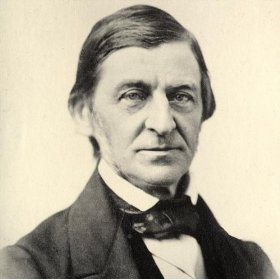
When running in the mountains, I’ve seen many footprints on the paths.  Sometimes I’m reminded of people like John Burroughs, John Muir, and Henry David Thoreau, who wandered the forests during the 19th and early 20th century, experiencing nature as a source of beauty, strength, and inspiration.  There are older tracks, too, for behind these figures lurks another spirit:  Ralph Waldo Emerson (1803-1882), the essayist, lecturer, poet, and father of the American Transcendentalist movement.

I hadn’t read Emerson since college, but one day it occurred to me that there could be a connection between “Transcendentalism” and the sport of ultra-running, if for no other reason that those who run longer distances than the conventional 26.2-mile marathon, are driven in part to do so by a desire to “transcend” perceived limits.  I began to wonder, might ultra-runners be carrying Emerson’s banner, without even knowing it?

emerson

Continue reading “Transcending Emerson”

Transcending Emerson