
Subscribe to continue reading
Subscribe to get access to the rest of this post and other subscriber-only content.
Subscribe to get access to the rest of this post and other subscriber-only content.
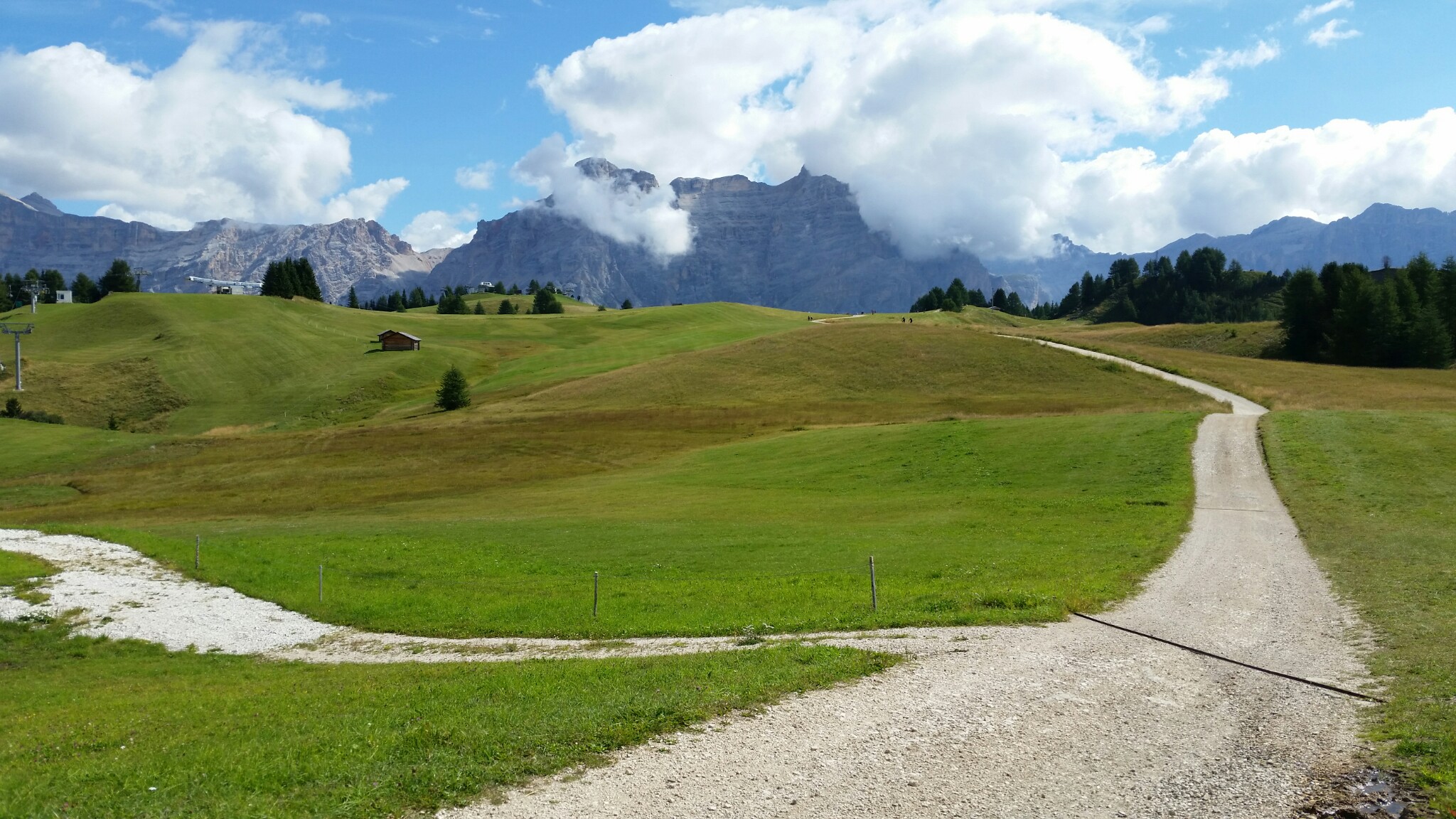
We have reached an interesting fork in the road on our collective journey. One way is a short cut to the promised land. The other way takes us home. Speaking as both a runner and an analyst, I’ve made my choice – how about you?
In his noteworthy 2020 book, Transcend: The New Science of Self-Actualization, Scott Barry Kaufman builds upon the work of pioneering humanist Abraham Maslow (1908-1970) to offer a 21st-century definition of “transcendence,” together with a review of scientific techniques for healing, growth, and self-actualization.
In a previous article,[i] I offered a quantitative definition of transcendence, yet one that was inspired by the 19th-century American Transcendentalist tradition, whose most famous authors include Ralph Waldo Emerson, Walt Whitman, Henry David Thoreau, John Burroughs, and John Muir. Staring with a metaphor for transcendence, I suggested the act of climbing a mountain, crossing a range, reaching the other side. Although to be clear, “transcendence” is not a place you reach. It is not a target end-state. Better to think of it as a vector, consisting of a direction (“up”) and a distance (how far you can climb), except we’re interested in maximizing happiness, rather than elevation. The best way to maximize happiness, according to the American Transcendentalists, is to spend time in nature. This is because the Transcendentalists saw exposure to “wild” environments as necessary for developing spiritual power. Bear in mind the Transcendentalists were writing during the mid- to late-19th century, when America was rapidly industrializing and urbanizing, and the frontier was already starting to close. Continue reading “Transcend What?”
How to Allocate Your Time, Avoid Burn-out, Boost Your Spiritual Power, and (Possibly) Make it to the Other Side
The word “transcend” is derived from the Latin “trans” (across) and “scandere” (to climb). In a sense, the word means to cross a mountain range. Like the scout William Lewis Manly, who found a route across the Panamint Mountains bordering Death Valley, made it to coastal California, and returned with food to save his comrades who were starving. This was in 1849.[1] Go back further in time, and it’s not hard to imagine our hunter-gatherer ancestors staring at a mountain wall, wondering what they would discover on the other side. If they could find a route across.
Today we use the term, “self-transcendence,” in a more general sense, wondering if we could become tomorrow, in some way, better, stronger, happier, and more productive than we are today.
American Transcendentalism was a 19th century philosophical movement which included authors such as Ralph Waldo Emerson, Henry David Thoreau, Walt Whitman, John Burroughs, and John Muir, among others.
The central premise of Transcendentalist philosophy was that people could achieve self-transcendence by drawing spiritual power from nature. In this regard, the Transcendentalists were reacting to problems they perceived in 19th century America, where industrialization and urbanization were spreading rapidly, and the frontier was shrinking and would soon close. Among the clerks, mechanics, priests, professionals, and others who spent their days indoors, Thoreau remarked on what he perceived as “lives of quiet desperation.” Emerson railed against the conformity, timidity, anxiety, and toxic egotism he associated with conventional society. Whitman was blunt – writing under the pen name Mose Velsor, he warned that a sedentary indoors lifestyle devoted purely to mental work was “death.”
Fast forward to today. The Transcendentalists are still remembered, but the popular narrative has shifted. The new philosophy is Transhumanism – the hope that we will transcend our limitations through technology. Transhumanism culminates in the “Singularity” – the point at which humans and machines merge.
Exhibit 1: Search Trends Show Transhumanism Eclipsing Transcendentalism

Source: Google Trends
Continue reading “Transcend This! A Quantitative Interpretation of American Transcendentalism”
In The Practice of The Wild, Beat poet, Zen student, and environmentalist Gary Snyder writes of stepping off the beaten path. This metaphor brings to mind the 19th century Transcendentalist Henry David Thoreau, who advocated for “absolute freedom and wildness,” and who strongly preferred sauntering through the woods to walking the public road. These authors have attracted a large following among nature-lovers, environmentalists, and even anarchists, many of whom crave independence from the constraints of modern society, and some of whom advocate for “rewilding” or a return to ancestral lifestyles. But a close reading of Snyder and Thoreau finds little support for “human wildness,” i.e., a state of being free of social constraint. Rather, they portray wildness as a fleeting experience and use the word more as a metaphor for creativity and originality. Once we understand this point, we find that the key to absolute freedom is not to be found in nature, but rather in the spirit of self-reliance and self-discipline – or put differently, the wild must indeed be “practiced.”

The mission was to complete the remaining twelve peaks needed to scratch the month of May off the Grid, and accordingly I arranged to take a week off of work. But the Rock The Ridge 50-miler left me with a sore ankle, which required a reduction in speed and mileage. In Henry David Thoreau’s essay, “Walking,” he used the word “saunter” to describe the act of sallying forth into the woods, which was for him the adventure and escape of his day, and he likened this daily saunter to the motion of a stream flowing downhill to the ocean:
The saunterer, in the good sense, is no more vagrant than the meandering river, which is all the while sedulously seeking the shortest course to the sea.
— Henry David Thoreau, “Walking”
To complete the Grid for May, I’d need to saunter instead of run — and rather than pushing myself, I’d need to “flow” through the mountains, just like a stream, except I’d be going uphill as well as down…
The east coast naturalist John Burroughs was a passionate observer of the forests, animals, and especially the birds of his native Catskill Mountains. He wrote unabashedly, “I find I see, almost without effort, nearly every bird within sight in the field or wood I pass through (a flit of the wing, a flirt of the tail are enough, though the flickering leaves do all conspire to hide them).”
This was no idle boast. Theodore Roosevelt, himself a great birder, acknowledged Burroughs’ mastery in his 1905 book, Outdoor Pastimes of an American Hunter, where he wrote that “No bird escaped John Burroughs’ eye; no bird note escaped his ear.”
As a Burroughs fan and someone trying to improve his own skills, I was thrilled to discover recently that the master had left behind some advice on the art of observation. Several of his essays contain how-to tips, including “The Art of Seeing Things,” “Sharp Eyes” and The Gospel of Nature, which I’ve tried to summarize in this blog post.
But first a few words of caution, in the form of a caveat Burroughs offered his readers: “I have as little hope of being able to tell the reader how to see things as I would have in trying to tell him how to fall in love or to enjoy his dinner. Either he does or he does not, and that is about all there is of it. Some people seem born with eyes in their heads, and others with buttons or painted marbles.”
The other day the idea occurred to me to total up the numbers in my training log. The calculation showed that I’d recently completed my 1,000th mile barefoot. I reflected on the odyssey that had led to this unexpected milestone, and an account seemed in order.
I picked up a beech leaf and examined it: the leaf was pale yellow in the center and dark brown around the edges. I knew that soon these leaves would carpet the forest floor in layers of beige, but for now, the forest was sparkling in the late October sunlight, and the beech trees glowed like gold.
The scene brought to mind Henry David Thoreau’s 1860 essay “Autumnal Tints,” in which he wrote, “There is just as much beauty visible to us in the landscape as we are prepared to appreciate.” He meant that by diligent study of nature we learn to appreciate its beauty. He summed up the essay by encouraging readers to pay attention to nature:
When you come to observe faithfully the changes of each humblest plant, you find that each has, sooner or later, its peculiar autumnal tint; and if you undertake to make a complete list of the bright tints, it will be nearly as long as a catalogue of the plants in your vicinity.
— Henry David Thoreau, “Autumnal Tints”
And so, this fall, I tried to do as Thoreau suggested, that is, as I hiked, ran, and drove through the eye-shocking autumnal displays in upstate New York’s Shawangunk and Catskill mountains, I tried to “observe faithfully.” Here is my list of the brightest tints….
Henry David Thoreau’s 1862 essay, “Autumnal Tints,” contains colorful descriptions of New England’s fall foliage, including sugar maple and northern red oak, as well as more humble plants like bearded grass and pokeweed. Of special interest to me was Thoreau’s commentary on the red maple (Acer rubrum): he’d noticed that as early as the 25th of September a small red maple on the edge of a meadow had already turned a “far brighter red than the blossoms of any tree in summer” and that the tree was all the “more conspicuous” in contrast with the rest of the forest, which was still green:
Some single trees, wholly bright scarlet, seen against others of their kind still freshly green, or against evergreens, are more memorable than whole groves will be by-and-by. How beautiful, when a whole tree is like one great scarlet fruit full of ripe juices, every leaf, from lowest limb to topmost spire, all aglow, especially if you look toward the sun!
— Henry David Thoreau, Autumnal Tints
In recent weeks I’d spotted solitary maple leaves dotting the trail, splashes of scarlet among the prevailing greens and browns of the forest floor. This Sunday would be the 25th of September — and based on Thoreau’s essay it seemed precisely the right time to go scouting for the season’s first red maples to have fully changed their color. My friend Steve Aaron was looking for a mountain to climb, so I invited him to join me and Odie the Labradoodle for an attempt on Fir Mountain, one of several pathless peaks that rise above the headwaters of the Esopus Creek.

 The Long Brown Path