Smart Grit, Stupid Grit, Old Grit, Young Grit

I’ve logged a lot of miles in Andrew Brown Park, located in the prosperous Dallas suburb of Coppell, as the smooth paved trails are easy on the feet.  Earlier this week, I showed up for a session of high-intensity interval training — specifically, a drill called “Yasso Splits,” which consists of 10 half-mile intervals at a fast pace, with ¼ mile recovery intervals in between.  Developed by Bart Yasso, the “mayor of running” and Runner’s World’s former Chief Running Officer, Yasso Splits force you to sustain an elevated heart rate, which is thought to be good training for a faster marathon.  To get through ten of these intervals takes a bit of grit.

I’ve been doing high-intensity interval training for almost 20 years, and Yasso Splits are one of my favorite workouts, although given the intensity, I approach them with a conservative attitude and, if I’m being honest, a touch of dread.  On the drive over to the park, I thought through all those years of accumulated experience and weighed them against more recent fitness indicators, and after due deliberation selected a target pace for the intervals of 7:30 per mile, with the recovery intervals to be run at plus-or-minus a 10-minute pace.  Then, after a moment of additional reflection, I decided to cut myself some slack – let’s go with a target range, call it 7:30-8:00 pace, with the goal being to maximize the training benefit, without taking on excessive risk. 

Risk?

Whenever you run, you take on risk.  Especially when running hard. 

The risk consists of the possibility that you might damage muscles, ligaments, tendons, and even bones.  There’s risk that an injury could derail your training goals, for example, spoil your plans for that upcoming race which you’ve been training for so intensely and which means so much to you. 

There’s the risk that injuries could become chronic.  Running is not just a sport, it’s a practice of self-empowerment and transcendence.  If you get sidelined, you’d have to find a new path to pursue these life-affirming goals.

So, when we talk about needing “grit” to complete a tough workout, the real question isn’t pushing through pain — it’s taking on risk.

Continue reading “Smart Grit, Stupid Grit, Old Grit, Young Grit”

Smart Grit, Stupid Grit, Old Grit, Young Grit

Running and Age

We run to learn.  This means that as we age, nothing changes.  Until you are ready to surrender.

Nothing changes because the hunger is still there.  The craving for intensity.  Fear is still there too, because it’s inescapable that physical resilience degrades with time, and injuries heal more slowly, which means the consequences are more severe and the stakes are higher when we head out sleepy-eyed for the morning jog or toe the starting line for an important race or disappear into the wilderness in pursuit of enlightenment. Continue reading “Running and Age”

Running and Age

Go Barefoot Cow

Maybe my fate would’ve been different if I’d grown up like a Comanche child – playing naked in the forest until adulthood.  Instead I grew up a modern child.  Living in a city, playing in the alleys.  Always clothed and shod, except for bed and bathtub. 

As a teenager I went to the track and tried to run, but after 15 minutes, my shins would go numb.  I couldn’t lift my toes.  Landed flat and heavy.   “Frustration” might have been my middle name, or maybe it was “persistent” for I clumped along despite the disability, hoping the symptoms would resolve.  I wanted so badly to go fast and run far. 

Continue reading “Go Barefoot Cow”

Go Barefoot Cow

Some Thoughts on Mental Toughness

In recent years I’ve noticed that mental toughness has become a popular meme on social media.  The topic reflects people’s aspirations for meaningful achievement.  It draws energy, too, from concerns about our increasingly sedentary lifestyle.  These concerns are not new.  In his 1963 Sports Illustrated article, “The Soft American,” President John F. Kennedy reminded us of the link between physical fitness and moral courage.  Warned of the deterioration in strength and health already apparent at that time (this was twenty years before the obesity epidemic took off, leaving us today with 74% of Americans overweight or obese).  In 2016 Angela Duckworth argued in her bestseller, Grit, that our society needs more passion and perseverance.  In 2018 ultra-athlete and former SEAL David Goggins published his memoirs, Can’t Hurt Me, rallying followers with his trademark exhortation — “stay hard.”  Three years later, in the aptly-titled The Comfort Crisis, Michael Easter advocated for embracing pain as the key to happiness.  Steve Magness’s new book, Win the Inside Game, which follows on the heels of his 2022 bestseller, Do Hard Things, offers specific mental strategies for toughness, drawn from his experience as an Olympic coach and performance scientist, which contrast with the traditional narrative of machismo.

My new book, Chasing the Grid, should serve as a useful case study for many of these themes.  The story follows my adventures in the Catskill Mountains while working on a big peak-bagging project (it comprised over 400 separate ascents).  In addition to the mileage and elevation gain, I had to overcome the challenges of terrain, weather, fatigue, injury, and age.  The narrative showcases mental techniques that helped me execute against my goals.  It also shares my mistakes and frustrations. Continue reading “Some Thoughts on Mental Toughness”

Some Thoughts on Mental Toughness

Ru’s 2024 SRT 70 miler recap

Guest post by Ru Shodai, 2024 SRT 70-mile competitor who completed 57.8 miles

I remember reading about the SRT race, years ago, and learning about the barefoot category, and wanting terribly to do it. Back then I could barely do a 10k on trails, but it was placed on my bucket list. After successfully racing North Face Endurance Challenge’s 10k race at Bear Mountain for several years, I was ready to sign up for the half, when it abruptly discontinued.  Fortunately, I had discovered Red Newt Racing’s Breakneck Point Trail Runs. And ran the toughest half of my life. And was hooked. Ran that half several times, and rediscovered the SRT. In 2022, I  signed up for the half. I had no idea what I was in for, but it was an amazing journey. I missed a turn, added 5 miles, stumbled into the finish, legs completely shot, and realized I had just done 18 miles on the trails. In sandals. I got my barefoot pin! I immediately wanted to sign up for the 30 miler. 

Continue reading “Ru’s 2024 SRT 70 miler recap”

Ru’s 2024 SRT 70 miler recap

13,000 Miles Barefoot

The 19th-century English art critic John Ruskin saw in mountains a story of endurance and destruction.  All we can know about a mountain is that “it was once greater than it is now, and it only gathers vastness, and still gathers, as it fades into the abyss of the unknown.”

And so it is with people – we endure as long as we can, hoping to leave something behind.

This is my report on reaching 13,000 miles of barefoot walking, hiking, and running, after starting on this unexpected journey some ten years ago. Continue reading “13,000 Miles Barefoot”

13,000 Miles Barefoot

Kate Shumeyko’s 70-mile SRT Race Report

Guest post by Kate Shumeyko, who ran the SRT 70-miler in 25 hour 51 minutes, winning the women’s division, after two prior unsuccessful attempts.  Of note, Kate is the only person to have won the coveted tomahawk first place award on three different occasions:  in addition to this year’s 70-miler, she won the 30-miler division in 2019 and 2023.

Third time’s a charm- I finally finished the SRT 70 miler! I’m still wrapping my head around it, processing the success and also going over what I could still change for next time.  I had 2 prior attempts – one DNF by choice in 2021 and one DNF by missing the cutoff time at checkpoint 4 in 2022- both at the 56 mile mark. I have also run the 30 miler twice. I’ve trained on the course and have run the whole distance in pieces but had yet to complete the full trail in one shot. I was nervous but also felt a sense of calm this round. I was excited and I was mentally ready. Continue reading “Kate Shumeyko’s 70-mile SRT Race Report”

Kate Shumeyko’s 70-mile SRT Race Report

12,000 Miles Barefoot

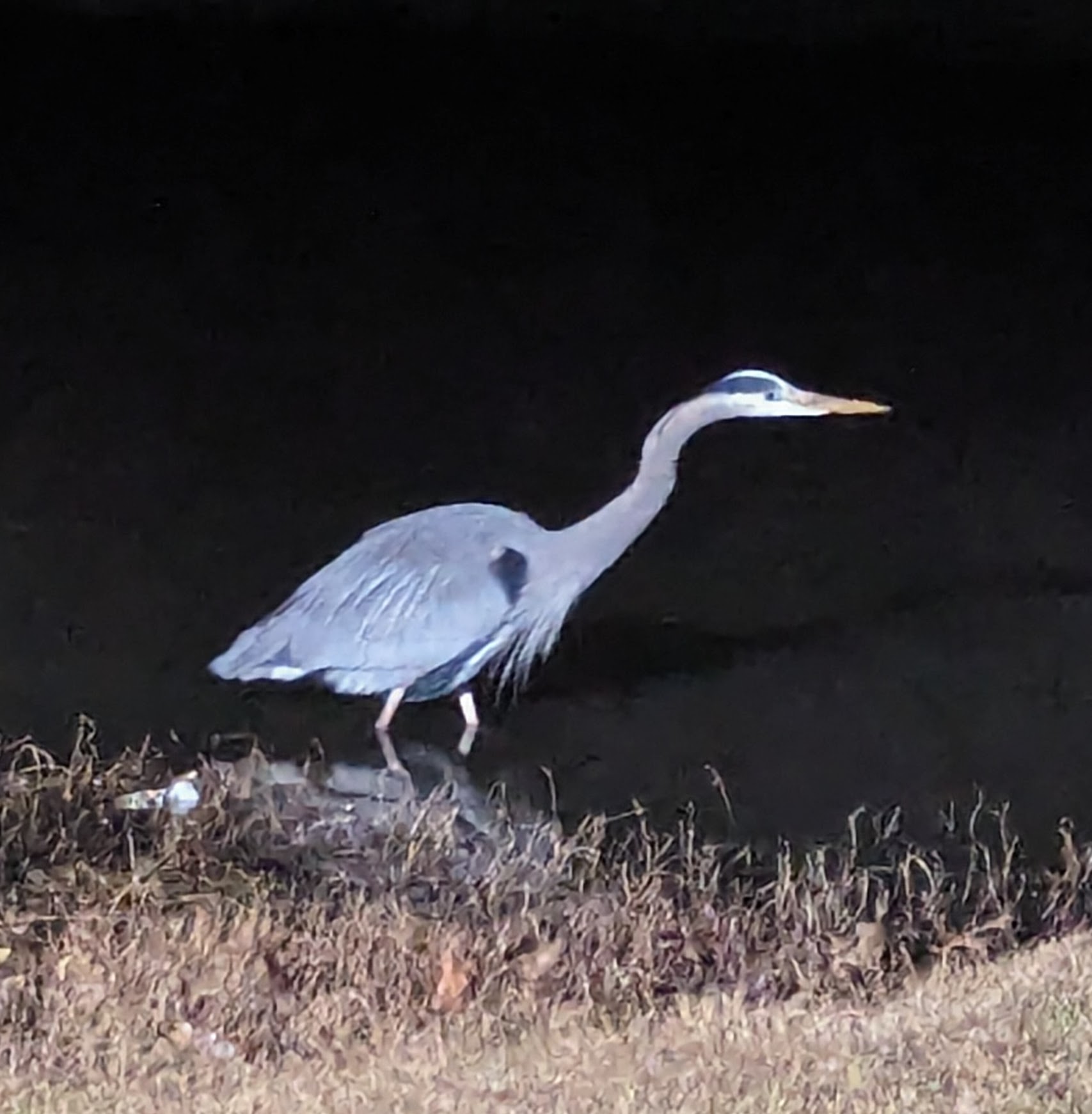
A blue heron looked up from the slimy water and gave me a sly sideways look, just as the digits 11,999 started to roll.  This was during a 1.6-mile barefoot stroll along the paved trails of Andrew Brown Park, Coppell, Texas.  I’m kidding – I don’t actually carry an odometer.  Rather I measure distances using a GPS watch and track my training (walking, hiking, running) in an excel spreadsheet with 16 tabs stored in the cloud.  It’s only in the spreadsheet that I see the world in digits.

original_4b5ea73b-da69-4b73-880a-d7f9b0b45ea7_PXL_20240220_114238233

From Andrew Brown Park it was off to DFW and then there was the long flight back to New York and a dark drive home in the rain.  The next morning, I emerged from boreal gloom onto the open summit of Wittenberg Mountain, where the southern view unfolds before your eyes as you step toward the edge of a flat sandstone ledge – nearly 100 miles of rolling green ridges, spring forests, hazy clouds — and it occurred to me that this, too, will end.  Instead of counting up past 12,000, maybe I should be counting down from (X-12,000) to zero, where X is my total lifetime mileage.  Only, I don’t know X.  Not yet.  But with each year it’s drawing closer.  I can sense it, just like when parachuting at night, how the invisible horizon rises to greet you – that’s when you flex your knees and get ready to roll. Continue reading “12,000 Miles Barefoot”

12,000 Miles Barefoot