Everyone wants to be in charge, but there are so many distractions
The Ashokan Reservoir is an important component of the New York City water supply. Lying at the base of the Catskill Mountains, the reservoir is 12 miles long, covers 8,300 acres, and has a maximum capacity of 123 billion gallons of water. Reservoir Year: A Walk of Days is Nina Shengold’s account of a unique project during which she visited the Ashokan Reservoir for a daily walk along the shore, with a special commitment to complete a full year’s worth of walks without skipping a single day. In her daily notes, which range from a single sentence to a few pages, she brings the reservoir to life. She recounts the drama of sky and water. Shares the antics of crows, deer, squirrels, bears, herons, and bald eagles. Relates the interactions with strangers she encountered and with friends and family members who sometimes walked with her during this improbable quest. Improbable, for a 60-year-old single mother with bills to pay and aging parents who need her help and many other obligations.
Nina is a talented writer and in particular a master of metaphor, which makes the book a stimulating read. On a spring-time visit, the cloud-striped sky evokes a blue-and-white lava lamp. The atmosphere beneath a brewing thunderhead feels “dead-air, locker room humid.” A sunset morphs from pastel “to flamingo, persimmon, tandoori salmon, hot lava.” It’s clear in writing up this account she had fun.
But beneath the engaging prose, a serious question lurks. Why? Why, if you didn’t have to walk a dog, would you visit the same place on every single day for a full year?
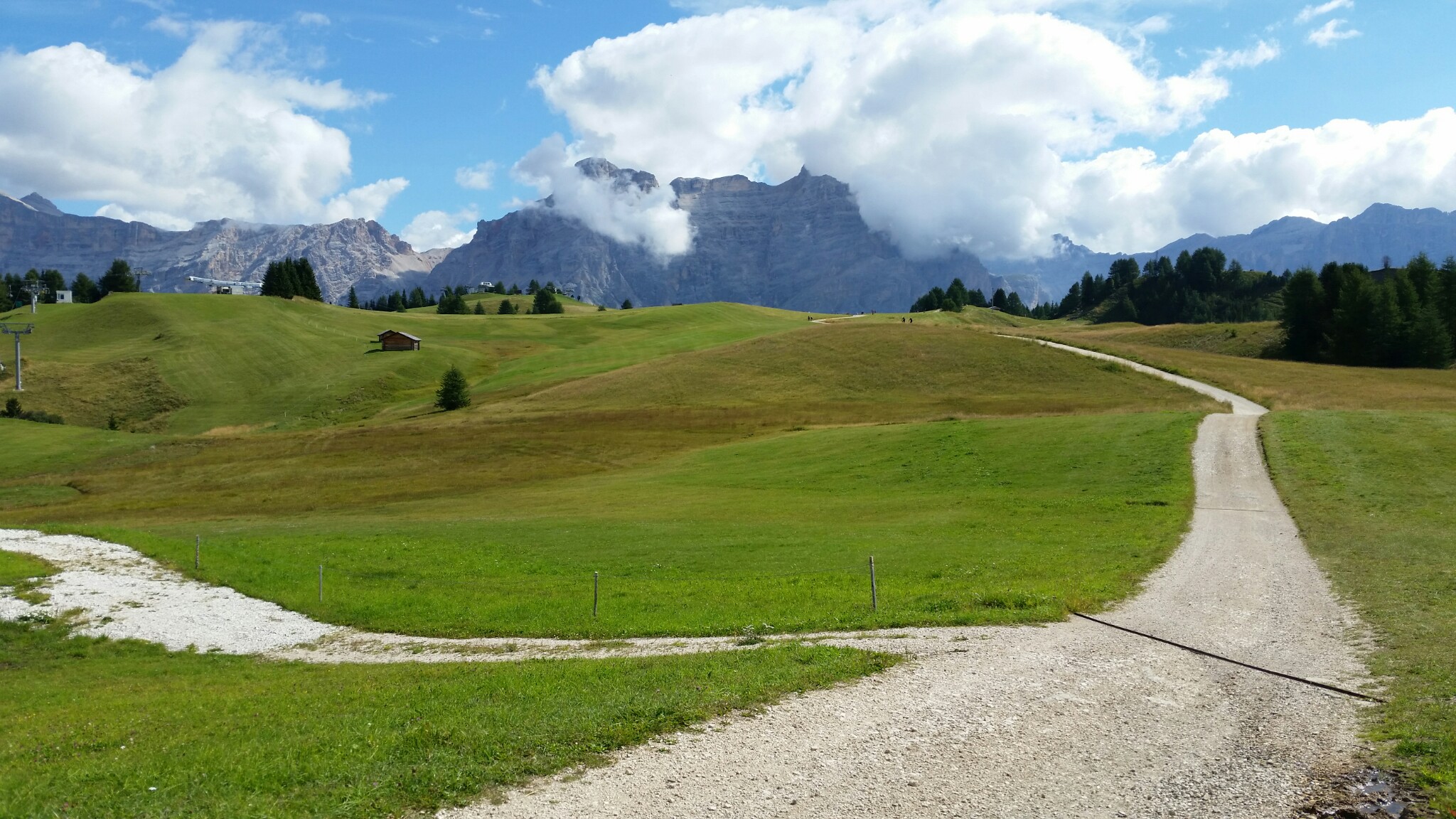
We have reached an interesting fork in the road on our collective journey. One way is a short cut to the promised land. The other way takes us home. Speaking as both a runner and an analyst, I’ve made my choice – how about you?
Bunny is a writer and jazz singer who’s built a following on Instagram (@bunny_fitzgerald) and Patreon (patreon.com/bunnyfitzgerald) by chronicling her barefoot lifestyle. Her new book, “The Barefoot Manifesto: How I stopped Wearing Shoes and Started Living,” is a deeply personal, lyrical, and forceful account of why she walks this interesting path. But the book is not a practical guide to foot health. Nor is it about style. Rather, Bunny positions the manifesto as a “book about freedom” with the key themes being personal sovereignty and the primacy of sensation.
Twist the throttle to the left, then push it forward. This engages the afterburner. Jet fuel is injected into a combustor located behind the turbine, significantly increasing thrust, the effect of which is visible as a 30-foot cone of blue fire and sometimes sparkles of flame called “shock diamonds.” Soon you’re topping out at Mach 1.8 (1,000 mph at sea level).
That’s how easy it is to go fast.
And this matters, because it’s not just Tom Cruise who feels the need for speed.
Old-schoolers insist on carrying maps. Paper maps.
I used to carry paper maps. Back in my Army Ranger days, some 40 years ago – always. Of course, that was before GPS. Since then — not so much. In August 2021, I was thru-hiking the John Muir Trail, and I distinctly remember reaching into my pocket for the map, but it wasn’t there. I’d stopped at Woods Creek to filter water and placed the map on a rock to keep it from getting wet. This was two miles back. I was so upset when I realized I’d have to go back to retrieve it.
Today, I rarely carry paper maps, and never in the Catskill Mountains, which lie in New York’s Hudson Valley, an area I know intimately. Instead, I use technology. That’s not to say I’m ignorant of the risks. The more you stare at a compass needle or screen, the less you look around and think. David Barrie, a fellow of the Royal Institute of Navigation, describes GPS as one of the great achievements of modern times. But then he comments on what the technology is doing to us, now that we’ve become dependent: “Though we may not realize it, we are fast becoming navigational idiots.” Continue reading “Hybrid Navigation Approach for the Catskills Off-trail Regime”→
Bump — wheels down, LAX, right on schedule. Baggage secured, I’m on the bus to the rental car center and then barreling along the freeway to my cousin’s home to hang with his family for ten days. And climb some mountains, too – why, I have a long list of them.
From the highway, I see big peaks floating to the north. Faint silhouettes cloaked by haze and ocean mist. Baking in the late afternoon glare…
The Memorial Day weekend was off to a good start, for the most part. Following a 4-hour drive to Vermont, I woke up the next morning and coughed up some phlegm, the tail effect of a chest cold the week before. Got dressed, walked toward the starting line, felt a back spasm, probably the result of sitting in the Jeep for so long the day before. A couple of Ibuprofen left me a little looser, and feeling excited if unsure, I headed out on the Infinitus 9-mile trail race with some gusto. Although a tight hamstring, the result of an injury the month before, limited my speed on the uphills. While a sea of mud limited my speed on the downhills. The last mile was relatively clear, and here finally I ran hard, and after receiving a large finisher’s medal and a handshake from the organizer, Andy Weinberg, I limped back to the Jeep for an even longer drive: 6 hours to New Jersey, where the next day I was going to take on a 1.6-mile open water swim in the Navesink River… Continue reading “Panic!”→
We run to learn. This means that as we age, nothing changes. Until you are ready to surrender.
Nothing changes because the hunger is still there. The craving for intensity. Fear is still there too, because it’s inescapable that physical resilience degrades with time, and injuries heal more slowly, which means the consequences are more severe and the stakes are higher when we head out sleepy-eyed for the morning jog or toe the starting line for an important race or disappear into the wilderness in pursuit of enlightenment. Continue reading “Running and Age”→
Maybe my fate would’ve been different if I’d grown up like a Comanche child – playing naked in the forest until adulthood. Instead I grew up a modern child. Living in a city, playing in the alleys. Always clothed and shod, except for bed and bathtub.
As a teenager I went to the track and tried to run, but after 15 minutes, my shins would go numb. I couldn’t lift my toes. Landed flat and heavy. “Frustration” might have been my middle name, or maybe it was “persistent” for I clumped along despite the disability, hoping the symptoms would resolve. I wanted so badly to go fast and run far.
When Born to Run was published in 2009, it caused a stir. To many people, McDougall’s thesis rang true – that running is a natural part of being human and so is going barefoot. More controversial was his claim that modern running shoes predispose us to chronic injury. The big heels, abundant cushion, and structural features designed to control the motion of the foot create a risk, McDougall argued – that they alter our natural gait. Why else would 70% or more of runners get injured every year, for participating in such a natural activity?
You could ask similar questions about other aspects of modern life. If eating is such a natural activity, then why are 74% of Americans overweight or obese?
Clearly, with technology we can solve for things like comfort and taste, since these attributes drive real-time feedback through sales. But that doesn’t mean we understand what drives health. Or the hidden costs and unintended consequences of having too much technology.
When Born to Run first came out, people saw barefoot running as primal. They understood intuitively that going barefoot offered connection and intensity, qualities which modern life sometimes lacks. The book was the catalyst for a boom in so-called minimalist footwear – lightweight running shoes with thin soles that let you feel the ground – sandals, like those worn by the Tarahumara Indians whom McDougall profiled in his book — or the funny-looking Vibram Five-Fingers with pockets for each toe. Some people unlaced their shoes and tried running on the unprotected soles of completely naked feet.
The enthusiasm faded quickly. People found the transition was too hard. Going from conventional to minimalist to barefoot exacted a toll on body parts that were used to having cushion. Many suffered injuries. For podiatrists, this was a windfall. Shoe companies profited by creating minimalist styles, and then they made even more money with by introducing new shoe types with even more technology.
I, too, experimented with minimalist and barefoot running, thanks to Born to Run. I, too, suffered aches and pains and injuries and other setbacks. But my path must have been subtly different from those of other people, because I made the transition successfully and have not looked back.
My new book, Chasing the Grid, chronicles my pursuit of a peak-bagging challenge in New York’s Catskill Mountains, which I undertook both barefoot and in shoes. The book’s themes include the power of big goals to drive personal development, and how I adopted the philosophical principles of minimalism and transcendentalism as a consequence of spending time in nature. The story includes my first experiments with going barefoot, starting with the ascent of Peekamoose Mountain in September 2015, after which I was immediately hooked.
Benefits of Barefoot
What first impressed me about going barefoot was the intensity. The wild contrast between aggravating surfaces, like gravel and sharp rocks, and pleasurable ones, such as dirt, smooth slabs, and moss. In shoes, the difference is lost. Moving barefoot, I felt such a powerful connection to the land – as if I had become part of the forest, instead of merely passing through.
I soon recognized that there were physical benefits, too. Barefoot teaches you to step carefully, since you can’t afford to slip and stumble without shoes. As such the practice promotes agility and balance. As we age, slips and falls become an increasingly serious risk, indeed by the time we’re in our 50s, they are the number one cause of emergency room visits – which might well be another costly side-effect of wearing shoes.
When people see me barefoot, they often ask if I am “grounding.” There’s no question, in my experience, that going barefoot creates a sense of calm. Some people think this has to do with electrical forces passing through the soles. Maybe. I have a simpler theory – that there’s a lot of circuitry in the brain that’s evolved to guide us in motion, which includes directing soft feet on rough terrain. When these circuits are engaged, you experience the joy of moving naturally — call it “the original human mindfulness.” When the feet are covered and protected, this circuitry sits idle, making it easier for the brain to get distracted.
The biggest benefit of going barefoot is that it’s so much fun. Running without shoes is such a blast! I think McDougall is right – the practice has improved my form. I can run hard, go fast, cover long distances, and I feel comfortable and loose. You know how everyone talks about “pounding the pavement”? That’s not how you feel in bare feet. Instead, there’s an incredible feeling of light-footedness.
Suggested Approaches
Since that first climb up Peekamoose Mountain ten years ago, I have completed nearly 14,000 miles barefoot, according to my training log. These miles include 112 races completed barefoot, of which 23 were marathons and ultra’s (longest distance 50 miles). Plus a lot of barefoot hiking. I’ve thru-hiked the 211-mile John Muir Trial in California’s High Sierra and climbed 485 mountains barefoot, including many of the Catskill peaks as chronicled in Chasing the Grid, as well as Mt. Whitney (14,500 feet) and Mt. Elbert (14,440 feet), the two highest peaks in the Continental US. My training log includes hundreds of miles of barefoot walking, which is such a simple, easy way to take a break from hunching behind the laptop, get some air, enjoy a dose of natural motion, sustain the body – even if it’s a 1-mile stroll on the quiet country roads around my house, the sidewalk outside a hotel, or a treadmill.
So what did I do differently from other people who tried and gave up? And what would I suggest for those interested in exploring?
Start with barefoot walking
Most of the barefoot action in Chasing the Grid consists of walking along the trails in the Catskill Mountains or moving off-trail in the forest. In my experience, this is a much easier way to start, because walking doesn’t introduce the same kinds of stress as running, yet you immediately benefit from the sense of intensity, connection, and calmness, while improving your agility and balance. Let your feet guide you as to speed and distance, and carry shoes as back-up for when they’ve had enough.
By the way, you don’t have to start by climbing a mountain. Go walk barefoot in a local park. Take a stroll around town. If someone asks what you’re doing, tell them you’re experimenting with “grounding.”
Understand that barefoot is a slower journey
Whether walking or running, you’ll find that when the terrain gets rough, barefoot gets slow. When faced with sharp-edged rocks, gravel, and gnarly roots, you’ll have to look around before stepping and then place each foot with care. On rough trails, you shouldn’t expect to keep up with friends in shoes. On rocky trails, I’ve been overtaken by grand-parents.
Going barefoot requires patience, and I suspect this is the primary barrier to more widespread adoption. But don’t we have enough mindless rushing in our modern lives already? The American Transcendentalist Ralph Waldo Emerson advised people to “adopt the pace of nature – her secret is patience.” In my experience, barefoot is a great antidote to the state of constant distraction.
Start barefoot running on rough terrain
If you’re a runner and would like to give barefoot a try, make sure to start out slow and short. Your legs are strong, and you have plenty of cardio, but the barefoot gait is subtly different. You’ll need strong core engagement. Your joints, tendons, and ligaments will need to adapt to a slightly different geometry.
Instead of starting on a smooth surface like a track or a grassy field, the better approach is to find a trail with dirt and rocks. This will teach you the right form. You’ll learn to watch where you step. To place your feet with care and pick them up. You may find that you shift to landing on the forefoot instead of landing on the heel — although contrary to popular belief, you can run barefoot either way. You may find that you run in a bit of a crouch. A few years back, I picked out a 1-mile circuit on the bridal trail in New York’s Central Park. The first time out, the best I could do was walk — with a few trotting steps where the coast looked clear. After a year of practice, I could move across the rocks at an “easy” running pace. When rain left the soil soft and damp, I could hammer it at threshold pace.
Barefoot is More Fun
When people see me hiking on the trails or running in a race, they give me lots of positive feedback. They shout “respect” and “next level” and give me fist-bumps. They call me “warrior” and “badass.” The kids cry out, “look Mom, a barefoot runner!” Afterwards, people ask how long I’ve been running like this. They want to know, did I read Born to Run?
Barefooting is relatively uncommon, but there are a handful of us out there. Thea Gavin is a self-proclaimed barefoot running grandma and poet who’s completed numerous trail races without shoes. She’s also crossed the Grand Canyon barefoot. In one of her posts, she shared her favorite answer when people ask, why barefoot?
“Because it’s more fun.”
Which is what I now say. Sometimes I elaborate, explaining that “barefoot is for the experience, while shoes are for speed.”
In my opinion, Chris McDougall is right. We were born to run.