Transcending Emerson

When running in the mountains, I’ve seen many footprints on the paths.  Sometimes I’m reminded of people like John Burroughs, John Muir, and Henry David Thoreau, who wandered the forests during the 19th and early 20th century, experiencing nature as a source of beauty, strength, and inspiration.  There are older tracks, too, for behind these figures lurks another spirit:  Ralph Waldo Emerson (1803-1882), the essayist, lecturer, poet, and father of the American Transcendentalist movement.

I hadn’t read Emerson since college, but one day it occurred to me that there could be a connection between “Transcendentalism” and the sport of ultra-running, if for no other reason that those who run longer distances than the conventional 26.2-mile marathon, are driven in part to do so by a desire to “transcend” perceived limits.  I began to wonder, might ultra-runners be carrying Emerson’s banner, without even knowing it?
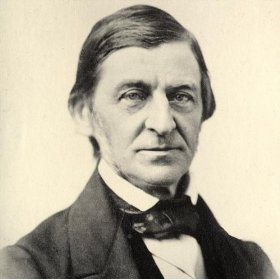
emerson

Continue reading “Transcending Emerson”

Transcending Emerson

The Spiritual Life of Long-Distance Runners

In a recent New Yorker article, Adam Alter explores the psychological and spiritual motivations of ultra-marathon runners, that is, people who run distances longer than the conventional marathon (26.2 miles) in races that sometimes last hundreds and even thousands of miles.  Alter, who is associate professor of marketing at the Leonard Stern School of Business, where he also has an affiliated appointment in the psychology department, asks the “obvious question,”  why would someone choose to do this?

But the really interesting question is, why would professor Alter want to know?

After all, the questions we ask reveal a lot about who we are and what we seek.

Continue reading “The Spiritual Life of Long-Distance Runners”

The Spiritual Life of Long-Distance Runners

What We Think About When We Run: Murakami

(An updated version of this post was published in The New Rambler)

“What are they thinking?”

In a recent New Yorker article, Kathryn Schulz ponders the 50,000 participants in the New York City Marathon, curious about what running could teach us of the “deep strangeness” of the human brain.  Her essay discusses research studies and books about running, including Haruki Murakami’s memoir, What I Talk About When I Talk About Running.  Murakami is not only an internationally acclaimed author who’s been lauded as one of the world’s greatest living novelists, he is also a long-distance runner who’s completed thirty marathons including New York City.  I was therefore somewhat surprised when Schulz dismissed his book as doing “very poor justice” to the question of what people think about while running.  She found it “neither inspirational nor aspirational nor descriptive.” Rather, it was “banal.”

It’s true, Murakami’s book has an ordinary tone and lacks the whimsical, surreal touches that grace his fiction.  But in re-reading the book, I found it addressed Schulz’ question head-on, just not in the way she might have expected. You see, when you’re running, what may matter more is what you’re not thinking….

haruki-murakami

Continue reading “What We Think About When We Run: Murakami”

What We Think About When We Run: Murakami

Losing Muir

I read a biography of John Muir, and his passion for nature inspired me to follow his footsteps into the mountains.  But I hesitated.  According to the bio, Muir believed that nature was love, goodness, an expression of God, and never evil, and he was often frustrated by his peers, whom he found materialistic, conformist, and indifferent to nature.  But it seemed to me that logically, if humans are part of nature, then everything we do must be an expression of love and goodness, regardless of our attitude toward the wilderness.

Rocks and waters, etc., are words of God and so are men. We all flow from one fountain Soul. All are expressions of one Love.

— John Muir

Continue reading “Losing Muir”

Losing Muir

Foodies: Chew on This

This Thanksgiving, if you’re spending time with family and friends, that’s fine, but if you consider yourself an “Epicurean,” that is, someone who places a high value on fine food and drink, unfortunately, I can’t find any philosophical justification for your preferences.

thanksgiving-dinner

As a fan of the Stoic philosophers of Ancient Greece and Rome, I thought it was only fair to give the other side a fair hearing, and so I set out recently to learn something about Epicurean philosophy, thinking it would be a study in contrast.  After all, the dictionary defines Stoicism as endurance of pain without complaint, while Epicurean signifies devotion to sensual pleasures, especially fine food and drink.  But I discovered, to my surprise, that this is not the real story.

Continue reading “Foodies: Chew on This”

Foodies: Chew on This

Let’s Put Thoreau in his Proper Place

In a recent post, I compared a weekend spent hiking in the Catskills to Henry David Thoreau’s two-year sojourn at Walden Pond, as both were experiments in natural living and self-sufficiency.

But then my daughter Emeline brought to my attention a recent article entitled “Pond Scum.”  The author, Kathryn Schulz, questions why we still admire the literature of a man who was mean-spirited and a fake.  She summarizes her opinion in no uncertain terms:

Continue reading “Let’s Put Thoreau in his Proper Place”

Let’s Put Thoreau in his Proper Place

Walden, in a Weekend

Friday evening, my nephew Nathaniel stopped by to visit during college break.  Over dinner he mentioned a course he was taking on Henry David Thoreau, the 19th century transcendentalist who had spent two years living in a cabin by the side of Walden Pond.  I had read Walden recently and appreciated Thoreau’s experiment in self-sufficiency and simple living, as well as his clever style.  I asked Nathaniel, did he think Thoreau was a nature lover or a social recluse?  Then I wondered aloud why Thoreau had left Walden after only two years.

Once dinner was over, and Nathaniel had left, I summoned Odie the Labradoodle, and we piled into the car for a weekend adventure that might, it occurred to me, share some of Thoreau’s values.  For us, self-sufficiency and simplicity would mean hiking barefoot, skipping meals, and sleeping in a lean-to.  However, instead of two years, our trip would last two days.  It would be like Walden, just in miniature.

I went to the woods because I wished to live deliberately, to front only the essential facts of life, and see if I could not learn what it had to teach, and not, when I came to die, discover that I had not lived.

Henry David Thoreau, Walden

Continue reading “Walden, in a Weekend”

Walden, in a Weekend

Another Barefoot Adventure in the Catskills

Behind me the sky had colored with the rising sun, while to the front the southern escarpment of the Catskill Mountains was silhouetted in mauve and cerise.

20150926_063239 20150926_063235

Odie and I were headed north for a minimalist adventure, the objective to climb three mountains, of which one would be a bushwhack.  The protocol for me would be climbing barefoot and descending in LUNA sandals; Odie is always barefoot.   Emboldened by slow but successful ascents of Peekamoose, Hunter, and Southwest Hunter, I had developed the peculiar ambition to climb all 35 peaks in the Catskills barefoot, and today’s activities would hopefully get me to number 6.

To make this expedition appropriately minimalist, I was carrying a small safety kit, but no food or water.

Continue reading “Another Barefoot Adventure in the Catskills”

Another Barefoot Adventure in the Catskills

Indian Running

By Barefoot Ken

Civilized man does not know his powers

— Georges Comte De Buffon, 1749

I recently read Peter Nabokov’s 1981 book, Indian Running:  Native American History and Tradition.  The book chronicles the 1980 Tricentennial Run, a 375-mile relay race across Arizona and New Mexico undertaken by teams of Pueblo Indians as a celebration of a 17th century rebellion against Spanish rule.  An anthropologist by profession, Nabokov weaves into the book a broader discussion of Native American running, including how they ran to communicate, fight, and hunt, as well as to enact myths and to create a bridge between themselves and the forces of the universe.

indian running

I read the book with great curiosity, wondering if people whose culture predated the spread of modern technology and sedentary lifestyle were indeed natural runners and if so, how their capabilities would compare to the those of modern runners.

My grandfather told me that Talking God comes around in the morning, knocks on the door, and says, “Get up, my grandchildren, it’s time to run, run for health and wealth.”

— Rex Lee Jim, Navajo Runner

Continue reading “Indian Running”

Indian Running

Running with the Devil

As I turned a corner in the road and caught sight of the ski slope, my spirits sank.  This was not going to be easy.

Running with the Devil is a timed race that takes place on a 3-mile loop at the Mountain Creek Ski Resort in New Jersey.  Each loop takes you up 1,100 feet to the top of a ski slope, and then back down again.  The average grade is 14%, but in some sections it approaches 30%.  The goal is to do as many loops as you can within a 12-hour time-limit.

I had been looking forward to this race for many reasons, including not only the challenge of battling the mountain and the joy of being outdoors on a summer day, but also because my sixteen-year old son had been reading up on philosophy and had asked me recently, what did I think about free will?  I replied that surely anyone who would run up and down a mountain for twelve hours is exercising free will — why else would they do that?

Continue reading “Running with the Devil”

Running with the Devil