Field notes from a hike with Mike Kudish

If you don’t know Mike, he is retired professor of forestry at Paul Smith’s College, author of The Catskill Forest: A History, and a preeminent expert on the Catskills.  Whenever I have a chance to hike with him, I learn not only to identify different plants but also the unique stories of how they fit together in the natural environment.  Our mission on this recent hike was to locate a 50-year old abandoned power line and follow it up the mountain until we could discover the original first-growth forest, which started at around 2600 feet, just above where 19th century tanners and loggers were able to reach.

Continue reading “Field notes from a hike with Mike Kudish”

Field notes from a hike with Mike Kudish

2015 TCS NYC Marathon

On Sunday, November 1, I completed the 2015 TCS New York City Marathon, my 68th race of marathon or ultra-marathon distance.

tcs

I headed into this race with limited training.  Back in August, I completed the Beast of Burden 100-mile ultramarathon in bad shape, having unwittingly strained my hip adducters, and it took three or four weeks to recover.  As this injury gradually healed, I developed a stress reaction in my left foot from barefoot running.  On any given day, it seemed that if one injury felt better, the other was worse.  I backed off, and both injuries healed, but September and October were lost to serious training.  My running log showed no long runs since July, no quarter-mile splits since June, no Yasso splits since early May, and I couldn’t even remember the last time I had run on pavement.

Continue reading “2015 TCS NYC Marathon”

2015 TCS NYC Marathon

Visions in the Mist

Upon reaching a mountain peak, one may be rewarded with a sweeping vision of the land, assuming the weather is clear, something that in times past would have helped chart a course through the wilderness.  But even today, when maps and GPS all but eliminate the practical value, we still experience special feelings when reaching a vantage point: surprise at the immensity of the landscape, joy in making distant connections, wonder at new sight lines, reverence for nature, humility, awe.  In certain cultures, climbing mountains is part of a quest for spiritual vision.

20140524_134558-1
Southern Catskills, as seen from vantage in the Shawangunks

Continue reading “Visions in the Mist”

Visions in the Mist

Crescent Moon Over Bearpen Mountain

To climb one of the Catskills’ highest peaks, barefoot, in 30 F weather, and at night – was this really a good idea?

I studied the map.  Between commitments on Saturday and Sunday, there was a narrow window of opportunity.  It would mean a lot of driving and little sleep, but with winter approaching, this might be one of the last chances this year to scratch another peak or two off the list.

And what could be more important than that?  Over the years, I’d fallen in love with the Catskills’ rugged mountains and quiet forests.  Barefoot hiking was a strategy to slow down, sharpen form, and improve balance and strength.  To climb all 35 of the Catskills’ highest peaks barefoot – this had started as an idea, become a goal, and was now a priority.

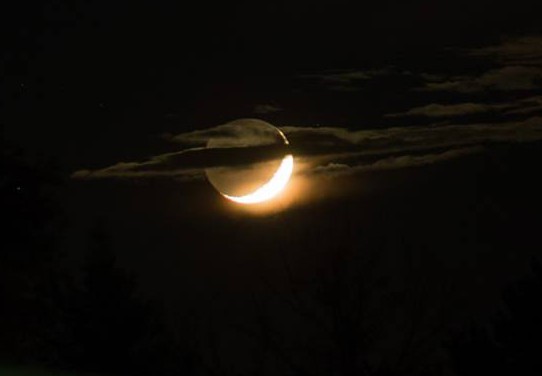
During the long dark drive north, the moon lay low on the horizon, as if weighed down by the glowing crescent on its lower side.  A small town, dark and derelict, passed by in the mirror, and then I was pulling over at the trailhead, the car’s clock reading 10:00 PM and the thermometer, 30 F.  Behind me, the moon hovered atop a distant ridgeline, as if it had descended from space and come to rest.

moon
Photo credit: Tom Bushey (photo taken on the same night)

Continue reading “Crescent Moon Over Bearpen Mountain”

Crescent Moon Over Bearpen Mountain

Before Badwater:  William Lewis Manly’s 1849 Crossing of Death Valley

In 1978, Al Arnold became the first person to run the 146 miles from the Badwater Basin in Death Valley to the summit of Mt. Whitney in the High Sierra.  Since then thousands of runners have completed a “crossing” in one form or another.

Contemporary runners face epic challenges in Death Valley:  brutal temperatures, fierce winds, and endless mountains  – valid reasons for the 135-mile Badwater Ultramarathon to tout itself as the “toughest footrace in the world.”

Runners take on these challenges to show the world that we still have the physical endurance and strength of spirit of our ancestors.  That we haven’t lost their determination and grit.  That in a world of wondrous technology, we haven’t gone soft.

In reflecting on his experience in Death Valley, Al Arnold once said, “If reincarnation is true, then I must have lived before as some kind of scout with an army or with pioneer settlers.  I really feel that you could drop me almost anywhere in the world and, barring human adversity, I’d survive.”

Interestingly, it was a scout who undertook the first documented crossing of Death Valley and the High Sierra.  The year was 1849, and the scout was named William Lewis Manly.  He was leading a group of pioneer settlers, or “emigrants” as they were then called, on an ill-fated shortcut from Salt Lake City to the California goldmines.

Arnold might well be Manly’s reincarnation, as they share the qualities of endurance and commitment.  Yet their experiences were quite different.  Arnold’s crossing was an achievement of training, discipline, and audacity.  Manly’s crossing was a venture gone wrong, a lesson in hunger, thirst, and fear, and a quest for survival.


Continue reading “Before Badwater:  William Lewis Manly’s 1849 Crossing of Death Valley”

Before Badwater:  William Lewis Manly’s 1849 Crossing of Death Valley

The Long One

(This is a story from the Yurok Indians of Northern California.  It caught my attention because of its eerie, sad tone.  Please leave a comment if it impacts you, too)


It was at Espeu that he lived who owned the Long One.

He hunted constantly on the cliffs north of Espeu.  There he found it when it was little.  When he saw it, he thought, “It’s pretty.  I shall try to keep it.”  He wanted to see how large it would be when grown.   He brought it to the house and made a box for it and kept it.  At first he did not know what it was.

He was always hunting.  When he killed deer or elk, he fed a small piece of the meat to his pet.  When he came again, he always saw that it had grown.

Continue reading “The Long One”

The Long One

Walden, in a Weekend

Friday evening, my nephew Nathaniel stopped by to visit during college break.  Over dinner he mentioned a course he was taking on Henry David Thoreau, the 19th century transcendentalist who had spent two years living in a cabin by the side of Walden Pond.  I had read Walden recently and appreciated Thoreau’s experiment in self-sufficiency and simple living, as well as his clever style.  I asked Nathaniel, did he think Thoreau was a nature lover or a social recluse?  Then I wondered aloud why Thoreau had left Walden after only two years.

Once dinner was over, and Nathaniel had left, I summoned Odie the Labradoodle, and we piled into the car for a weekend adventure that might, it occurred to me, share some of Thoreau’s values.  For us, self-sufficiency and simplicity would mean hiking barefoot, skipping meals, and sleeping in a lean-to.  However, instead of two years, our trip would last two days.  It would be like Walden, just in miniature.

I went to the woods because I wished to live deliberately, to front only the essential facts of life, and see if I could not learn what it had to teach, and not, when I came to die, discover that I had not lived.

Henry David Thoreau, Walden

Continue reading “Walden, in a Weekend”

Walden, in a Weekend

Cold Feet

(Please vote in the poll at the end of the post!)

With inclement weather in the forecast, another barefoot hike in the mountains might’ve seemed a questionable proposition.  But I had become determined to conquer all 35 of the Catskills’ highest peaks — and with six down so far, I had set my sights this weekend on completing four more — and then growing ambitious and impatient, imagined climbing six or even eight.  But upon reaching the trailhead on a very grey afternoon, the car’s thermometer read 45 F, and it was raining.  For a system still acclimatized to summer, this would be a shock.

Continue reading “Cold Feet”

Cold Feet

Mastering the Stairmaster

For those who have mountains on the mind, the stairmaster is a great way to train muscles and spirit.  But how to structure the training?  I see a lot of different styles at my local health club: people with earbuds dancing on the machines, others plodding along as they read the newspaper, some bent over almost horizontally as they hang from the handrails.

815yLdnmFDS._SL1500_
Stairmaster

It occurred to me that the same principles of training might apply to climbing as well as running, so I turned for guidance to Daniels’ Running Formula, 3rd edition.

Continue reading “Mastering the Stairmaster”

Mastering the Stairmaster

More Race Reports from SRT

Here’s a race report from Kevin Russell, one of the 74-mile particpants in the recent SRT race, which takes place along the Shawangunk Ridge Trail.  Kevin’s lively story features field-expedient shoe repair, a porcupine, bushwhacking, and rock scrambles.  Thanks for sharing, Kevin!

Kevin Russell
Kevin Russell (in the front) departing High Point State Park, NJ

Continue reading “More Race Reports from SRT”

More Race Reports from SRT