What a Runner Could Learn from a Ranger Mom

A long time ago, I was a U.S. Army Ranger.  It was just about the toughest thing I ever did.  Honestly, I wasn’t very good; my path ended up taking me to Wall Street, which was a better fit for my skills.  But I’m proud to have served my country as best I could, and I remain very impressed with the caliber of people I encountered in the Army then and today.
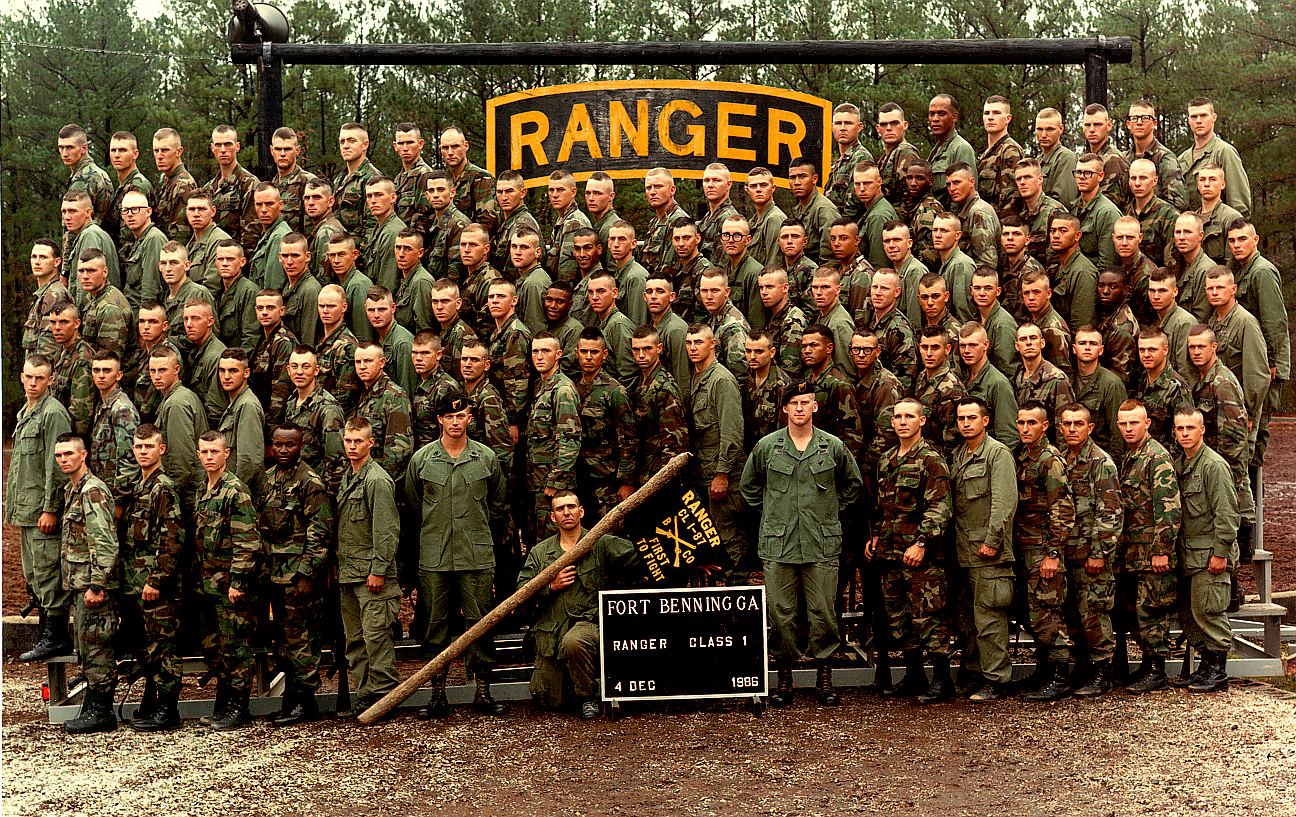
U.S. Army Ranger School Graduation 1987.  The author is located directly below the
U.S. Army Ranger School Graduation 1987. The author is located directly below the “N”

Violence of Action:  The Untold Stories of the 75th Ranger Regiment in the War on Terror, consists of a series of first-person accounts told by Rangers who fought in Iraq and Afghanistan.  I recently met two of the co-authors, Charlie Faint and Marty Skovlund Jr.

Most of the stories were about combat operations, but the story that caught my attention was that of Scoti Springfield Domeji, the mother of Sergeant First Class Kristoffer Domeji, a highly regarded member of the 2nd Ranger Battalion.

Scoti’s account is the story of a Ranger Mom.  As a priest and general once told her, “You raised a warrior. Not everyone can raise a warrior.”

Reading this, I immediately recalled the Spartans of Ancient Greece, especially the Spartan mother who told her son, “Come back with your shield, or on it..”

Growing up, Spartan girls ran, wrestled, and trained, just like the boys.  As mothers, they expected their sons to fight and win.  If they died in battle, that was a cause for celebration, not sorrow, because that was the purpose for which they had been raised.  The injured or defeated were not welcomed home.

Spartans are a minority in modern America.  Like me, Scoti grew up during the 1970s, a time when soldiers returning from the Vietnam War were treated poorly.  We both remember the feelings of tension and divisiveness.

Raising two sons as a single mother, Scoti had to be tough.  She recounts how young Kristoffer once got into a fight.  The other boy’s father marched up to her, demanding  “Who’s this boy’s dad?”

“I am!” she replied.

The fight occurred because she had given Kristoffer permission to “handle” bullies.  The rule was, “Do not throw the first punch, but make sure you end it.”

That wasn’t the only rule she enforced.  “Start anything you want. If you hate it, don’t whine to quit. Mom’s not negotiable; you will finish your commitment.”

In her story, she explains a little more of her philosophy:

I wanted my sons to learn that failure is success in disguise. I never allowed two sayings in my home: “I don’t know how” and “I can’t.”  I taught the boys to say, “I’ll try.” I didn’t care if they failed, but I expected them to try.

When Kristoffer asked permission to enlist, she was reluctant to sign the paperwork.  She acknowledges that deep down, she was thinking, “If you’re killed, I’ll feel guilty.”  But she did sign, and he enlisted in the Army and volunteered for the Rangers.

Like any mom, she worried.  She may have been a “lioness single mom,” as her friends called her.  But she recognized that her “cub” had grown into a “full-fledged lion.”  Even so, she instinctively yearned to take care of him.

On October 21st at 11: 30 pm, she received unexpected visitors.

“Who’s knocking on my door?” I spoke aloud. My surprise at the sudden banging on my front door near midnight gave way to annoyance. “Probably someone with car trouble. If I ignore the knocking they’ll go away.” The insistent pounding on my door continued for fifteen minutes. I finally walked down my stairs and opened the door. Two tall men in military uniforms stood on my front steps.

He had been killed by an improvised explosive device.  There were funerals, ceremonies, and memorials.  During these events, Scoti would remind herself, “Be strong. Hold yourself together. My son, a Ranger, would not want me to embarrass him.”  Passing three rows of Rangers standing at attention, she told them, “You are all my sons now.”

Ranger Mom or not, she missed her son.  “At first, some days I could barely manage breathing. My mind raced, consumed with thoughts of Kristoffer. I wanted my son back to hug, to touch.”

It didn’t help when her three year-old granddaughter asked, “Is Daddy better now?”

Even as time went by, Scoti continued to feel the loss of her son sharply.

I still fly blind trying to navigate turbulent ups-and-downs of mourning. Unpredictable emotional loops, rolls, and spirals send me crashing. I burn with longing for my son to still be alive. I’ve lost all power to reclaim before-my-son-died “normal” or to control after-death’s sting.

The loss did provide her some perspective on life.  She stopped worrying about the “shoulds.”  She no longer had the energy “to swim against the flow of the unimportant.”  She looked around her and wondered why so many people pursue goals that seem to lack significance, why so many spend their lives “running away from difficulties or trying to sprint past them as fast as possible.”  She remembers her son as someone who “bolted toward challenging, dangerous situations,” and she continues to believe that “challenges aren’t to be wished away.”

To help manage the physical toll of her grief, Scoti took up CrossFit. “Some days just putting one foot in front of the other feels like I will shatter to pieces,” she admits.  “But I soldier on, pushing my limits.”

Sometimes, the emotional pain overwhelms my physical strength. With immense effort, I urge myself forward. Just take one step, one more step.

What could a runner learn from Scoti?  Something about the spirit that keeps you moving forward, one step after another, no matter how bad you feel, whether it’s the last quarter mile of a 5k, the last five miles of a 350-mile ultra-marathon, or some challenge or loss in the real world.

Theodore Roosevelt once said, “Black care rarely sits behind a rider whose pace is fast enough.”  In other words, keep moving.

I wonder how those Spartan moms really felt.

Thank you for sharing your story, Scoti.
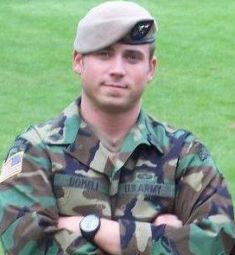
SFC Kristoffer Domeji http://freedomremembered.com/index.php/sgt-1st-class-kristoffer-b-domeij/
SFC Kristoffer Domeji “Greater love has no one than this, that one lay down his life for his friends” (John 15:13) http://freedomremembered.com/index.php/sgt-1st-class-kristoffer-b-domeij/
What a Runner Could Learn from a Ranger Mom

Tales of the Timbisha: Coyote Races

DV
View of Death Valley and the Panamints from Zabriskie Point Source: http://parks.mapquest.com/national-parks/death-valley-national-park/

A long time ago, the animals were people.

Coyote’s brother Wolf told Coyote, “I want you to run a race with the five Mountain Sheep brothers.”  The mountain sheep weren’t very fast, Wolf thought.

“Just as soon as you outrun the five brothers,” Wolf said, “I will be there to cut their throats.”

Wolf had picked a certain place for them to start, at the crest of a mountain.  Witnesses were stationed at key points along the course.  As they milled around the starting place, people got to saying that the mountain sheep were good runners.  Then they saw Coyote, looking strong and fresh.

The race started.  Coyote had little trouble outrunning the sheep.  Before they were halfway, the Mountain Sheep were panting, gasping for air.  Coyote got to the end of the course with ease.  He went around doubled over, pretending he was out of breath.  The people saw him and laughed.  He was most pleased with himself.

Wolf was glad.  He cut the throats of the mountain sheep and prepared a big feast.  The people ate until they were full, and then they ate some more.  Coyote was proud.  He became very sure of himself.

“There’s one thing more,” Wolf said.  “I want you to race the Magpies.”

He gestured to a distant peak.  “The race will start way up on that mountaintop over there.  Three magpies will race you.”

Coyote didn’t like the sound of this.

“You’re not serious, are you?” he asked.  “The Magpies are mighty birds.  If I lose, they’ll kill me and eat me.”

“There would be lots of spectators,” Wolf said, shrugging.  “All the people would be watching you.”

So the day of the race came.  The Magpies arrived before Coyote.  Then Coyote came, stepping from rock to rock (as was his superstition).  One of the witnesses sounded the start.  On both sides of the course, the spectators cheered and shouted.

Wolf had told Coyote, “If we win, we’ll get all the pretty feathers of the Magpies.  I want the feathers for my head.  The wings I want for my buckskin suit.”  Now Wolf took up his station at the end of the course and waited there patiently with a long, sharp knife, its blade glinting in the desert sun.

Coyote started.  He tore along on the ground, raising a cloud of dust.  But the Magpies folded their wings against their bodies and dove.  The course was all downhill, and the Magpies hurtled through the air.  When Coyote reached the bottom of the valley, the Magpies were already there, waiting for him.

Coyote didn’t know what to do.  He tried to hide.

“All right now,” the Magpies said, “we’re ready to butcher you.”

“Don’t butcher me right away,” Coyote pleaded.  “Let me go bathe in the cool creek before I die.  That way, I’ll be clean.”  They agreed.

Coyote ran to the creek and dove under the water. He tried to hide under some green weeds that were growing in the running water.  But the Magpies’ quick eyes found him.  They ducked under the water and dragged him out.  They killed him.

Wolf did not get his feathers.

(Adapted from Anne M. Smith, Shoshone Tales, 1993 and Julian H. Steward, Some Western Shoshoni Myths, 1943, http://www.sacred-texts.com/nam/ca/wsm/)

Tales of the Timbisha: Coyote Races

Stories of the Timbisha

In my first post, I mentioned my journey along New York’s Long Path — but now let’s take a jump out west, to Death Valley.

DV
View of Death Valley and the Panamints from Zabriskie Point Source: http://parks.mapquest.com/national-parks/death-valley-national-park/

As you may know, the Badwater Ultramarathon is held in Death Valley each July.  It’s a 135-mile ultramarathon from Badwater Basin to the Whitney Portal, famous for the extreme temperatures runners face, and for this reason often identified as one of the world’s toughest footraces.  I ran Badwater in 2010 and 2012 and completed a double in 2014.

Each time I’ve journeyed to Death Valley, I’ve been curious about the harsh but beautiful lands and the people who have long lived here, the local Timbisha Shoshone Indians, who today have a reservation near Furnace Creek.

Historical encounters with Native Americans interest me, because they give us a glimpse of what people were like before modern technology.  For example, consider this encounter, as recounted by William Lewis Manly, a scout who led emmigrant gold-seekers across Death Valley in 1849:

One day I was going up a wide ravine leading to the summit, and before I reached the highest part I saw a smoke curl up before me. I took a side ravine and went cautiously, bowed down pretty low so no one could see me, and when near the top of the ridge and about one hundred yards of the fire I ventured to raise slowly up and take a look to see how many there were in camp: I could see but two and as I looked across the ravine an Indian woman seemed looking at me also, but I was so low she could only see the top of my head, and I sank down again out of sight. I crawled further up so as to get a better view, and when I straightened up again she got a full view of me. She instantly caught her infant off its little pallet made of a small piece of thin wood covered with a rabbit skin, and putting the baby under one arm, and giving a smart jerk to a small girl that was crying to the top of her voice, she bounded off and fairly flew up the gentle slope toward the summit, the girl following after very close. The woman’s long black hair stood out as she rushed along, looking over her shoulder every instant as if she expected to be slain. The mother flying with her children, untrammeled with any of the arts of fashion was the best natural picture I ever looked upon, and wild in the extreme. No living artist could do justice to the scene as the lady of the desert, her little daughter and her babe, passed over the summit out of sight. I followed, but when I reached the highest summit, no living person could be seen.

Manly, William Lewis. Death Valley in ’49 (p. 59). . Kindle Edition.

Manly was intrigued by this Timbisha woman because she was so natural, wild, and fast — she flew off with her children and disappeared from sight before Manly reached the summit — and he was no slouch. If you read Manly’s memoirs, you’ll see that he was curious about the Indians, whom he regarded as the “real kings of the forest” — and respectful.

Technology does so much for us, but the question is whether we’ve lost some of the physical vigor of our distant ancestors — and if so, what we can do to recover it.  Bernd Heinrich writes about running as a way to recover that strength and forge a link with ancient peoples::.

As runners, I think we reach directly back along the endless chain of history. We experience what we would have felt had we lived ten thousand years ago, eating fruits, nuts and vegetables, and keeping our hearts and lungs and muscles fit by constant movement. We are reasserting as modern man seldom does, our kinship with ancient man, and even with the wild beasts that preceded him.

Heinrich, Bernd. Why We Run (p. 10). HarperCollins. Kindle Edition.

I agree with Bernd, and judging from what I see ordinary athletes accomplish in trail races and ultramarathons, I believe a lot of that strength is lying just below the surface.

If you keep running with me, we’re going to go backwards in time, on the tracks of that Timbisha woman and her children, and then even earlier.

To a time when the animals were people…

And we’ll see what we find….

Stories of the Timbisha

Welcome to The Long Brown Path

Afoot and light-hearted, I take to the open road,
Healthy, free, the world before me,
The long brown path before me leading wherever I choose

— Walt Whitman, Song of the Open Road

Welcome to my blog!  My purpose is to develop content for articles and books, practice my writing skills, and discover what interests people through their comments.  If you follow me, we’ll go on adventures, some long, some short, some fast, some slow, some on foot, some back in time, some in other directions, wherever the path beckons.

I am borrowing the title from Raymond Torrey’s weekly column which ran in the New York Post from 1918 to 1938.  Torrey was a founder of the New York-New Jersey Trail Conference and a hiker, conservationist, naturalist, and trail-blazer.  In his weekly column, Torrey shared news from regional hiking clubs, described popular trails, and championed environmental causes.  He was an avid hiker and trail builder, and he spearheaded volunteer efforts to establish a network of trails throughout Harriman State Park.  In 1921, he became an advocate of the Appalachian Trail, and over the next ten years, was instrumental in routing, blazing, and clearing over 160 miles of the trail from New Jersey to Connecticut.   From March through June 1934, Torrey devoted his popular column to describing the proposed route for New York’s Long Path, which was envisioned as connecting New York City and the Adirondacks.

Torrey was an impressive fellow.  He was an amateur naturalist and quite knowledgeable about the flora and fauna of the Hudson Valley.  He could reputedly identify 700 different plants, was especially interested in boreal species found at high elevation, and became an authority on lichens.

He was also someone who stood up for what he thought was right.  He had a famous disagreement with master builder and New York power broker Robert Moses over the proposed routing of a parkway across environmentally sensitive areas in Long Island.  After the two men shouted at each other and traded insults, Moses tried to strangle Torrey and then threw a heavy smoking stand at him, but fortunately missed.

Raymond Torrey — newspaperman, free-lancer, nature lover and self-trained scientist — was one of the prime movers in the making of the Appalachian Trail in the New York-New Jersey region. (Courtesy of New York-New Jersey Trail Conference)
Raymond Torrey — newspaperman, free-lancer, nature lover and self-trained scientist. (Courtesy of New York-New Jersey Trail Conference)

Torrey passed away in 1938.  Friends scattered his ashes on Long Mountain, one of his favorite spots in the Hudson Valley, and erected a monument that identifies him as a “Great Disciple of the Long Brown Path.”  He had been such a hard worker, it would take an entire committee of people to carry on his responsibilities.

Torrey had borrowed the title of his column from the opening stanza of Walt Whitman’s Song of the Open Road.  That Whitman became the poet laureate for New York hikers was somewhat ironic.  He didn’t wander energetically through the mountains like John Muir or Henry David Thoreau.  He loved cities and people more than wilderness.   His friend John Burroughs called Whitman “the poet of democracy.”  Whitman referred to himself as a “loafer.”  The Long Brown Path was really a metaphor for the freedom that people have to follow their own unique paths through life and also a reflection of the sense of optimism felt by Americans in the late 19th century.

Walt Whitman (1819-1892), age 37, frontispiece to Leaves of grass, Fulton St., Brooklyn, N.Y., 1855, steel engraving by Samuel Hollyer from a lost daguerreotype by Gabriel Harrison.  Source:  Wikipedia, public domain

I discovered Torrey and Whitman when I thru-ran New York’s Long Path in 2013.  The 350-mile trail took me 9 days to complete.  It was an adventure:  rough terrain, bad weather, getting lost, running out of water and food, blisters and other injuries, and confrontations with unfriendly wildlife.  By the time I made it to the end, I was in rough shape.  Friends told me I looked like a “mountain man.”

Norwegian Spruce Forest
The author after 250 miles on the Long Path

But I had learned so much.  About myself.  About the wonderful parks and preserves of the Hudson Valley.  And about the history and people of New York, including Torrey and Whitman and many other interesting characters.  From Torrey I learned about the importance of championing land and trail stewardship.  From Whitman, the importance of understanding that everyone follows a different path.

If you follow this blog, we’ll travel together in search of new experiences and insights, and we’re sure to find something interesting.  After all, once you figure out your path, it’s only a question of putting one foot in front of the other…

Welcome to The Long Brown Path