For many years, I looked down my nose at the modest mountains of Harriman State Park. My attitude was, like, I’m busy, I can’t be bothered. Instead, I focused on the Catskill Mountains, which are tall and rugged, and which I knew intimately from completing a peak-bagging project there called “the Grid.”[1] Inspired by that experience, I ventured farther afield, until I’d reached every single summit on the Appalachian Mountain Club’s list of 111 Northeastern 4,000-footers, comprising the high peaks of New York, New Hampshire, Vermont, and Maine.[2] For longer vacations, I headed west, climbing mountains in California, Arizona, New Mexico, and Colorado, including a handful of 14,000-footers.
I ignored Harriman until the day I irritated the meniscus in my left knee. Why, the knee stung so bad I could hardly walk a mile. The physical therapist told me to be careful – for people my age, the surgery might set me up for arthritis and a knee replacement — better to take it easy for a while and work on strengthening the glutes. My sports doc prescribed a week’s worth of anti-inflammatories, told me to come back in a month, which I never did because the knee started feeling better.
Nonetheless, this episode prompted an evolution in my thinking. Maybe, as an aging athlete, writing off Harriman had been shortsighted. After all, mountains are products of endurance – what you see is what’s left after millions of years of erosion. In this regard, a smaller stature means the mountain is older and therefore deserving of more respect, not less. In the case of Harriman, the bedrock dates from the Precambrian age; it’s estimated to be 1.1-1.3 billion years old.
Furthermore, since I hike barefoot, even a tiny mountain can present an athletic challenge. If the trails are steep and rocky, or if off-trail routes take me through thick brush, then the going gets difficult quickly, and my pace decelerates until it feels like I’m hardly moving. Placing naked feet on rough ground demands agility, balance, and total focus, even for short distances.
As the meniscus was healing, I pulled out a map of Harriman and studied the topography. Found a 15-mile route that would bag me seven (7) separate peaks, starting with Black Rock Mountain (1,381 feet) and ending with Pine Swamp Mountain (1,165 feet). I got out there on November 10, 2024 and had a lovely time. Recognized another advantage of hiking smaller mountains – the temperatures are warmer at lower elevations, which means that short mountains offer a longer season for barefooting. Over the next two years, Harriman became my go-to destination during late fall and early spring, when the Catskills were dripping ice and piled with snow.
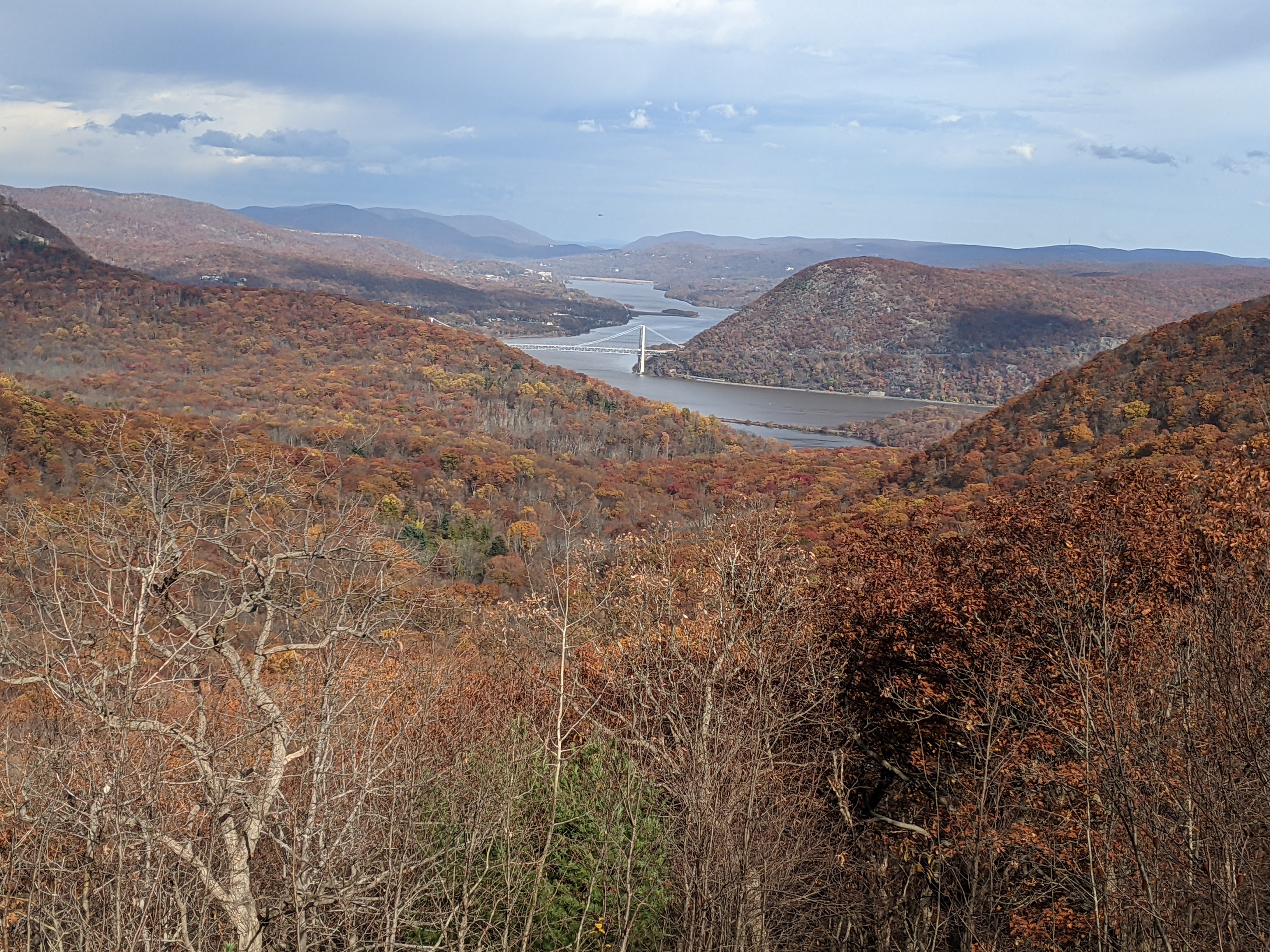
Eventually I came up with the idea for a special project – to climb each of the 67 named peaks in Harriman and its neighbor Bear Mountain State Park. With the ascent of Mount Aramah (1,422 feet) on May 8, 2026, I have completed this goal. Along the way I received a special message which I would like to share with you.
The Specifics
But first, for the benefit of my fellow peak-baggers, let me clarify this project’s key parameters. To start with, I couldn’t find an “official” list of mountains for Harriman and Bear Mountain. Instead, I scanned maps produced by the New York-New Jersey Trail Conference, looking for peaks labeled with names. Cross-checked these on the Gaia hiking app, which is populated with data from OpenStreet Map, a collaborative open-source project, and in certain cases referenced mountain-oriented websites like peakbagger.com. I shared my list with Harriman enthusiasts on Facebook, one of whom pointed out that I’d missed Mount Aramah (sometimes spelled Orama), a peak with an unappealing reputation. Its true summit is capped with a radio tower and water tank, it takes a long bushwhack to reach, offers no views, and is reportedly frequented by poachers.[3] With some reluctance, I added Aramah to the list for number 67.
Now, if you study the maps, you can find more than sixty-seven named geographical features in Harriman, but I have high standards, even when taking on short mountains. Specifically, I excluded features whose name contains the word “hill.” Such as Cranberry Hill, Horn Hill, High Hill, Big Hill, North Hill, South Hill, Hemlock Hill, Summer Hill, Turkey Hill, and Raccoon Brook Hill, among others.[4] A “mountain” earns its status because of the special feeling the place evokes. A feeling that inspires someone to go there and give the place a name. We appreciate hills, too, but there isn’t the same magic.
By alpine standards, the mountains in Harriman-Bear Mountain are modest, averaging only 1,154 feet in elevation. The tallest is Black Mountain at 1,465 feet. The shortest is Poor Fawn Mountain at 808 feet. You don’t need mountaineering gear to reach the summits – you just walk along a trail, or in some cases cut through the forest, high-stepping in places where the blueberry scrub is thick and scratchy and sometimes ducking through twisty stands of tree-sized mountain laurel. There is a single exception – ropes are draped over the rocks on the way to the 942-foot summit of Popolopen Torne, which overlooks the US Army Military Academy at West Point. The ropes are helpful in scrambling up a handful of outcroppings, but they aren’t strictly necessary — you can get to the top without using them.
To summarize, the project took me two years six months and totaled 188 miles of barefoot walking and 45,282 feet of cumulative elevation gain. This may sound like a lot of climbing (roughly four times the climb from base camp to the top of Mt. Everest), but elevation gain per peak averaged only 533 feet, and only 247 feet per mile.
Impressions
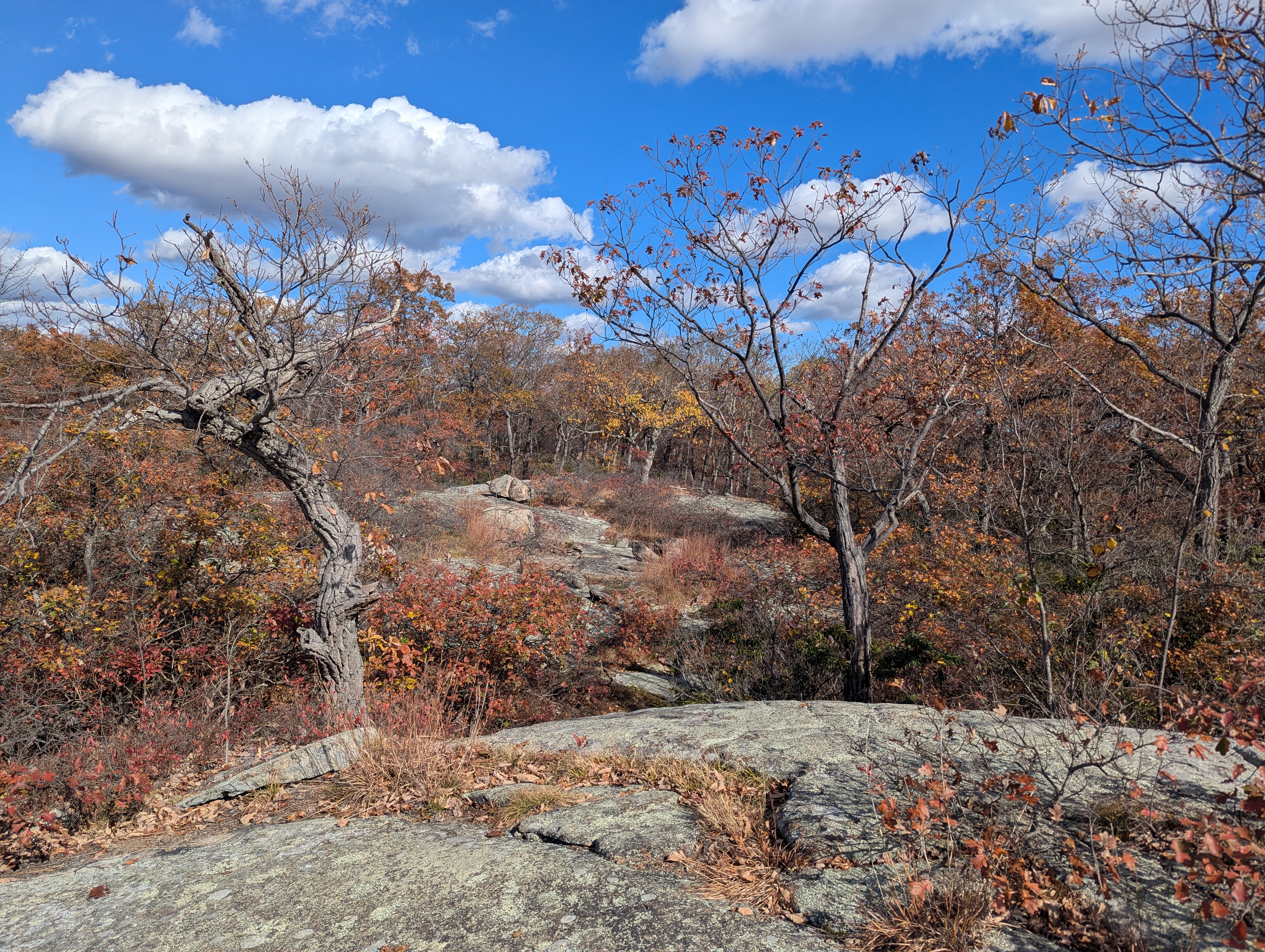
So, what was it like to climb so many mountains in Harriman and Bear Mountain State Parks without shoes? Let me share a patchwork quilt of impressions. There are the quiet grassy knolls. The open forests of oak, maple, pine, cedar, and hemlock. The endless blueberry scrub. The low clouds and valley fog of late fall and early spring, with splashes of sunlight when least expected. The prickly grey lichen-speckled slabs which sit atop the summits, often capped with a glacial “erratic” – a big block dragged by ice from somewhere else.
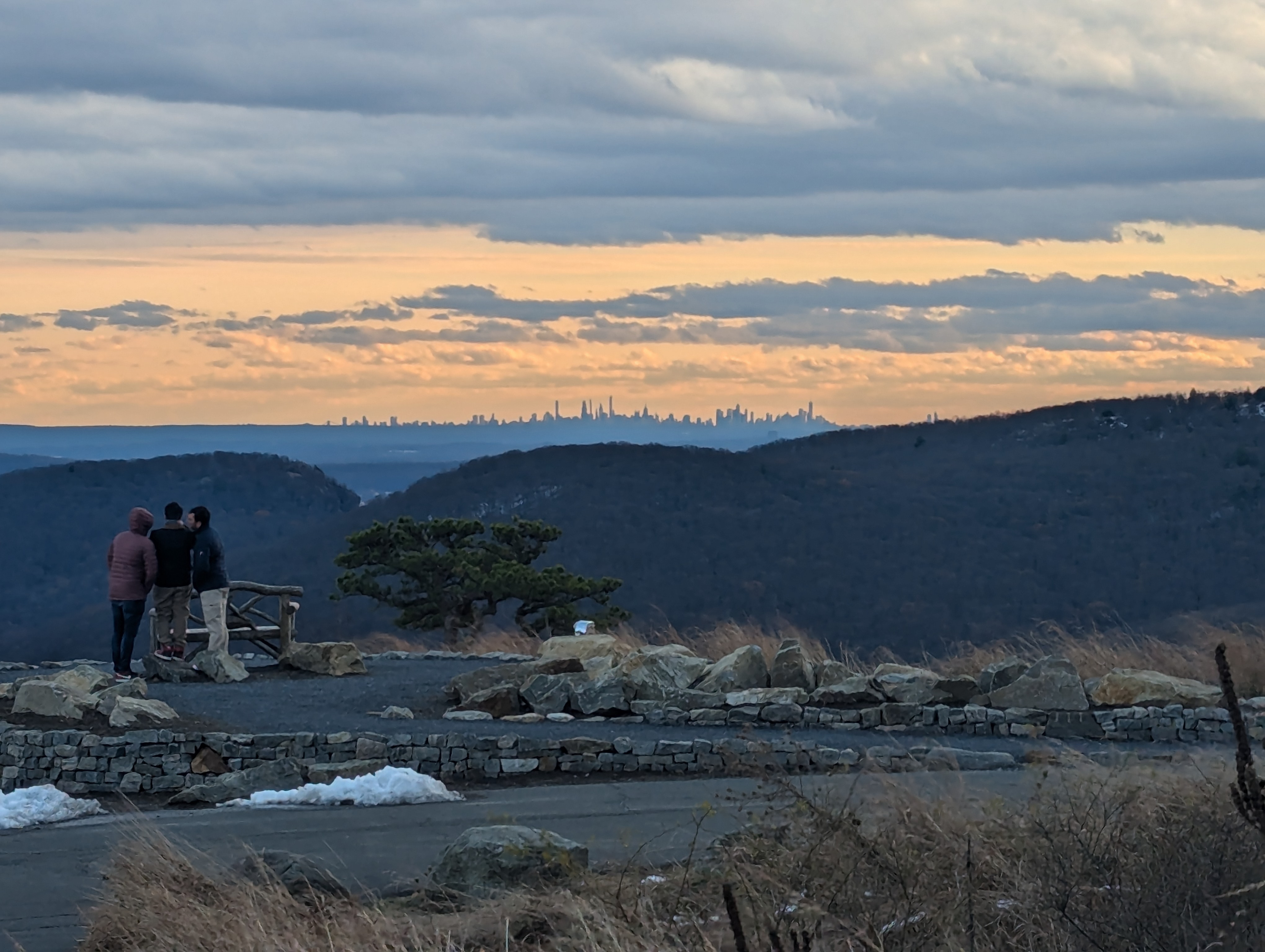
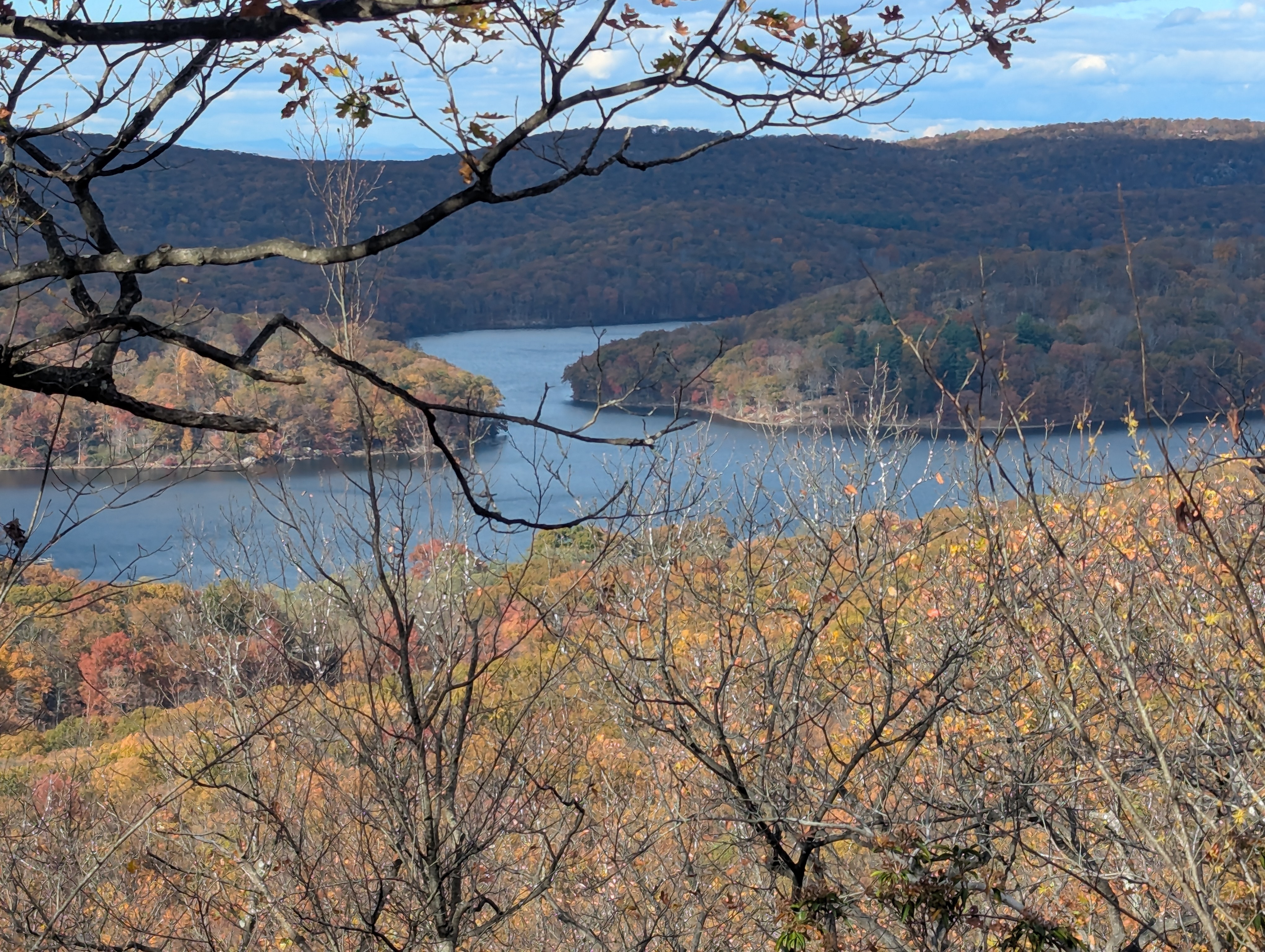
The long ridges run north-northeast/south-southwest, separated by glacial U-shaped valleys. In the bottomlands lie lakes, swamps, marshes, and stands of common reed. From vantage points on the eastern and southern ramparts, the New York City skyline shimmers along the horizon, some forty miles to the south, its pencil-thin towers looking alien and vaguely insectoid, as if belonging to some kind of hive.
If I was going to use a single word to describe the peaks of Harriman, that word would be quiet. Or still. Maybe this feeling relates to the great age of this place and its ancient bedrock. Or maybe the mountains feel this way to me because going barefoot is so slow. Where the trails are smooth, I can reach 2 MPH, according to my GPS watch, but where they are steep and rocky, or when pushing through brush, my pace drops to 1 MPH or below. Interestingly, this feeling of stillness does not manifest for me at other speeds. When running on roads, I feel exhilaration. Driving on the highway is monotonous. When I’m engaged in sedentary work, the world does not feel quiet or still, nor does it when I’m lounging. Maybe there’s something special about barefoot speed. After all, it is a natural pace, and maybe a natural pace helps one get back in synch with Nature.
Although my sense of stillness waivers when the wind picks up.
Like that cool morning last November, when I was following a footpath up the ridge toward Stockbridge Mountain (1,319 feet), sauntering cheerfully across grassy knolls and through an oak forest of tawny ocher and burnt orange — when suddenly the wind picked up. It rolled in from the west without warning, jostled the treetops, roared like a squadron of cargo jets. I zipped my jacket tighter, feeling anxious, recognizing in the rough gusts the angry sound of winter.
Listening to the Wind on Big Bog Mountain
Earlier this year, on an unseasonably warm day in March, I hiked out five miles to Big Bog Mountain (883 feet), starting with a quarter mile on the prickly pavement of a road that was still closed for the season. It took me a moment to locate the unmarked path, then I splashed off into a rivulet, stepped across slick black rocks, padded through beds of peat moss, scrambled uphill until a marked path materialized in front of me. I crossed through a shady area with a few banks of snow still lingering, which chilled my naked feet where they punched through, before cresting a small rise and here the ground was dry and covered in soft fallen leaves. Yellow blazes led me through a shadowy forest of pine and hemlock and down into a valley where there flowed a creek whose water was so perfectly transparent that I could distinguish each leaf, stone, and pebble lying on the bottom. My map showed the summit of Big Bog atop a modest rise a short distance off trail. I strode uphill through layers of dry leaves rustling underfoot and high-stepped through blueberry scrub, the leafless twigs scratching the tops of my feet, until I reached a block of rock sitting upon a slab, which marked the summit.
The trees were leafless, so early in the season. The afternoon sun illuminated the forest floor with a cheerful glow, while a warm breeze poured across the summit. Part of me wanted to hang out and enjoy the scene, but another part was thinking of the five-mile return journey and worrying about the time.
I’d recently read some chapters of the Navajo Emergence Story (Diné Bahane’) and now I thought of Níłchʼi, the Navajo wind spirit, who is described as offering good advice to those who keep an open ear. So I tossed out a question – having gotten a late start, and seeing as it was now mid-afternoon, would it be OK to hang out here for a little bit? How about five minutes?
An answer came to me immediately, as if born upon the breeze — in my mind I pictured a curt nod. My interpretation — when in the mountains, no matter how modest their stature, stay focused on the mission. Keep an eye on the time. A short break would be OK, but don’t linger.
The gesture felt a little curt, though. Níłchʼi is probably busy, I thought to myself. He might not have a lot of time for such a minor question.
But the message didn’t seem unfriendly. The Navajo Holy People must recognize that aging hikers can feel fragile. Our strength ebbs and injuries accumulate and what once was easy now takes effort. Especially those of us who bare our soles to the prickles of the terrain, which is a humbling practice.
For what it’s worth, the advice not to tarry was sound. By the time I got home, it was late. That evening I felt uncharacteristically edgy. Skipped dinner. Went to bed fretting about aches and pains. Woke up around midnight with a sore throat. Felt off the next day. The day after that, however, I was fine.
Good Medicine
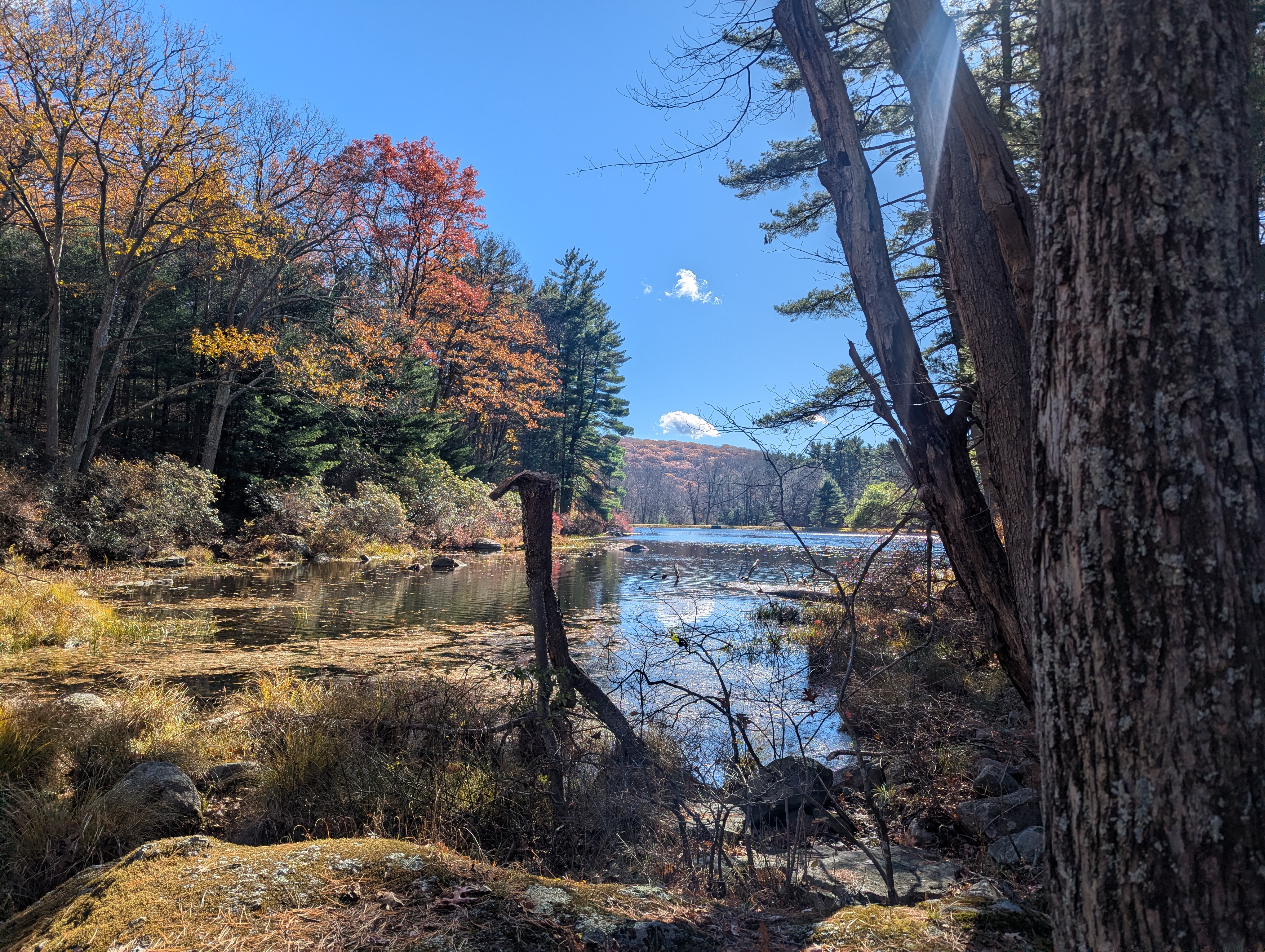
Tom Brown, Jr., was a naturalist, tracker, survivalist, and author who grew up in the New Jersey Pine Barrens, which are situated, incidentally, not far from Harriman (about an hour and a half to the south). In his memoirs, Tom explained that positive experiences in nature can be considered a form of “good medicine.”[5]
Good medicine announces its presence in the form of “marvelous sights, wondrous happenings,” which are signs that nature is showing you favor. Good medicine appears when you are totally engrossed in nature, not when you are marching around in your city personality. Good medicine can be considered a gift from the spirit-that-moves-through-all things. Sometimes it is powerful enough to change how you think about the world.
Tom learned about good medicine from Stalking Wolf, who was the grandfather of Tom’s friend and neighbor, Rick. Stalking Wolf was a member of the Lipan Apache people. Stalking Wolf seemed to always know what was happening, Tom remembered, as if he had “ears and eyes all over his body.”
Stalking Wolf taught Tom and Rick to move through the forests silently. To find their way. To track. To stalk. To become invisible. To become so still that animals would not see them. One day, he mentioned that “cold wind is your brother” – then asked why were they treating him as an enemy? To help the boys appreciate this lesson, Stalking Wolf had Tom and Rick strip down to shorts and sneakers and walk home five miles in a snow storm. This would teach them to never again feel cold.
One summer, Stalking Wolf sent them on a vision-quest. Each boy was to venture out to a remote section of the Pine Barrens, there to camp alone for a week, subsisting only on what he could find or catch. Afterwards the boys were to return and meet Stalking Wolf at a certain tree at high noon and tell him what they had experienced. This exercise was supposed to teach them never to be afraid.
Tom recalled a sense of relief after this week alone, for he felt he’d done something hard, and he also appreciated the sense of independence he’d earned. However, he felt a little disappointed, too, as he walked back to rendezvous with Stalking Wolf, since he hadn’t experienced anything remarkable enough to qualify as a “vision.” He was almost back to the meeting place when he noticed the light coming in “slantwise through the cedar skeletons in long flat blades.” Then he spotted a short steep waterfall surrounded by mist. Beside the falls, hidden by a semicircle of bushes, a small tan fawn was lying on a bed of moss. The scene was magical. “The light came down on it like a spotlight and some of it hit the waterfall and burst into star-shaped rainbows.” He recalled feeling both greatly honored and greatly humbled. The scene shown with “a perfect rightness, like a flawless motion,” like some pattern working its way toward “complete perfection.” He wrote that the beauty made him cry. Years later, he recalled how the experience touched him in a way that shaped him ever since.
No doubt Tom felt an affinity for all the living creatures in the forest, but he seems to have been especially close to the deer. Once Stalking Horse took him and Rick out at night to teach them to track animals in darkness. Tom lay in the grass, alert but perfectly still, “without thoughts or sensations other than just being,” until a buck approached so close its silhouette blocked the stars.
Later, when Tom was a teenager, he came upon the work of poachers, who had killed and quartered several deer, taking the hindquarters and shoulders, which were valuable, and leaving behind the other body parts in pools of blood, sinews, veins, and matted fur. By the time he tracked the poachers to a cabin, he’d found a dozen carcasses, butchered and mutilated. Filled with a sudden madness, he kicked in the cabin’s cinderblock wall, knocked down three of the poachers as the fourth fled in terror, grabbed a shotgun and smashed it to pieces, all the time screaming, “You killed my deer! You killed my deer!” Coming to his senses, he fled, leaving the cabin in ruins — then stopped and tore off a piece of his shirt, stuffed it down the gas tank of the poachers’ truck, and pulled out some matches. In a daze, he stumbled off down the road as the truck exploded behind him.
Wind Spirits
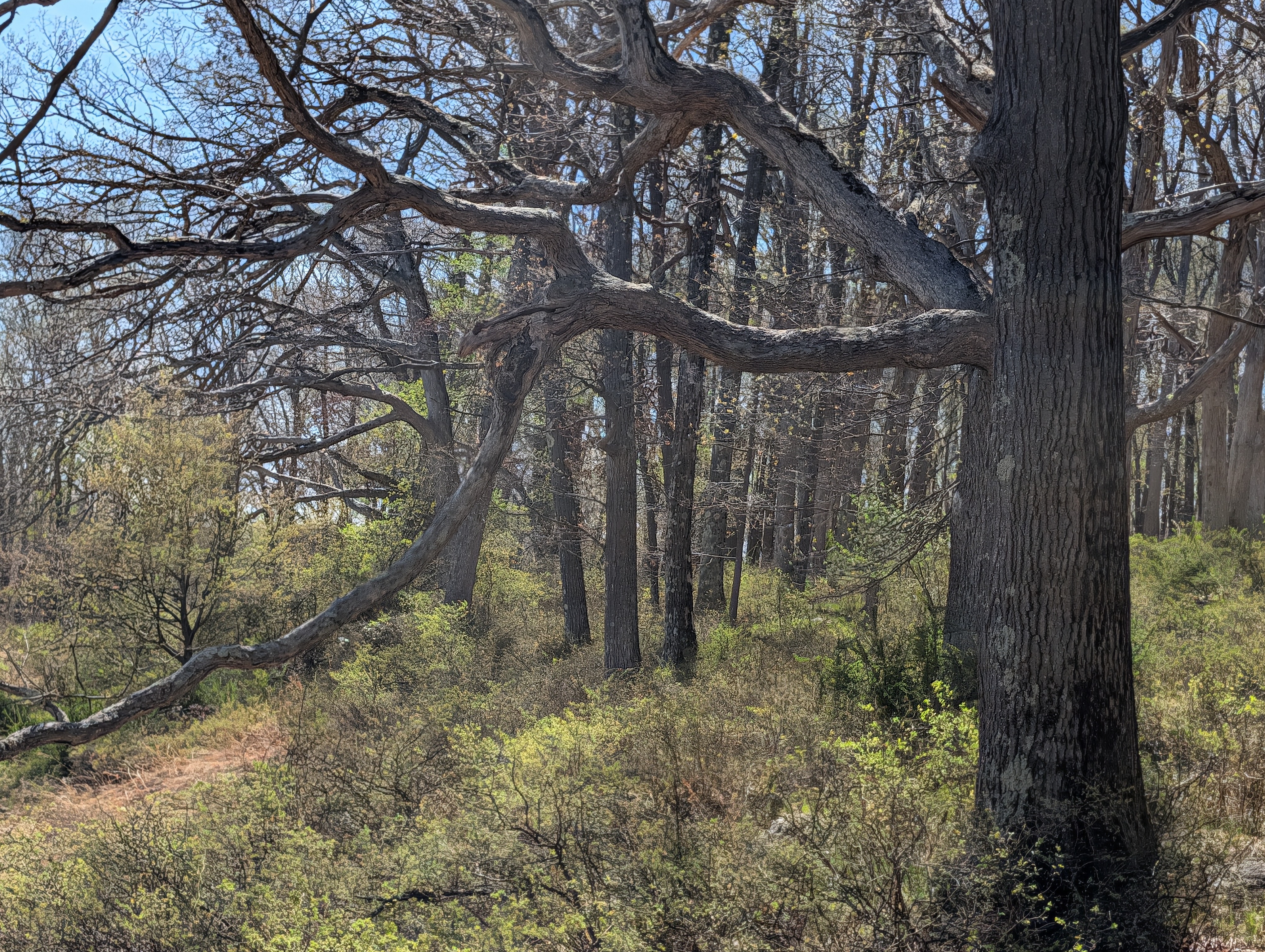
I often thought of Tom’s story during my Harriman hikes. Especially when I followed deer trails through the brush, spotted their droppings, sometimes saw a flashing white tail as an animal bounded off into a stand of laurel. Sometimes I’d creep up quietly and if the wind was right, stand for a moment and watch them grazing from ten or fifteen yards away.
Stalking Wolf’s lesson about cold wind also stuck with me. I, too, had done cold weather training, such as going shirtless in the winter, similar to what Stalking Wolf had had Tom and Rick do on that five-mile snowy march. But even so, the truth is I’m a warm weather guy. Rarely do I feel too hot, whereas I get chilled easily. Maybe that’s just a part of getting older.
One day it occurred to me that the cold wind must be a cousin of the Navajo wind-spirit, Níłchʼi – or perhaps they are one and the same. Indeed, some research revealed that the Apache wind god is called Nilchídilhkizn, meaning “Chief of the Winds.” The two names are so similar because the Apache and Navajo are closely-related Athabaskan-speaking peoples, who originated in the frigid wind-swept steppes of Siberia and Mongolia and crossed the Bering Strait into Alaska some 10,000 years ago. Incidentally, the Apache are careful never to complain about the wind, lest they anger Nilchídilhkizn and bring on violent storms.
Good Spring Mountain
On a brisk spring day in mid-March, I walked along a paved road that led in the direction of Good Spring Mountain until I came upon a collection of cabins and signs that said “stay out.” So I veered into the woods. Now I’m high stepping through the blueberry brush, lifting and placing each foot carefully among the scratchy twigs. And here’s a band of mountain laurel with wavy trunks reaching overhead, which I weave between, while ducking beneath the sprays of shiny dark green leaves. The map shows a steep climb ahead, which I’m nervous about, fearing the slope will be cluttered with rocks and deadfall. Suddenly, a mossy trail materializes beneath my feet and wafts me to the summit. Down below, views of lake Kanawauke, still iced over. The wind flows gently through the leafless trees. This is good medicine.
Good Medicine for Walt Whitman
There is also “bad medicine.” As a young man, Tom Brown, Jr. worried about “a bad medicine death.” He looked around and saw people dying from boredom or insignificance. Or getting killed by accident or by drunken idiots. And then there was Cancer. Heart attack. Emphysema. Stroke.
In 1875 at age 56, the poet Walt Whitman suffered a stroke. Whitman was the “poet of Democracy,” the poet who sang of the open road, who sang of the self, who sang the body electric. I first became interested in Whitman when I thru-ran the Long Path,[6] a 350-mile trail in New York whose name, short for the Long Brown Path, was derived from the first stanza of Whitman’s poem, “Song of the Open Road.” I did not suffer a stroke when I turned 56, but at that point in my life I was struggling with running injuries, which were starting to turn chronic. In the face of adversity, Whitman struck a “matter-of-fact” attitude; his equanimity was inspiring to me.
While convalescing from the stroke, Whitman moved in with his brother, who lived on a farm outside Philadelphia. There Whitman worked on his health by taking walks along quiet country lanes. He had a favorite creek, where he would often retire, strip off his clothes, sometimes wrestle with a sapling for some moderate exercise, sometimes just sit their naked, taking in the scene. In his memoirs, Whitman attributed his partially-restored health to the fact that he had been “almost two years, off and on, without drugs and medicines, and daily in the open air.”
The favorite creek was fed by a spring, whose currents poured over two or three little cascades while meandering through a depression filled with bushes, trees, grass. Whitman sat among the dangling green leaves and watched “the dark smoke-color’d clouds roll in furious silence athwart the sky.” He listened to the wind, which kept up a “hoarse, soothing music over my head—Nature’s mighty whisper.”
The afternoon wore on. Evening approached. Whitman rose. Put on his clothes. Hobbled up the lane towards his brother’s house, where he saw “an incomparable sunset shooting in molten sapphire and gold, shaft after shaft, through the ranks of the long-leaved corn.”
This was good medicine. When the sunlight comes slicing in diagonally in shafts or blades, it is almost always good medicine.
“Never before did I get so close to Nature,” Whitman remembered in his memoirs. “Never before did she come so close to me.”
Many years after my Long Path thru-run, I visited Whitman’s gravesite in Camden, New Jersey, where I found on his tombstone a final message of encouragement. The carved words said that he had bequeathed himself to the dirt, to grow with the grass, and that if you needed his guidance, to look beneath your feet.[7]
Limekiln and Panther Mountains
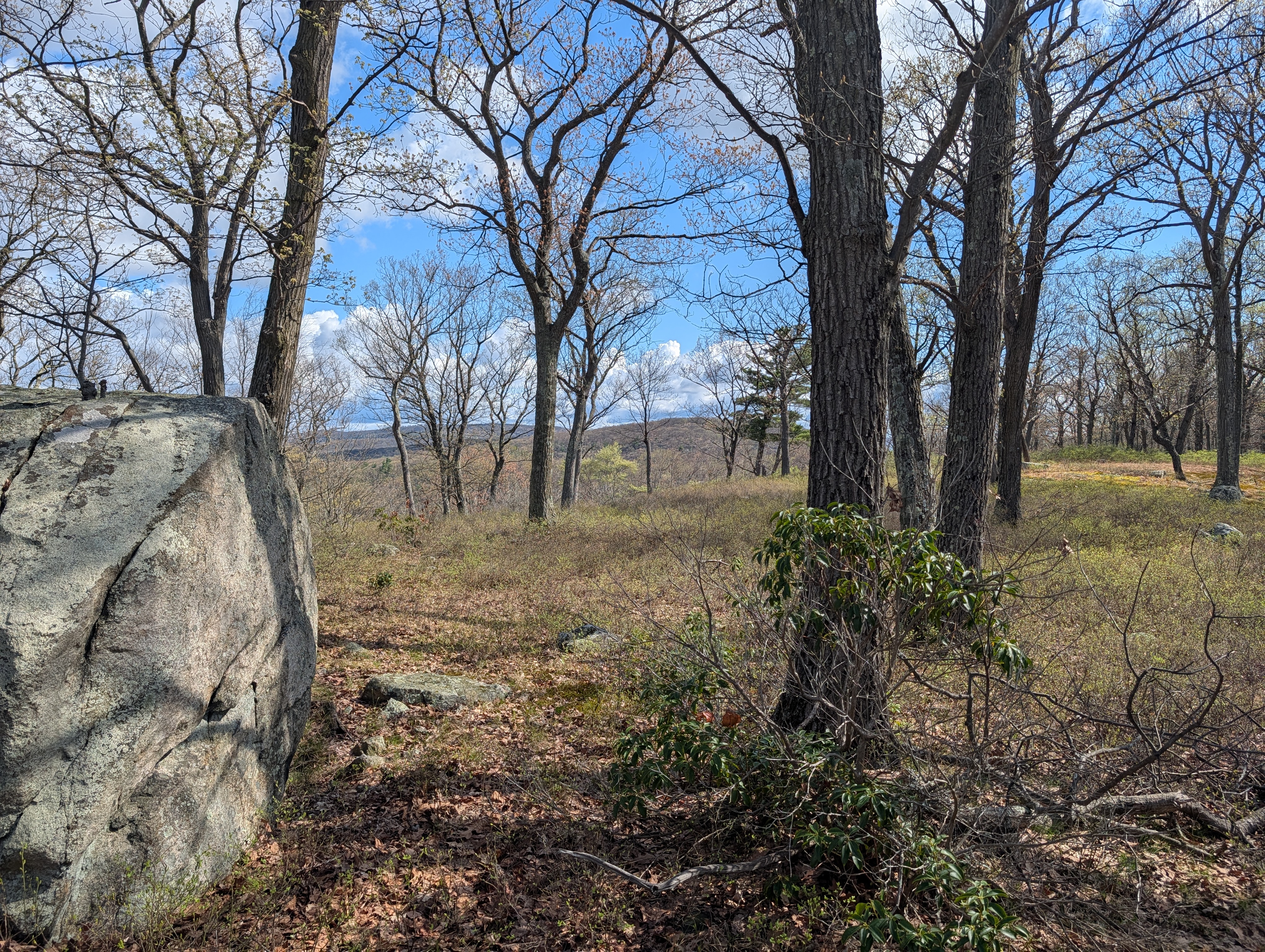
After a navigating a painful gravel-strewn parking lot, a rocky path beneath a set of power lines, and a steep climb along a heavily-eroded forest road, I was finally nearing the summit of Limekiln (1,122 feet), when I encountered a barrier of gray branches, twisted, scratchy, and unyielding. Scrub oak. Nasty stuff in my experience. I found a route around the tangle, swished through soft yellow grass, crossed a barren slab, and then my feet sank into a luscious bed of emerald moss. Up ahead lay the summit, a pile of rocks a few feet high. But the way was blocked – more scrub oak – in fact, the nasty gray branches encircled the rock pile completely. Even worse, upon inspection I discovered some sort of brier entangled with the oak, the vines adorned with shark tooth thorns and tendrils curled around the oak branches, cinching everything into place with no way to dislodge the stuff. A “real” mountaineer does not stop short of the summit, even if it is only a few feet away. There was no choice but to push through. A moment later, I was sitting on the top, feet covered with scratches and bleeding from a cut or two. But I’d made it, scratched another peak off the list, and now had only to make it out alive.
The payback for this struggle was a pleasant trail which whisked me over to Panther Mountain (1,096 feet), where I stood on a rock and scanned the wide-open views, enjoying a splash of sun. From there a grassy trail shepherded me back down to the trailhead, which I reached just as rain began to fall.
A few days later on Blauvelt Mountain (1,165) — this time the obstacle was monster berry brambles that ringed the summit, the thick red canes hanging in great arcs and bristling with hairy spikes. The kind of spikes that can grasp shirts and trousers and hold you up — or tear the fabric if you struggle. I found a way to slink through without getting sliced to shreds, or stepping on the stuff and resolved henceforth to carry a pair of garden clippers in my pocket for self-defense.
Special Light
Tom Brown, Jr. wrote that when he moved just right – “when the precision of my training blended perfectly with the patterns around me” – he would catch out of the corner of his eye a glimmer of special light. “A faint halo of the glory” that had come to him during his vision of the fawn. Possibly the “bright shadow” of the spirit-that-moves-through-all-things.
The first weekend in April found me walking under brilliant skies on the trail to Nordkop Mountain (894 feet), a sentinel along Harriman’s southeastern rampart. The sunshine lit up the ridge and the gravelly road beneath some power lines. The energy was scintillating. Until I crested a knob, and the sun slipped behind the clouds – and suddenly the wind came whipping in from the west. It was my brother, cold wind, come to roughhouse with me in the way that older siblings sometimes do, pushing and tumbling more aggressively than the smaller children appreciate. I was chilled so quickly, I had to stop, fumble in my pack, and pull out an extra sweater and a windbreaker.
Then the wind paused, the sun came out again, and I began to cook beneath my layers.
The summit of Nordkop lay in the middle of an open field, the right-of-way for a gas pipeline. Here the wind was howling, while the sun beamed down upon a field of tall parched grass waving vigorously. I climbed up on the lichen-speckled glacial erratic that marked the top and sat there for a moment, before resuming my slow trek.
During the four long miles to Cobius Mountain (1,151 feet), wind and sun alternated, chilling and warming me in turn, while the flashes of light were energizing and the somber gray shadows disheartening. I soldiered slowly on, feeling hungry and low on gas, accepting flux as part of my fate. That evening, I curled up by the fireplace.
A few days later, it was sunny again and nearly 60 F, but even so cold wind came rushing across the summit of Car Pond Mountain (1,020 feet), where I’d taken a group out for an introductory barefoot hike. Fearing that the blast would discourage them, I shepherded the group down the backside, but halfway down the slope, conditions were completely different — the air was calm, the sun relentless, and the heat was suddenly oppressive.
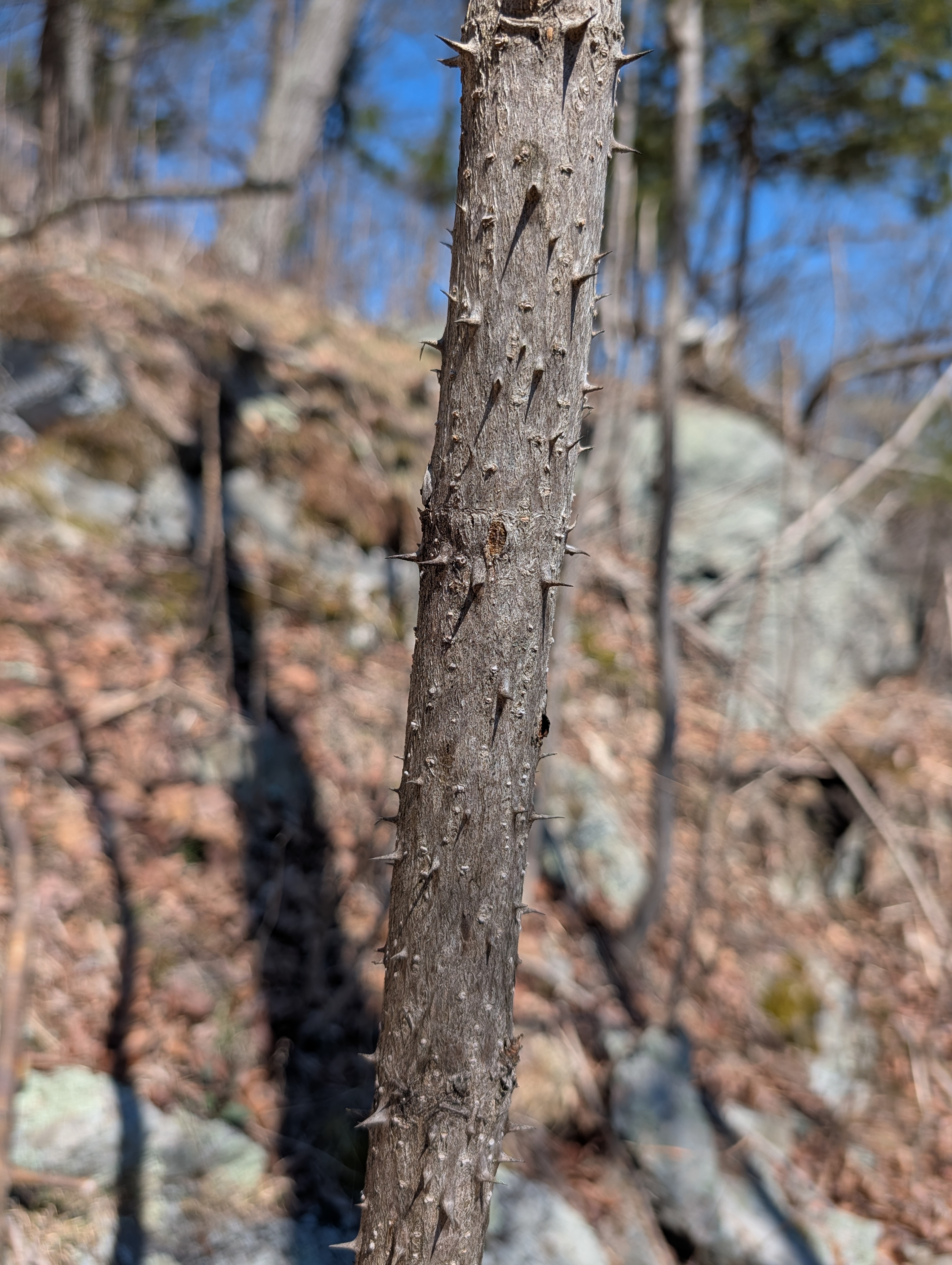
Later that day, I bushwhacked to the top of Poor Fawn Mountain, weaving through a bright green jungle of Japanese barberry which had sprouted on the soggy forest floor. From the top, I decided to take a short cut to Fox Mountain (919 feet) which entailed butt-sliding down a steep slope slippery with dead leaves. During the descent, I spotted a brood of young brambles poking from the leaves. Veered left to avoid them. Reached out to grab the thick grey stalk of some dead bush or tree, only to jerk back my hand — the stalk was studded with vicious spines. Later I would identify this as Devil’s Walking Stick (Aralia spinosa), a native tree growing 15-25 feet tall, notorious for bark, leaves, and stems all bristling with prickers.
When I finally made it to Fox Mountain, my brother the wind was waiting for me. I knew better than to complain, instead pulled on my windbreaker and retreated.
We Need the Winds to Stir our Thoughts
The challenge isn’t just the temperature, but the turbulence, for wind rarely flows in a smooth and even manner. Rather it comes splashing through the forest, casting off eddies and vortices which whirl around and shake the trees — and make me feel uneasy.
Arguably, the trees need that shaking. They evolved in the presence of wind, as is evident in the balance between strength and flexibility characteristic of their architecture. It may be the case that people, too, need to be shaken.
In addition to being a poet, Walt Whitman was a fitness influencer. In a series published in 1858 under the title “Manly Health and Training,” he advocated for physical exercise, cautioned against sedentary indoors lifestyles, and described fresh air as the “great antiseptic.” Influenced by his advice, I leave my bedroom window wide open all year long. So now, I’m leaned back against pillow, peering out the window at a grove of maples on the slope across the creek, watching as the slender branches sway – when suddenly a big gust barrels in. How the trees twist and thrash! A moment later, the wind has leapt across the creek, and now it comes rushing against the house, grappling with the Norway Spruce outside my window, until its long limbs are bobbing and weaving and whipping the dangling branchlets around in hieroglyphic patterns. And then a puff of air pushes in through the window and brushes my face.
As I’m contemplating this dramatic scene, a memory of my grandfather Roy comes to mind. How when I was five or six, he took me by the hand and walked me out to the grove of woods behind his house, pointed to the trees, said simply, “this is nature.” I remember, too, how he used to strip off his shirt with a big grin, and strike a body builder’s pose, make his bicep muscles bulge and jump – how we kids laughed! In later years, he’d lean back at the dinner table, watching closely but letting others do the talking.
These memories are important because I’m a grandpa now. Thank you, brother, for reminding me.
The Final Countdown
I’d been making steady progress on my Harriman project, and now there were only a handful of the 67 peaks left to climb.
The weather turned. There were a couple of days at 90 F. I felt like I could relax. A quarter-mile trail leads from the parking lot to a road, on the far side of which an unmarked footpath takes me a quarter-mile to the summit of Pole Brook Mountain (1,181). My watch shows 144 feet of climbing. Which would be like 10 floors in an office building, just not as steep.
Later that day, the walk to Flaggy Meadow Mountain (1,086 feet) isn’t much longer, although the bushwhacking is more difficult. As I near the summit ridge, I see from my phone that I’ve veered slightly west. To reach the top, I’ll have to walk a quarter-mile across the broad flat summit ridge. A sudden intuition — there might be a lot of blueberry scrub up there. Sure enough, as I gain the crest, I look out across an ocean of pale green brush full of scratchy twigs with tiny leaves unfurling, and here it’s growing waist-high. With shoes on, you could barrel through the stuff, I suppose. I do carry shoes for back-up, but the whole point of this special Harriman project is to climb the 67 peaks barefoot, so the shoes stay in my pack. With a sigh, I wade out into the scratchy mess. Aim my feet for occasional barren spots. Scan for deer paths but to no avail. Creep along at a dismal pace trying not to catch twigs between my toes. After an eternity I check my phone and see the slight rise I’ve reached is a false summit, with the “true” one still hanging out there in the distance, an imperceptible foot or two above.
By the time I reached the official summit, I was wore out. Frustrated. Getting sort of desperate and cranky. On the way down, however, I stumbled upon a ring of rocks, which someone must have dragged into a circle to shield their campsite from cold wind. How interesting!
By the first of May, fresh young leaves were billowing upon the trees in soft green clouds tinged with brown and faint red. But the trail to Pine Meadows Mountain (1,115 feet) was full of rocks, and it took forever getting there. Then I had to step off trail and fight through a band of aspen, green leaves fluttering in the breeze, interspersed with dying pine trees whose long stiff branches barred the way. I zigged and zagged through the stuff, clambered up an outcropping, emerged onto a series of open slabs. Now I’m crunching along on a layer of grey-green lichen which feels like sawdust underfoot, interspersed with deep beds of haircap moss.
The climb to Horse Meadow Mountain (1,066 feet) was initially quite steep, with a mix of laurel and blueberry for handholds, but once I’d gotten over the shoulder, I found deer paths galore, which took me through the tangles straight to the summit. Thank you, deer! Thank you, Tom Brown, Jr., for looking out for them! On the way back to the trailhead — a glimpse of black as a young bear slips into the brush. A flock of wild turkeys pecking their way through the forest, keeping their distance. Purple violets and small yellow cinquefoil flowers dotting the ground. The still dark waters of Pine Meadow Lake so gentle and welcoming, the trees and laurel and blueberry on the far shore so fluffy and soft, while by my feet lies a fire ring upon an open slab, as if there might be something to be said for the concept of sitting still and watching. Camping out. Catching a fish and cooking it on the fire and sleeping underneath the milky way. Call it stationarity and maybe this is the next level up for me, something to aspire to in future years.
By the way, the final peak in my quest, Mount Aramah, was a weird mix of things, but on a positive note, I found a parking spot on the map which cut the hike to 5.5 miles roundtrip. For self-defense against brambles, I carried my garden clippers. For self-defense against poachers, I thought of sticking a .45 automatic inside my belt, but as it turned out I did not encounter criminals or see any mutilated carcasses. I showed up on a Friday afternoon, after some business calls. Had to dash across a highway with relentless impatient weekend traffic moving at high speed. From there it’s all bushwhack, starting with the familiar routine of high-stepping through blueberry, as I edge along the shoulder of a ridge to keep above a swamp. Sudden spatter of cold rain. I cross into a remote valley, far from any trails, where the forest floor is strangely clear of brush — thank you for the openness. Ahead of me, a band of small trees, which, to my surprise, are blueberry bushes growing eight feet tall, something I’ve never seen before. I emerge onto a gritty road, approach a maintenance shed marked “restricted area,” veer into the woods. Cross a swampy swale choked with barberry, dance around a cane of multi-flora rose covered with small daggers, emerge into another draw where the forest floor is once again strangely open — and here’s an abandoned road, with barberry bushes sprouting through the surface, and covered with beautiful moss so soft to step upon. The final climb is steep, but the blueberry grows here sparsely and only ankle high, and as I near the summit, to my astonishment, there’s an open field of wavy green grass — I soft-foot across, hear a snort, look up, see two deer bounding. The last steps take me onto an open grassy summit, past gray stalks which I know not to grasp. Why, all my friends are here to cheer for me on this, the final mountain of my Harriman-Bear Mountain quest!
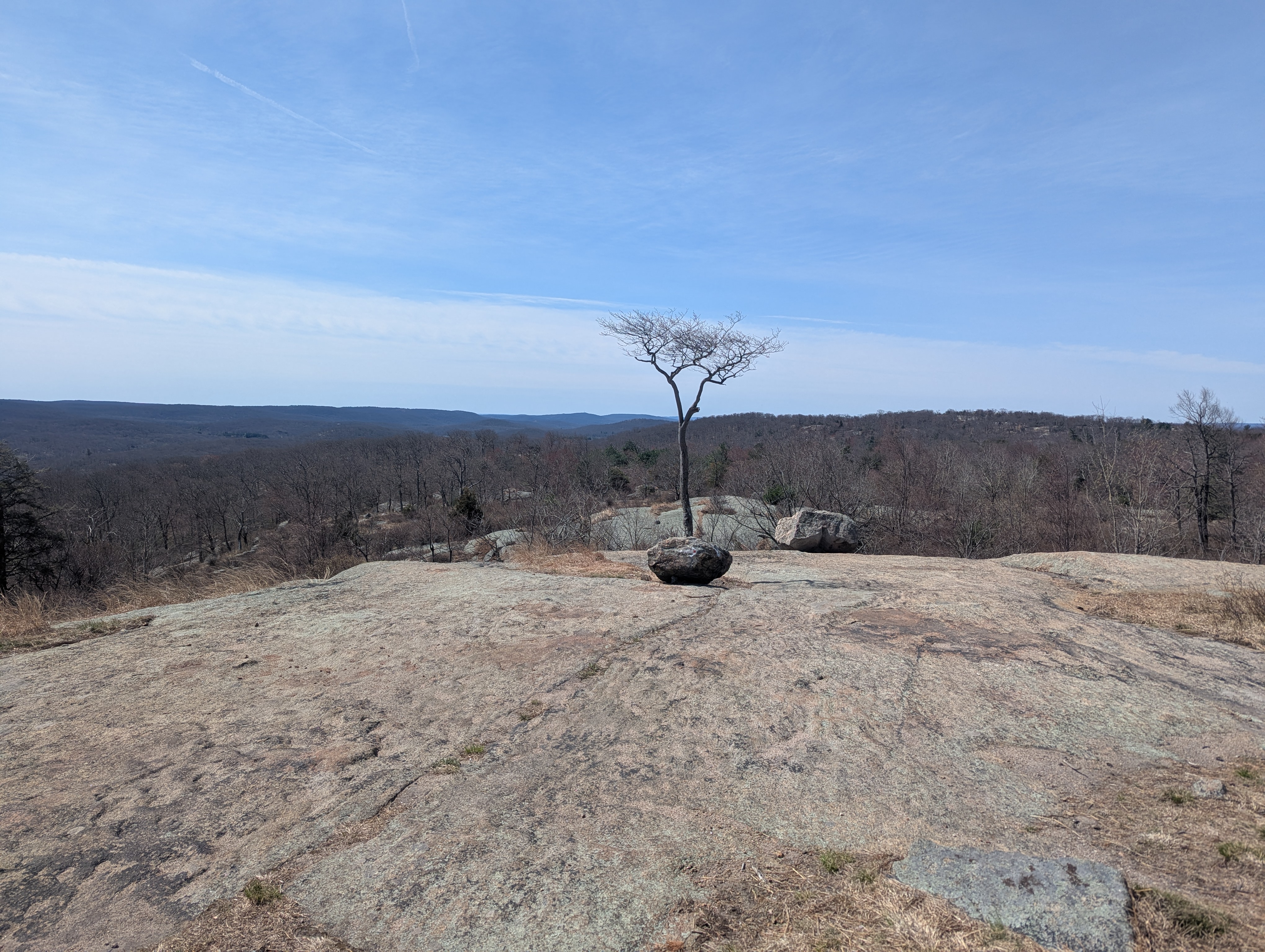
At the top, the sun is out, and the air is still. The typical lichen-dusted slabs. A patch of steeplebush topped with brown flowerheads left from last year. There’s a radio tower, observatory, and water tank, marked with no-trespassing signs. Glimpses of a lake below, through the foliage. A whisper of traffic sounds from the highway. It turns out that Aramah is a friendly place, with that special feeling of stillness that comes with elevation and age.
Message Received, Over
If cold wind is my older brother, then I suppose the blueberry is a sibling, too, and the brambles, briers, barberry, multi-flora rose, mountain laurel, aspen groves, and Devils Walking Stick are friends and other relatives.
Did I mention ticks? With the weather finally warming, these tiny creatures started appearing on my pants and arms and then later in my Jeep and even in the house. Ticks are understandably unpopular because they transmit the dreaded Lyme disease, but they are nature’s babies, too, and there’s no point hating them. I used to drive my ex-wife crazy, when I’d find one inside – “kill it!” she’d shriek – but instead I’d carry the tiny black squiggling speck outdoors and release it in the wild.
This message which I have received is so intriguing. A message which evidently originated with the Athabaskan people, who lived 10,000 years ago on the wind-swept steppes of Siberia and Mongolia. (I picture them dressed in skins, in winter temperatures of -50 F, lying in wait for caribou.) They passed this message down to Stalking Wolf of the Lipan Apache and he taught Tom Brown, Jr., the famous survivalist and tracker, who shared it in his memoirs. The message reads — don’t waste energy fighting nature. Instead, accept nature in all its forms. The cold wind. The thorns and spikes. The rocks and sticks underfoot and the slow pace they necessitate. The passage of time and the accumulation of aches and pains which is part of the aging process. All these things plus the light and stillness that well out of the forest when the wind is not too rough.
Isn’t it amazing that this signal penetrated the noise and entropy of the modern world and reached all the way to me.
Or maybe everyone already knows this. After all, Whitman’s message was basically the same, and my Grandpa Roy tried to teach me about nature, too.
One night I’m lying in bed, window open besides my bed, letting my imagination roam, and suddenly I’m sitting in a fine Parisian café, sipping a cappuccino. Seated on my left is Stalking Horse, reaching for a breadstick. Whitman is on my right, the breeze gently tussling his long white beard. Tom Brown, Jr. sends his regrets – he has a conflict and couldn’t make it.
I want to ask them about so many things. About aging with grace. Climate. Conservation. Community. About how to be a warrior. A leader. A scout. How to be a good father and grandpa.
Mist rises off the Seine and drifts across the scene. I stare at Stalking Wolf and Whitman, but they cannot hear my questions. It seems the transmission channel operates in only one direction.
In closing, let me go on record recommending the modest mountains of Harriman-Bear Mountain as an excellent place to practice moving naturally. All 67 of them.
“There are mountains hidden in treasures. There are mountains hidden in swamps. There are mountains hidden in the sky. There are mountains hidden in mountains. There are mountains hidden in hiddenness.”
— Eihei Dogen, “Mountains and Rivers Sutra”
[1] The Grid consists of climbing each of the Catskills’ 35 high peaks in each month of the year, for a total of 420 climbs. I told the story of this adventure in Chasing the Grid: An Ultrarunner’s Physical and Spiritual Journey in Pursuit of the Ultimate Mountain Challenge.
[2] Recounted in Kenneth Posner, “Barefooting the Northeast 111,” Appalachia, Summer/Fall 2025.
[3] The 67 peaks include two mountains whose true summits sit on private property but where there is a nearby bump of similar magnitude on public land. In the case of Mount Amarah, the true peak of 1,426 feet is on private property, but a second peak only 4 feet lower in elevation sits on public land less than 200 feet away. The other peak in this category is Long Mountain, whose true peak sits on West Point land, but whose secondary peak on public land is only 15 feet lower and bears a memorial plaque to Raymond Torrey.
[4] Also excluded are features with the word “rock” in their names.
[5] “The Tracker: The True Story of Tom Brown Jr” as told to William Jon Watkins, 1986.
[6] Recounted in my book, “Running the Long Path: A 350-mile Journey of Discovery in New York’s Hudson Valley”
[7] For more on Whitman see https://thelongbrownpath.com/2017/11/04/walt-whitmans-speciman-days/ and “Whitman and Wilmington,” The Long Brown Path, April 30, 2022
Chasing the Grid is available on Amazon!


