We have reached an interesting fork in the road on our collective journey. One way is a short cut to the promised land. The other way takes us home. Speaking as both a runner and an analyst, I’ve made my choice – how about you?
We have reached an interesting fork in the road on our collective journey. One way is a short cut to the promised land. The other way takes us home. Speaking as both a runner and an analyst, I’ve made my choice – how about you?
In his noteworthy 2020 book, Transcend: The New Science of Self-Actualization, Scott Barry Kaufman builds upon the work of pioneering humanist Abraham Maslow (1908-1970) to offer a 21st-century definition of “transcendence,” together with a review of scientific techniques for healing, growth, and self-actualization.
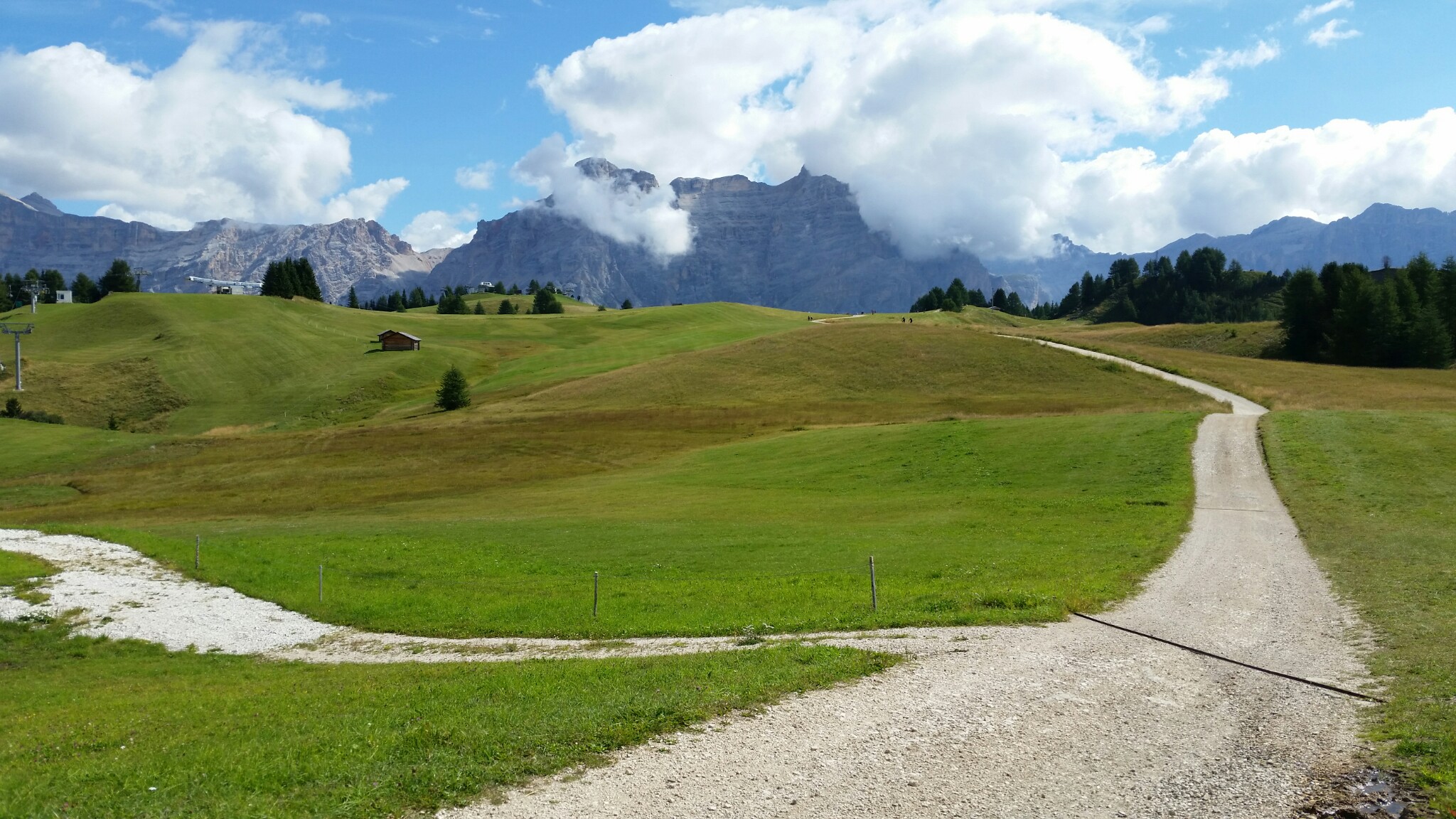
In a previous article,[i] I offered a quantitative definition of transcendence, yet one that was inspired by the 19th-century American Transcendentalist tradition, whose most famous authors include Ralph Waldo Emerson, Walt Whitman, Henry David Thoreau, John Burroughs, and John Muir. Staring with a metaphor for transcendence, I suggested the act of climbing a mountain, crossing a range, reaching the other side. Although to be clear, “transcendence” is not a place you reach. It is not a target end-state. Better to think of it as a vector, consisting of a direction (“up”) and a distance (how far you can climb), except we’re interested in maximizing happiness, rather than elevation. The best way to maximize happiness, according to the American Transcendentalists, is to spend time in nature. This is because the Transcendentalists saw exposure to “wild” environments as necessary for developing spiritual power. Bear in mind the Transcendentalists were writing during the mid- to late-19th century, when America was rapidly industrializing and urbanizing, and the frontier was already starting to close. Continue reading “Transcend What?”
In Whitman: A Study, the Catskills nature-writer, essayist, and philosopher John Burroughs (1837-1921) defended Walt Whitman (1819-1892) against the hostile reactions of contemporary scholars, for whom Whitman’s poetry was too coarse, racy, and controversial. In the book, Burroughs presented Walt Whitman as the “poet of democracy” and described him as a primal man, visionary of the open air, barbarian in the parlor, force of nature, and prophet. But Whitman: A Study isn’t just about Whitman, it’s also an exposition of Burroughs’ philosophy. Inspired by both science and nature, Burroughs saw natural processes at work within society, and he explained how both physical strength and the vitality of culture can fade if we lose our connection with the natural world. This message seems just as relevant for our information age as it was 120 years ago when Whitman: A Study was first published.
Continue reading “Burroughs: Don’t Lose Your Connectivity with Nature”
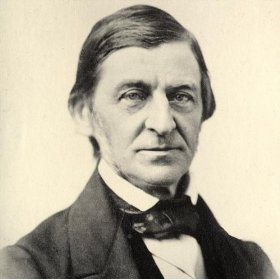
When running in the mountains, I’ve seen many footprints on the paths. Sometimes I’m reminded of people like John Burroughs, John Muir, and Henry David Thoreau, who wandered the forests during the 19th and early 20th century, experiencing nature as a source of beauty, strength, and inspiration. There are older tracks, too, for behind these figures lurks another spirit: Ralph Waldo Emerson (1803-1882), the essayist, lecturer, poet, and father of the American Transcendentalist movement.
I hadn’t read Emerson since college, but one day it occurred to me that there could be a connection between “Transcendentalism” and the sport of ultra-running, if for no other reason that those who run longer distances than the conventional 26.2-mile marathon, are driven in part to do so by a desire to “transcend” perceived limits. I began to wonder, might ultra-runners be carrying Emerson’s banner, without even knowing it?
 The Long Brown Path