Transcend What?

In his noteworthy 2020 book, Transcend: The New Science of Self-Actualization, Scott Barry Kaufman builds upon the work of pioneering humanist Abraham Maslow (1908-1970) to offer a 21st-century definition of “transcendence,” together with a review of scientific techniques for healing, growth, and self-actualization.

In a previous article,[i] I offered a quantitative definition of transcendence, yet one that was inspired by the 19th-century American Transcendentalist tradition, whose most famous authors include Ralph Waldo Emerson, Walt Whitman, Henry David Thoreau, John Burroughs, and John Muir.  Staring with a metaphor for transcendence, I suggested the act of climbing a mountain, crossing a range, reaching the other side.  Although to be clear, “transcendence” is not a place you reach.  It is not a target end-state.  Better to think of it as a vector, consisting of a direction (“up”) and a distance (how far you can climb), except we’re interested in maximizing happiness, rather than elevation.  The best way to maximize happiness, according to the American Transcendentalists, is to spend time in nature.  This is because the Transcendentalists saw exposure to “wild” environments as necessary for developing spiritual power.  Bear in mind the Transcendentalists were writing during the mid- to late-19th century, when America was rapidly industrializing and urbanizing, and the frontier was already starting to close. Continue reading “Transcend What?”

Transcend What?

Transcend This!  A Quantitative Interpretation of American Transcendentalism

How to Allocate Your Time, Avoid Burn-out, Boost Your Spiritual Power, and (Possibly) Make it to the Other Side

The word “transcend” is derived from the Latin “trans” (across) and “scandere” (to climb).  In a sense, the word means to cross a mountain range.  Like the scout William Lewis Manly, who found a route across the Panamint Mountains bordering Death Valley, made it to coastal California, and returned with food to save his comrades who were starving.  This was in 1849.[1]  Go back further in time, and it’s not hard to imagine our hunter-gatherer ancestors staring at a mountain wall, wondering what they would discover on the other side.  If they could find a route across.

Today we use the term, “self-transcendence,” in a more general sense, wondering if we could become tomorrow, in some way, better, stronger, happier, and more productive than we are today.

American Transcendentalism was a 19th century philosophical movement which included authors such as Ralph Waldo Emerson, Henry David Thoreau, Walt Whitman, John Burroughs, and John Muir, among others.

The central premise of Transcendentalist philosophy was that people could achieve self-transcendence by drawing spiritual power from nature.  In this regard, the Transcendentalists were reacting to problems they perceived in 19th century America, where industrialization and urbanization were spreading rapidly, and the frontier was shrinking and would soon close.  Among the clerks, mechanics, priests, professionals, and others who spent their days indoors, Thoreau remarked on what he perceived as “lives of quiet desperation.”  Emerson railed against the conformity, timidity, anxiety, and toxic egotism he associated with conventional society.  Whitman was blunt – writing under the pen name Mose Velsor, he warned that a sedentary indoors lifestyle devoted purely to mental work was “death.”

Fast forward to today.  The Transcendentalists are still remembered, but the popular narrative has shifted.  The new philosophy is Transhumanism – the hope that we will transcend our limitations through technology.  Transhumanism culminates in the “Singularity” – the point at which humans and machines merge.

Exhibit 1:  Search Trends Show Transhumanism Eclipsing Transcendentalism

Exhibit 1

Source:  Google Trends

Continue reading “Transcend This!  A Quantitative Interpretation of American Transcendentalism”

Transcend This!  A Quantitative Interpretation of American Transcendentalism

Seeking Wildness

In The Practice of The Wild, Beat poet, Zen student, and environmentalist Gary Snyder writes of stepping off the beaten path. This metaphor brings to mind the 19th century Transcendentalist Henry David Thoreau, who advocated for “absolute freedom and wildness,” and who strongly preferred sauntering through the woods to walking the public road.  These authors have attracted a large following among nature-lovers, environmentalists, and even anarchists, many of whom crave independence from the constraints of modern society, and some of whom advocate for “rewilding” or a return to ancestral lifestyles.  But a close reading of Snyder and Thoreau finds little support for “human wildness,” i.e., a state of being free of social constraint.  Rather, they portray wildness as a fleeting experience and use the word more as a metaphor for creativity and originality.  Once we understand this point, we find that the key to absolute freedom is not to be found in nature, but rather in the spirit of self-reliance and self-discipline – or put differently, the wild must indeed be “practiced.”

gs
Gary Snyder

Continue reading “Seeking Wildness”

Seeking Wildness

Burroughs: Don’t Lose Your Connectivity with Nature

In Whitman:  A Study, the Catskills nature-writer, essayist, and philosopher John Burroughs  (1837-1921) defended Walt Whitman (1819-1892) against the hostile reactions of contemporary scholars, for whom Whitman’s poetry was too coarse, racy, and controversial.  In the book, Burroughs presented Walt Whitman as the “poet of democracy” and described him as a primal man, visionary of the open air, barbarian in the parlor, force of nature, and prophet.  But Whitman:  A Study isn’t just about Whitman, it’s also an exposition of Burroughs’ philosophy.  Inspired by both science and nature, Burroughs saw natural processes at work within society, and he explained how both physical strength and the vitality of culture can fade if we lose our connection with the natural world.  This message seems just as relevant for our information age as it was 120 years ago when  Whitman: A Study was first published.

Continue reading “Burroughs: Don’t Lose Your Connectivity with Nature”

Burroughs: Don’t Lose Your Connectivity with Nature

Transcending Emerson

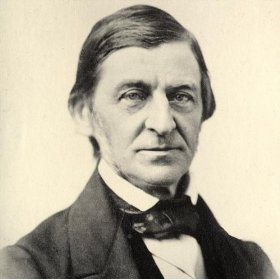
When running in the mountains, I’ve seen many footprints on the paths.  Sometimes I’m reminded of people like John Burroughs, John Muir, and Henry David Thoreau, who wandered the forests during the 19th and early 20th century, experiencing nature as a source of beauty, strength, and inspiration.  There are older tracks, too, for behind these figures lurks another spirit:  Ralph Waldo Emerson (1803-1882), the essayist, lecturer, poet, and father of the American Transcendentalist movement.

I hadn’t read Emerson since college, but one day it occurred to me that there could be a connection between “Transcendentalism” and the sport of ultra-running, if for no other reason that those who run longer distances than the conventional 26.2-mile marathon, are driven in part to do so by a desire to “transcend” perceived limits.  I began to wonder, might ultra-runners be carrying Emerson’s banner, without even knowing it?

emerson

Continue reading “Transcending Emerson”

Transcending Emerson

The Spiritual Life of Long-Distance Runners

In a recent New Yorker article, Adam Alter explores the psychological and spiritual motivations of ultra-marathon runners, that is, people who run distances longer than the conventional marathon (26.2 miles) in races that sometimes last hundreds and even thousands of miles.  Alter, who is associate professor of marketing at the Leonard Stern School of Business, where he also has an affiliated appointment in the psychology department, asks the “obvious question,”  why would someone choose to do this?

But the really interesting question is, why would professor Alter want to know?

After all, the questions we ask reveal a lot about who we are and what we seek.

Continue reading “The Spiritual Life of Long-Distance Runners”

The Spiritual Life of Long-Distance Runners

Let’s Put Thoreau in his Proper Place

In a recent post, I compared a weekend spent hiking in the Catskills to Henry David Thoreau’s two-year sojourn at Walden Pond, as both were experiments in natural living and self-sufficiency.

But then my daughter Emeline brought to my attention a recent article entitled “Pond Scum.”  The author, Kathryn Schulz, questions why we still admire the literature of a man who was mean-spirited and a fake.  She summarizes her opinion in no uncertain terms:

Continue reading “Let’s Put Thoreau in his Proper Place”

Let’s Put Thoreau in his Proper Place