Welcome to the World — Bob’s Baby Granddaughter!

In an eloquent and heartfelt essay, my former colleague Bob Dewey announced the birth of his granddaughter, commenting on how grateful he felt that the delivery was “routine and uneventful.”  Indeed, modern medicine delivers infants with exquisite care and safety.  Bob pointed out that childhood mortality in the US recently hit a new low – only 5 deaths per 1,000 live births, equivalent to a rate of 0.5%.

I, too, am grateful for safety.  My grandson, Arden, recently turned 6.

But…

Continue reading “Welcome to the World — Bob’s Baby Granddaughter!”

Welcome to the World — Bob’s Baby Granddaughter!

Reservoir Year by Nina Shengold — A Review

Everyone wants to be in charge, but there are so many distractions

The Ashokan Reservoir is an important component of the New York City water supply.  Lying at the base of the Catskill Mountains, the reservoir is 12 miles long, covers 8,300 acres, and has a maximum capacity of 123 billion gallons of water.  Reservoir Year: A Walk of Days is Nina Shengold’s account of a unique project during which she visited the Ashokan Reservoir for a daily walk along the shore, with a special commitment to complete a full year’s worth of walks without skipping a single day.  In her daily notes, which range from a single sentence to a few pages, she brings the reservoir to life.  She recounts the drama of sky and water.  Shares the antics of crows, deer, squirrels, bears, herons, and bald eagles.  Relates the interactions with strangers she encountered and with friends and family members who sometimes walked with her during this improbable quest.  Improbable, for a 60-year-old single mother with bills to pay and aging parents who need her help and many other obligations.

Nina is a talented writer and in particular a master of metaphor, which makes the book a stimulating read.  On a spring-time visit, the cloud-striped sky evokes a blue-and-white lava lamp.  The atmosphere beneath a brewing thunderhead feels “dead-air, locker room humid.”  A sunset morphs from pastel “to flamingo, persimmon, tandoori salmon, hot lava.”  It’s clear in writing up this account she had fun.

But beneath the engaging prose, a serious question lurks.  Why?  Why, if you didn’t have to walk a dog, would you visit the same place on every single day for a full year?

Looking across the Ashokan Reservoir

Continue reading “Reservoir Year by Nina Shengold — A Review”

Reservoir Year by Nina Shengold — A Review

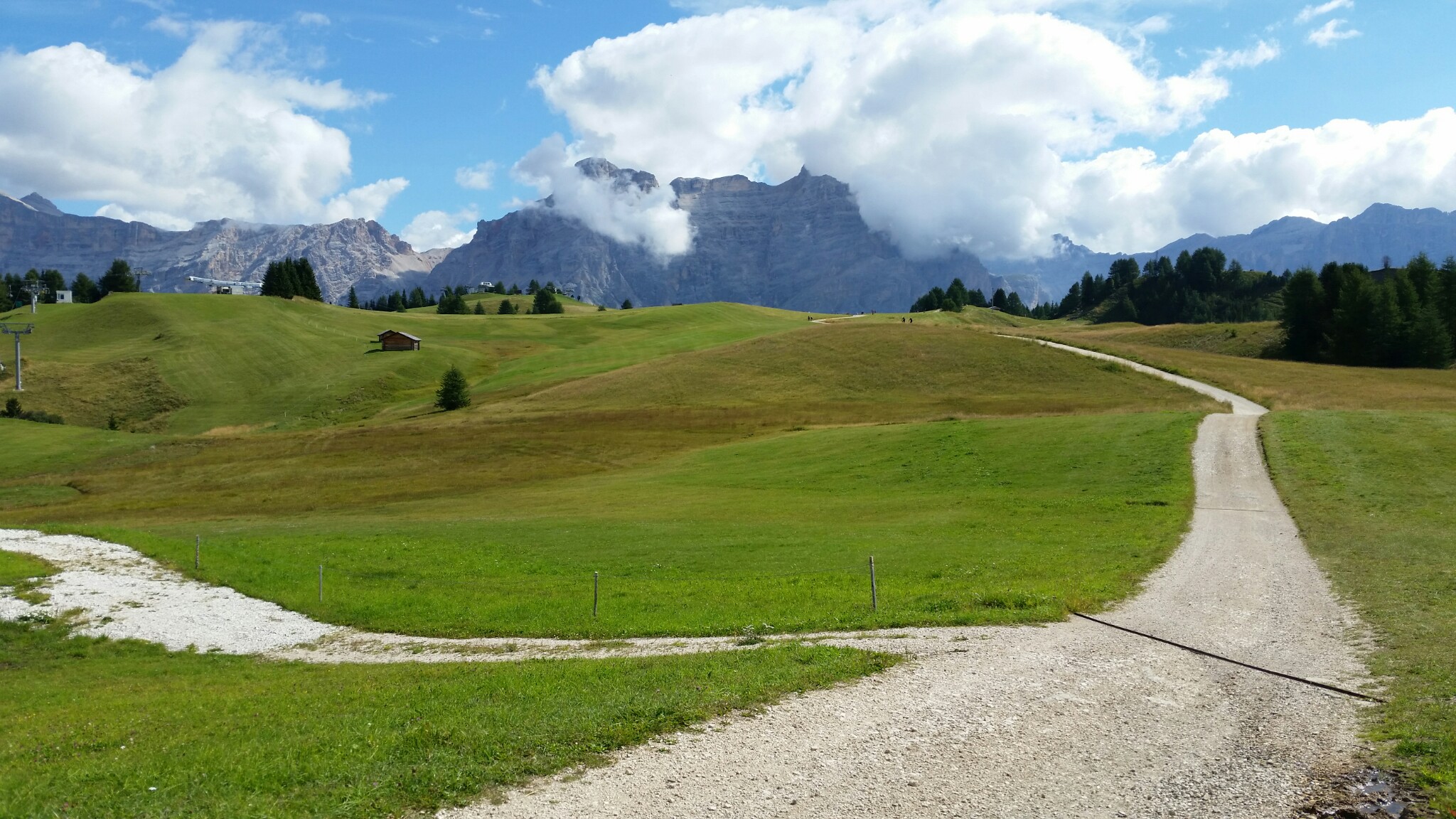
Fork in the Road

We have reached an interesting fork in the road on our collective journey.  One way is a short cut to the promised land.  The other way takes us home.  Speaking as both a runner and an analyst, I’ve made my choice – how about you?

Continue reading “Fork in the Road”

Fork in the Road

Transcend This!  A Quantitative Interpretation of American Transcendentalism

How to Allocate Your Time, Avoid Burn-out, Boost Your Spiritual Power, and (Possibly) Make it to the Other Side

The word “transcend” is derived from the Latin “trans” (across) and “scandere” (to climb).  In a sense, the word means to cross a mountain range.  Like the scout William Lewis Manly, who found a route across the Panamint Mountains bordering Death Valley, made it to coastal California, and returned with food to save his comrades who were starving.  This was in 1849.[1]  Go back further in time, and it’s not hard to imagine our hunter-gatherer ancestors staring at a mountain wall, wondering what they would discover on the other side.  If they could find a route across.

Today we use the term, “self-transcendence,” in a more general sense, wondering if we could become tomorrow, in some way, better, stronger, happier, and more productive than we are today.

American Transcendentalism was a 19th century philosophical movement which included authors such as Ralph Waldo Emerson, Henry David Thoreau, Walt Whitman, John Burroughs, and John Muir, among others.

The central premise of Transcendentalist philosophy was that people could achieve self-transcendence by drawing spiritual power from nature.  In this regard, the Transcendentalists were reacting to problems they perceived in 19th century America, where industrialization and urbanization were spreading rapidly, and the frontier was shrinking and would soon close.  Among the clerks, mechanics, priests, professionals, and others who spent their days indoors, Thoreau remarked on what he perceived as “lives of quiet desperation.”  Emerson railed against the conformity, timidity, anxiety, and toxic egotism he associated with conventional society.  Whitman was blunt – writing under the pen name Mose Velsor, he warned that a sedentary indoors lifestyle devoted purely to mental work was “death.”

Fast forward to today.  The Transcendentalists are still remembered, but the popular narrative has shifted.  The new philosophy is Transhumanism – the hope that we will transcend our limitations through technology.  Transhumanism culminates in the “Singularity” – the point at which humans and machines merge.

Exhibit 1:  Search Trends Show Transhumanism Eclipsing Transcendentalism

Exhibit 1

Source:  Google Trends

Continue reading “Transcend This!  A Quantitative Interpretation of American Transcendentalism”

Transcend This!  A Quantitative Interpretation of American Transcendentalism